


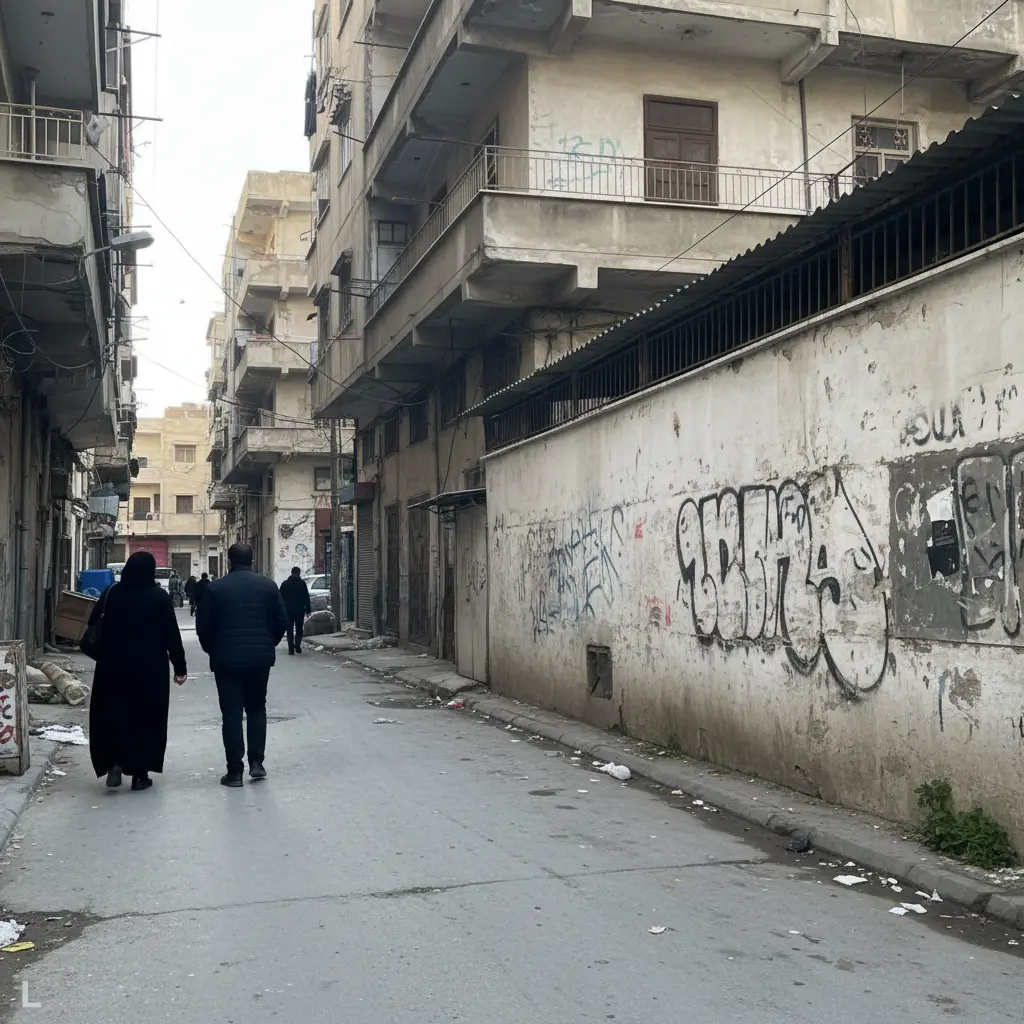
In the quiet, pre-dawn hours of December 11, 2025, a devastating fire ripped through a modest home in İstanbul’s Pendik district, claiming the lives of nine-year-old Cennet Çelikkol, five-year-old Zülfikar Sepetci, and two-year-old Özden Sepetci. The tragedy, which occurred in the Fevzi Çakmak neighborhood, has cast a harsh light on the pervasive issue of deep poverty and the systemic vulnerabilities faced by marginalized families in Turkey.
A Neighborhood’s Lament: ‘It’s Always Because of Poverty’
The scene at the fire-ravaged home, a two-story building with crumbling plaster and unpainted walls, speaks volumes. A neighbor, gazing at the charred remains, murmured, “It’s always because of poverty.” This sentiment echoes throughout the Fevzi Çakmak neighborhood, a diverse area where shantytown-style dwellings stand alongside middle-class apartments and modern blocks. The building itself, marked with a spray-painted “Allah korusun” (God protect us) and the distinct logo of the TV series “Çukur,” bears the scars of neglect, its old windows and iron bars offering little protection against the inferno that erupted around 2:30 AM.
The Absence of a Mother, the Plight of a Family
At the time of the fire, the children’s mother, Selvi Sepetci, was not home. She was at Kartal Training and Research Hospital, seeking treatment for her youngest child, Ela Nur Zurnacı, born earlier this year. Her TikTok profile, filled with smiling photos of her children and a “Welcome” message for her baby, paints a poignant picture of a mother’s love amidst hardship. According to police sources, the baby’s father was incarcerated, further underscoring the family’s precarious situation.
A Desperate Rescue Attempt and a Survivor’s Hope
Yıldıray Oktay, the local headman who lives on the same street, described the frantic efforts of neighbors to rescue the children. “The heating in the house was provided by an electric heater,” Oktay explained, suggesting the fire likely started from an overloaded power strip. As the flames engulfed the home, the children reportedly fled into a single room. Neighbors, armed with sledgehammers, desperately tried to break through the iron bars and windows to reach them. Firefighters and medical teams, upon arrival, found four unconscious children. While three tragically succumbed, the eldest, 11-year-old Muhammed Ali Çelikkol, remains in intensive care. A young friend, speaking to reporters, expressed a heartbreaking wish: “I hope Muhammed doesn’t die, brother.”
A Life of Scavenging: “They Collected Paper for a Living”
The family had moved into the house just two months prior. Neighbors revealed that none of the children attended school or kindergarten. Oktay noted that because the family hadn’t yet registered their residency in the neighborhood, it was unclear if they were receiving any social assistance. He also mentioned that the family identifies as Roma. “They had a motorized cart,” a neighbor recounted, describing how the couple would leave early in the morning to collect paper, often taking Muhammed with them. “The other children were always at home. When the new baby arrived, they started taking her with them too.”
The Perils of Paper Collection and “Poverty Fires”
Ali Mendillioğlu, head of the Recycling Workers Association, highlighted the immense difficulties and lack of security in paper collection. He emphasized that while many collectors are young men living in depots, Roma families often work together, leaving young children at home. “There are many factors in their homes that create fire conditions,” Mendillioğlu stated. “Unfortunately, paper collection is perhaps the lowest profession, but among those, Roma people have much worse conditions than other paper collectors.”
A Recurring Tragedy: “We Experience This Every Winter”
This tragedy is not an isolated incident. Last November, five children died in a house fire in İzmir’s Selçuk district, an event that drew parliamentary attention. The Children’s Rights Center of the Idea and Art Workshop (FİSA) Association, which tracks child deaths in fires, reported that 29 children lost their lives in fires last year. Ezgi Koman from FİSA described these winter fires as “systematic.” “We know that between December and March, such fires occur systematically. Unfortunately, there will be other fires until March.”
Deep Poverty: A Cycle of Vulnerability
Önder Uçar, Research and Advocacy Coordinator for the Deep Poverty Network, affiliated with the Open Space Association, characterized the family’s profile within the framework of deep poverty. “The family profile here perfectly matches the profiles of our registered households in the field,” Uçar explained, citing young marriages, divorces, remarriages, and children born from each union, all working in unregistered jobs. He criticized the media’s tendency to attribute such incidents solely to the family’s shortcomings. “I’m not saying there’s no fault of the family here, but we also need to talk about the macro-level structural problems that drive these households into these conditions.”
A Call for Systemic Change: “This Should Not Be Normalized”
Koman uses the term “poverty fires” to describe these incidents, emphasizing that they disproportionately affect the Roma community and refugees who struggle to access economic rights. She also pointed to the absence of an effective child protection system in Turkey. “In this case, the mother works, collects paper. She takes her child to the hospital. There is no place for her to leave her child, no child protection system, no nursery. These children have a right to care services. The mother also has the right to receive this.” Koman further linked these events to the right to housing, noting that impoverished individuals are forced to rely on risky heating methods like electricity and lack fire prevention mechanisms in their homes.
Koman stressed the need for central and local governments to identify the multifaceted causes of these annual tragedies and implement preventative measures. “If children are in a situation where they cannot live in such a home, they need to be supported economically and socially. If necessary, they can even be taken into protection. There are many methods.” Uçar highlighted the existence of various social assistance programs in Turkey but argued for increased financial aid and a more holistic implementation of these programs. He expressed concern that while the İzmir fire gained significant public attention, the Pendik fire has received less, indicating a worrying normalization of such tragedies. “This should not be normalized,” he urged.
Source: https://www.bbc.com/turkce/articles/c4g44dj3971o