


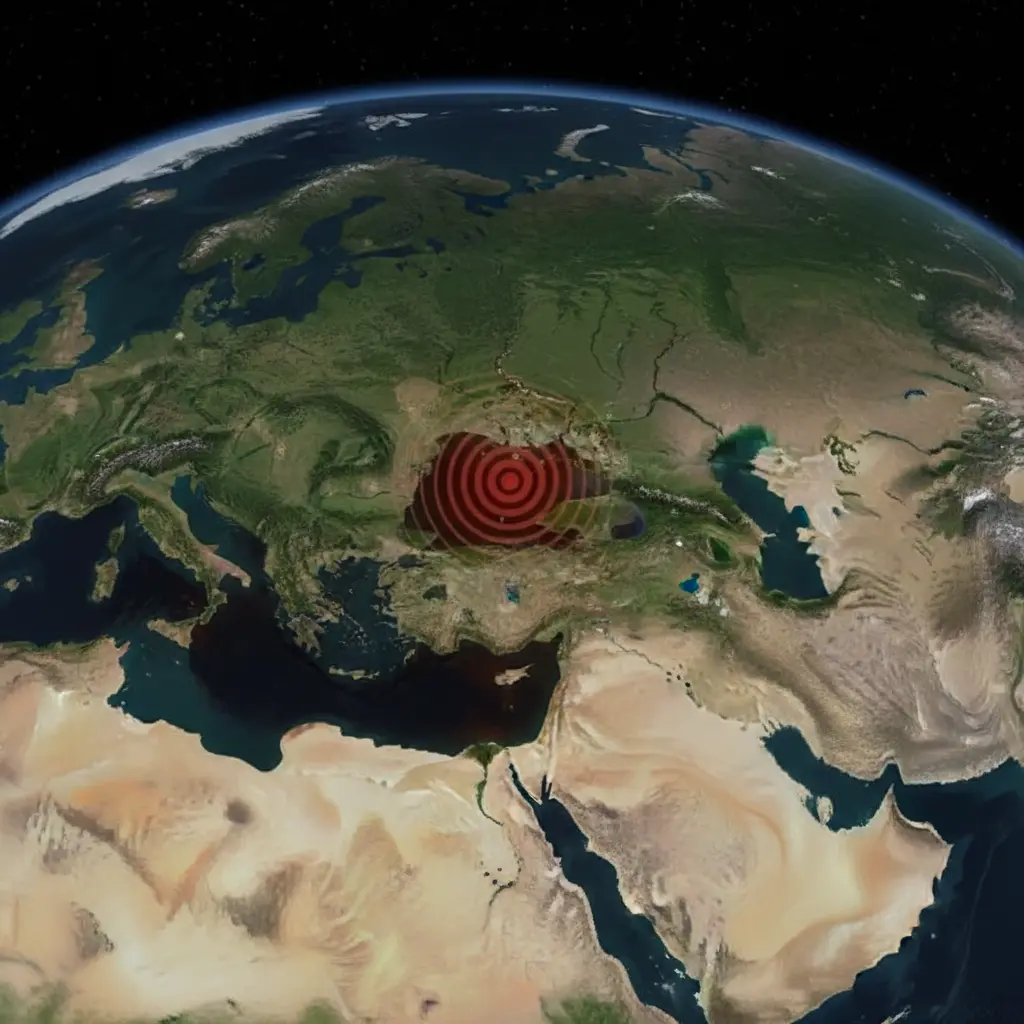
Rethinking the Istanbul Earthquake: Geothermal Factors at Play
For years, the specter of a major earthquake in Istanbul has loomed large, with scenarios of a catastrophic rupture beneath the Marmara Sea dominating discussions. However, new scientific insights, particularly those focusing on the geothermal structure of the Marmara region, are prompting a re-evaluation of these long-standing predictions. Geologist Prof. Dr. Osman Bektaş argues that elevated temperatures in the area could significantly influence fault behavior, potentially leading to a more gradual, less destructive release of seismic energy.
Prof. Dr. Bektaş, a retired academic from Karadeniz Technical University, emphasizes the critical importance of incorporating recent scientific findings regarding the Marmara Sea seabed into earthquake risk assessments. He refers to a 2025 study by Güvercin and Barbot published in Nature, which highlights a shallowing of the Curie depth in Marmara. This phenomenon, according to Bektaş, directly impacts the locking capacity of faults.
High Temperatures: A Barrier to Catastrophic Rupture?
According to Bektaş, the intense heat beneath the Marmara Sea makes it difficult for faults to accumulate stress over extended periods. This condition favors a process known as ‘silent creep,’ where energy is released slowly and continuously, rather than through an abrupt, large-scale rupture. This mechanism is considered a crucial factor that could potentially limit the intensity of a major earthquake.
The “Thermal Shield” of Central Marmara
Bektaş particularly draws attention to the Central Marmara segment, suggesting that this area, due to its high temperatures, might act as a “thermal barrier.” The tendency of the fault to creep rather than lock could naturally impede a cascading, single-segment rupture. This perspective offers a nuanced understanding of how seismic energy might dissipate in the region.
Curie Depth Explains Past Earthquakes
Bektaş’s interpretation also sheds light on why past earthquakes in Marmara have exhibited varying characteristics. He notes that:
- The 1999 İzmit and 1912 West Marmara earthquakes occurred in more locked fault segments.
- Earthquakes of magnitude 6 and above in 1963 and 2025 were associated with faults that were partially locked and partially creeping.
It is also observed that the seismogenic crust in Marmara, which generates earthquakes, is considered thinner compared to many other regions, further influencing seismic activity.
Scientific Limits on Maximum Earthquake Magnitude
Citing Güvercin’s 2025 study, Bektaş states that the projected maximum earthquake magnitude for the Marmara Sea is limited to M 7.3. This scientific upper bound challenges previous scenarios that suggested a single-segment rupture of M 7.5 or higher. The fragmented rupture tendency of faults and their creep behavior strengthen the possibility of a more controlled energy release.
A New Lens for Earthquake Risk Assessment
Prof. Dr. Osman Bektaş concludes that the geothermal conditions beneath the Marmara Sea compel a re-evaluation of long-held assumptions about the Istanbul earthquake. He emphasizes that high temperatures could be one of the most critical factors preventing the anticipated catastrophic rupture. According to Bektaş, earthquake hazard assessment must now consider not only fault length and past ruptures but also the thermal structure deep within the earth. This analytical shift underscores the complexity of seismic phenomena and the need for continuous scientific inquiry to refine our understanding of earthquake risks.