


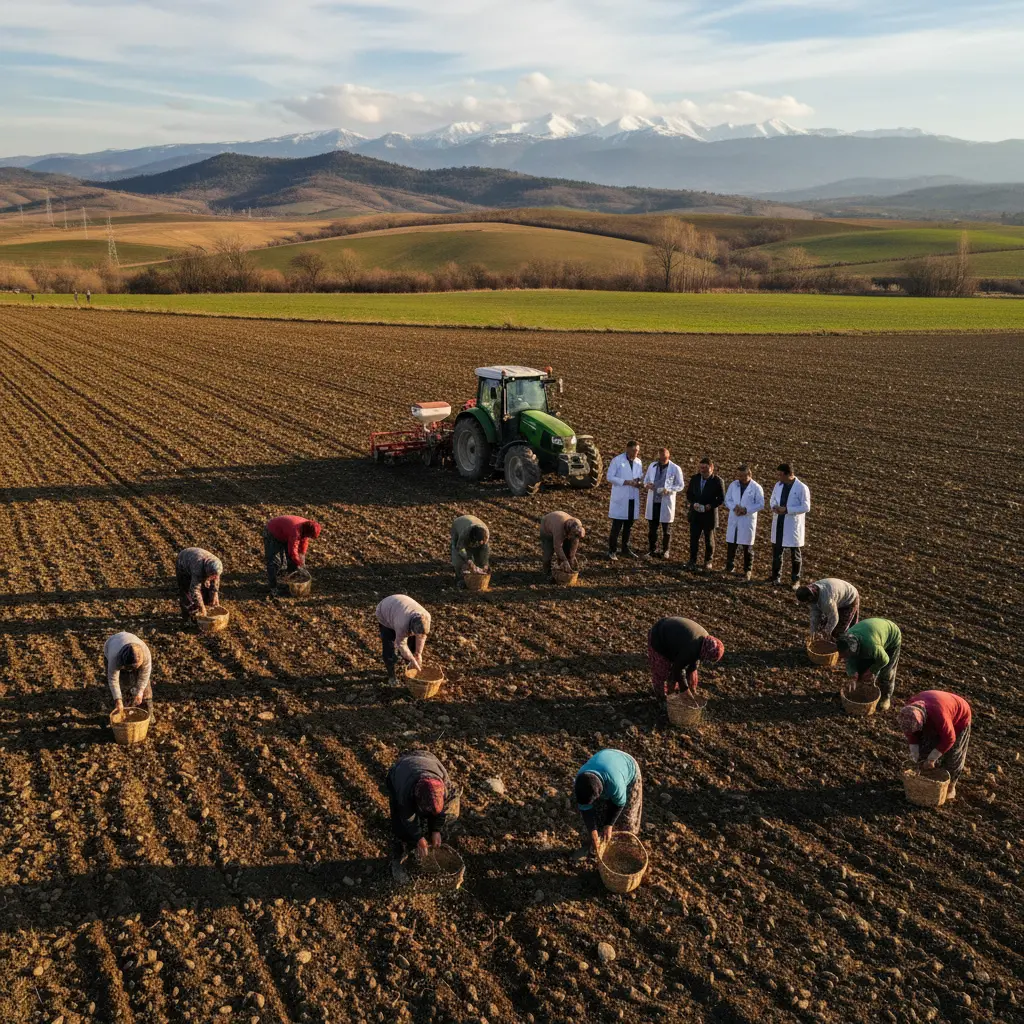
Ankara, Turkey – The sowing of 12,000-year-old Iza (Einkorn) wheat has officially begun in the Mengen district of Bolu, spearheaded by an initiative from Bolu Abant Izzet Baysal University (BAIBÜ).
University Spearheads Ancestral Seed Preservation
According to a statement from the Council of Higher Education, Berker Çiftçi, a lecturer at BAIBÜ Mengen Vocational School, established a ‘Seed Granary’ to protect ancestral seeds, reintroduce them into production, and support them with scientific research. This granary, built with special architecture underground to minimize energy consumption, spans approximately 35 square meters and houses 610 varieties of ancestral and local seeds, maintained at constant temperature and humidity conditions throughout the year.
Iza Wheat Distributed to 500 Farmers
Among the most valuable species in the Seed Granary is the Iza (Einkorn) wheat, which has now been distributed to farmers in the Mengen district for cultivation. Berker Çiftçi stated that approximately 500 producers have received free seeds to date, thereby multiplying the ancestral seed heritage in the field. Çiftçi emphasized that the work carried out in the Seed Granary is also based on a strong collective memory, with free seed distribution also taking place annually during the March 18 Çanakkale Victory Week.
Çiftçi highlighted that the model developed in the Seed Granary has grown on the basis of university-farmer cooperation. He further stated that the work focuses on creating an ecosystem based not only on preservation but also on production, education, and application.
Farmer Testimonial: From Seben to Mengen
Şeref Kabasakal, a farmer in Babahızır village, noted that Iza wheat, which was sourced from Seben four years ago, is now being widely cultivated in Mengen, with production continuously increasing each year.
The initiative underscores the importance of academic institutions in supporting local agriculture and preserving biodiversity through the reintroduction of ancient crop varieties. The success of the Seed Granary model in Mengen is expected to serve as a blueprint for similar projects across the country, fostering sustainable agricultural practices and empowering local farming communities.
The project aligns with broader national efforts to promote indigenous seed varieties and reduce reliance on commercial seeds, ensuring food security and agricultural heritage for future generations. The collaboration between BAIBÜ and local farmers exemplifies a successful model of knowledge transfer and community engagement in the agricultural sector.