


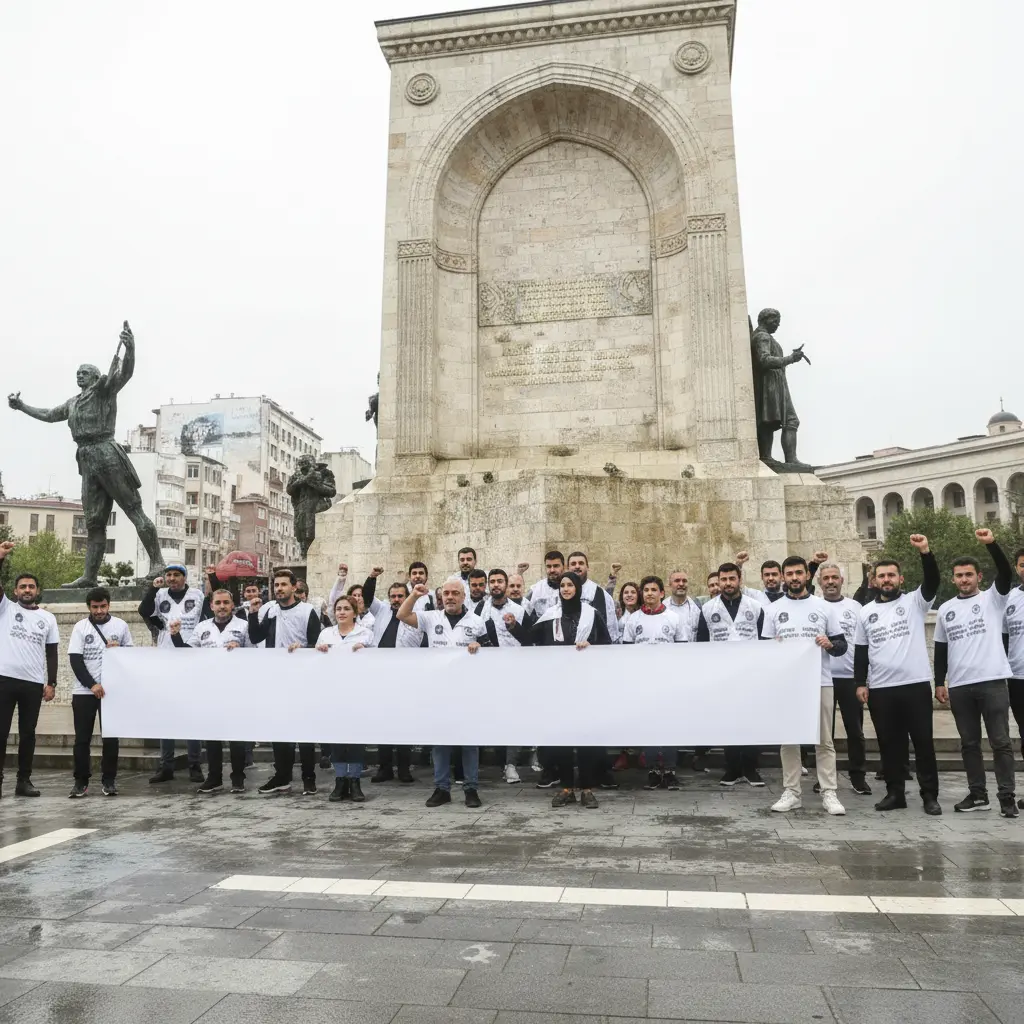
Ankara, January 25, 2026 – Thousands of citizens, commonly referred to as ‘IBAN victims,’ find themselves in a distressing situation where they are both victims and suspects in fraud cases due to their bank account numbers (IBANs) being used without their knowledge or consent. The TCK 158 Victims Platform held a press conference in Ankara today, calling for legal reforms to resolve this complex issue.
IBAN Victims: Both Defrauded and Prosecuted
Ilyas Ataş, President of the TCK 158 Victims Platform, speaking alongside other representatives, highlighted that citizens are being defrauded and then prosecuted as suspects because their IBANs were either given in good faith or used without their knowledge. Ataş emphasized that this problem has transcended individual cases and become a significant societal issue.
Ataş stated, “Thousands of our citizens are being victimized after giving their IBANs in good faith for job applications, assistance, or commercial expectations, or through transactions made in their name without their knowledge or consent. In some cases, citizens’ IBANs are used to commit fraud without their awareness or approval, leading to the IBAN holders being prosecuted as suspects instead of the actual fraudsters. Individuals are being both defrauded and punished.”
Despite compensating for the damages, the ordeal for these victims does not end, Ataş added. “These individuals face judicial fines for dozens of cases opened in their names and continue to be prosecuted with demands for 3 to 10 years of imprisonment for each case.”
11th Judicial Package Fails to Address Victims’ Plight
Ataş noted that while the 11th Judicial Package introduced some preventive measures concerning crypto, banking, and GSM operators, these regulations did not directly cover the victims. “We explicitly state that if these victimizations under TCK 158 did not exist, these regulations would not have been made. So, we ask: What about the victims?” Ataş questioned, arguing that transferring cases to misdemeanor courts also failed to solve the problem.
“The transfer of cases to misdemeanor courts was not done to provide solutions but merely to reduce the caseload of the High Criminal Courts. Therefore, the victimizations continue,” Ataş asserted.
How IBAN Victimizations Occur
The Platform’s statement detailed various methods through which victimizations under TCK 158 arise. Ataş listed these methods: “IBANs used at a friend’s request, exploitation of small business owners’ good intentions, citizens deceived by promises of home-based work, individuals defrauded by promises of trade, those trapped by ‘we are a bank’ credit score scams, and students misled by scholarship promises are prime examples of these victimizations.”
Ataş also claimed that some GSM operator employees abuse trust by opening unauthorized lines in citizens’ names. “High-value fraud is committed through these lines. Furthermore, money transfers are made using citizens’ IBANs without their knowledge.”
Demand for Legal Reforms: Inclusion in Conciliation Scope
Ataş also shared the demands of TCK 158 victims with the public, calling for legal reforms to find a solution. “Our demand is clear: to include Article 158 of the TCK within the scope of conciliation and to revise Article 253 of the Code of Criminal Procedure accordingly,” Ataş stated, urging all members of parliament and the Ministry of Justice to take action.
You can read a more comprehensive and detailed version of the news in Sonsöz Newspaper.