


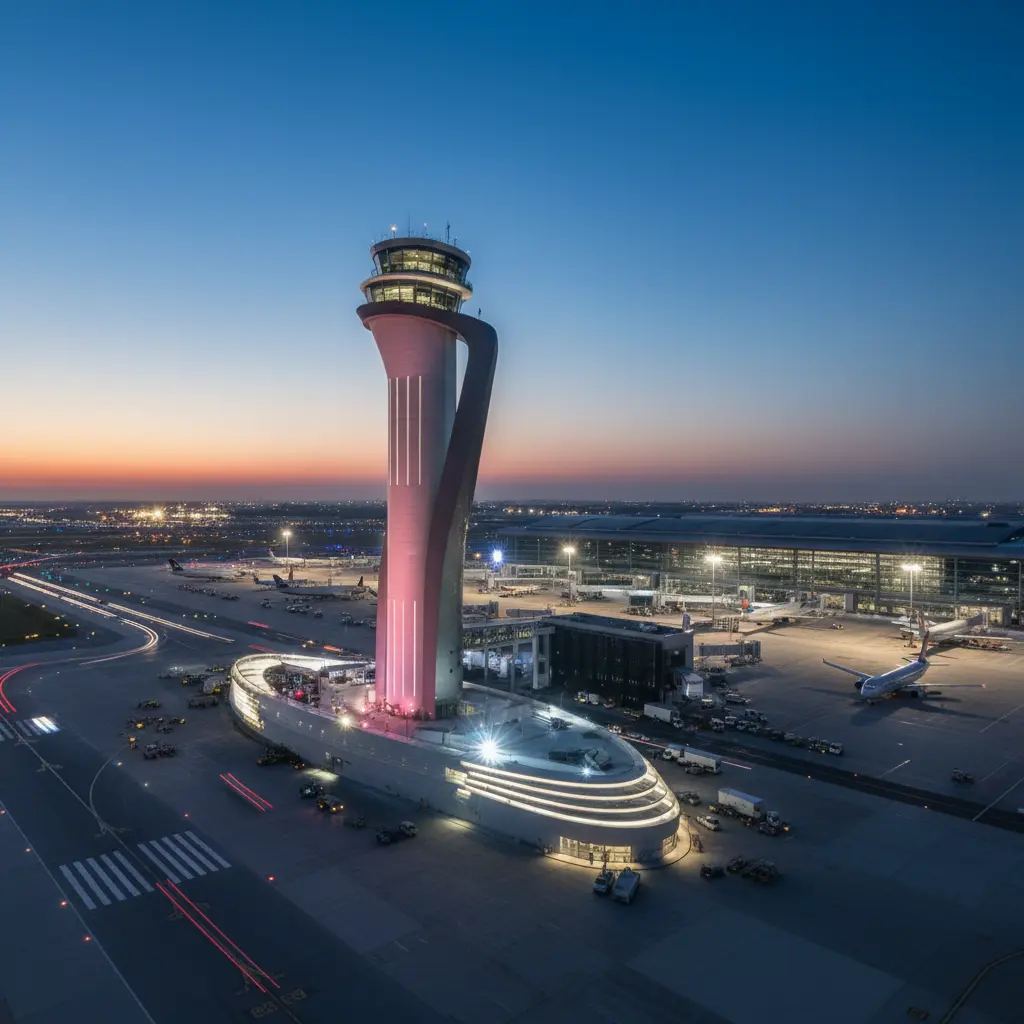
Istanbul Airport Leads European Aviation Traffic
Istanbul Airport has achieved the distinction of being Europe’s busiest airport, according to a report released by the European Organisation for the Safety of Air Navigation (Eurocontrol). The report, covering the period from January 26 to February 1, 2026, highlights Istanbul Airport’s impressive performance, averaging 1,447 flights per day.
This significant achievement underscores Istanbul’s growing prominence as a global aviation hub, solidifying its position within the competitive European air travel market.
Dominance Over Major European Hubs
The Eurocontrol report details how Istanbul Airport surpassed several well-established European counterparts in daily flight operations. Following Istanbul Airport, London Heathrow registered an average of 1,235 flights daily, placing it second on the list. Paris Charles de Gaulle Airport came in third with 1,167 daily flights, while Amsterdam Airport secured the fourth position with 1,151 flights per day.
This data illustrates a clear shift in air traffic patterns, with Istanbul emerging as a key player in managing a high volume of air travel across the continent.
Factors Contributing to Istanbul Airport’s Success
While the Eurocontrol report primarily focuses on flight statistics, several factors likely contribute to Istanbul Airport’s leading position. Its strategic geographical location, serving as a bridge between Europe and Asia, naturally positions it as a crucial transit point for international travel. Furthermore, significant investments in infrastructure and capacity have allowed the airport to handle an increasing number of flights and passengers efficiently.
The airport’s modern facilities and continuous expansion efforts also play a vital role in attracting airlines and travelers, contributing to its sustained growth and operational intensity.
Implications for the Aviation Industry and Turkish Economy
Istanbul Airport’s status as Europe’s busiest airport has substantial implications for both the aviation industry and the Turkish economy. For the aviation sector, it signifies a robust recovery and expansion of air travel, particularly in the Eastern European and Asian markets. For Turkey, this achievement boosts its global image, enhances its tourism potential, and stimulates economic growth through increased air traffic and related services.
The continuous high volume of operations at Istanbul Airport is expected to further strengthen its role as a critical node in global air transportation networks.
Source: https://www.sabah.com.tr/ekonomi/avrupanin-en-yogun-havalimani-istanbul-7520900