

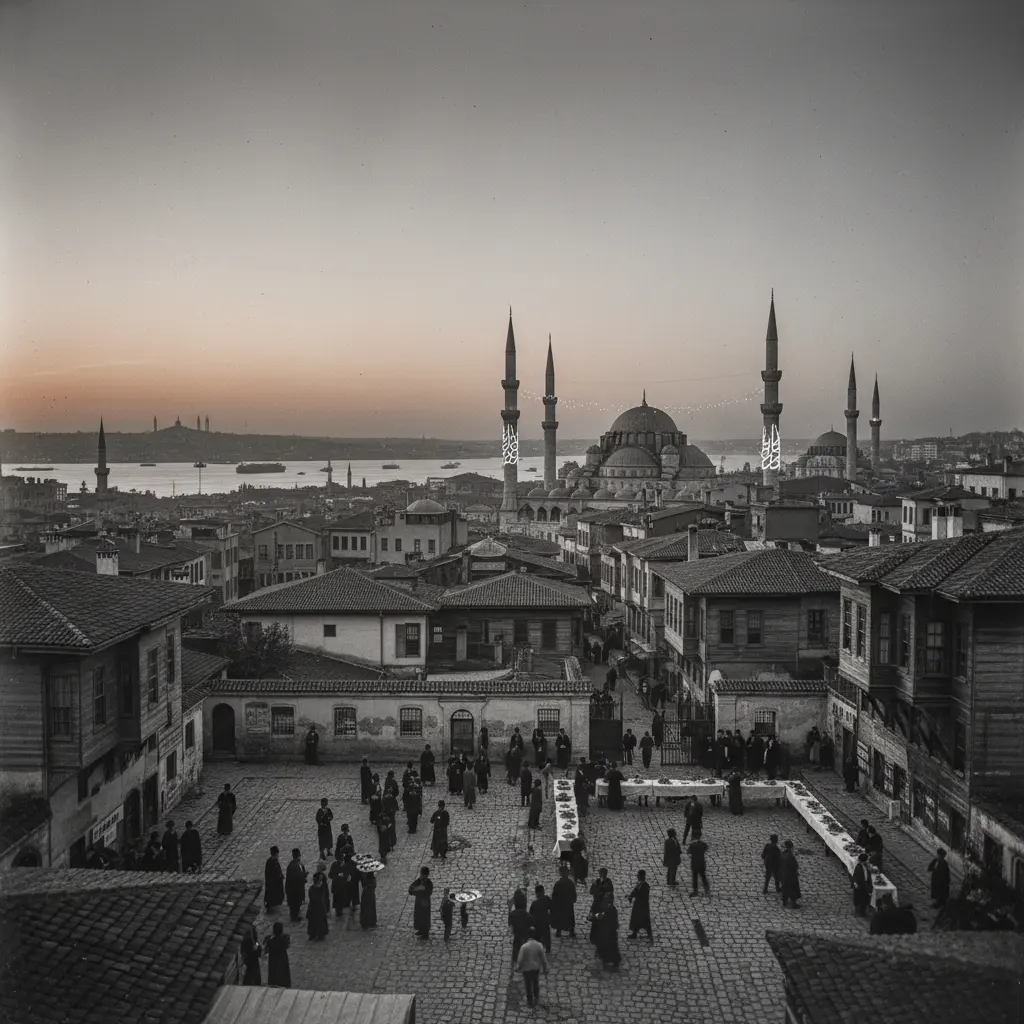
The scent of history hangs heavy in the air, mingling with the phantom aroma of freshly baked bread and the distant echo of muezzins calling to prayer. We are transported back 130 years to Istanbul, a city where tradition and modernity danced a delicate tango, a dance vividly captured by the masterful pen of Ahmet Rasim. A prolific writer, essayist, and journalist, Rasim’s true fame blossomed between 1897 and 1899 with his ‘City Letters’ published in the Malumat newspaper. These letters, a captivating blend of anecdotes, conversations, and essays, offer a kaleidoscope of Istanbul’s vibrant life, its bustling markets, its cherished traditions, and the everyday dramas of its people.
Ramadan Through Rasim’s Lens: A Tale of Two Worlds
Rasim’s writings on Ramadan, commencing with a heartfelt prayer for blessings upon all believers, delve into the intriguing dichotomy between those who observed the fast and those who did not. He paints a picture of a society where the lines between piety and pretense were often blurred, leading to amusing and sometimes poignant observations.
The Art of Disguise: Fasting or Feigning?
Rasim, with his characteristic wit, describes the subtle cues that distinguished a true fasting individual from one merely putting on a show. He recounts a conversation with his friend, the ‘Ayasağa letter-writer,’ who possessed an uncanny ability to discern the genuine from the fake. “How did you acquire this talent?” Rasim inquired. The letter-writer’s response was simple yet profound: “Nothing could be easier. First, I look at their face. If they have the face of a writer, they are fasting. If they have the face of a director, they are not. Because one of them is always hungry, and the other is always full, in every season of the year.” This humorous anecdote underscores the societal pressures and personal choices that shaped the experience of Ramadan in Old Istanbul.
Rasim also touches upon the physical toll of fasting, describing how on the first day, many would experience trembling hands and incessant yawning. He even consulted a doctor about these symptoms, who simply replied, “All of these will pass after the Bayram.”
The Unforgettable Cigarette and a Moment of Forgetfulness
In another delightful anecdote, Rasim recounts the story of a man who, despite his pious facade, harbored a secret desire for a cigarette. Having forgotten to lock his door, his nephew walked in to find him taking a few puffs. The nephew’s surprised exclamation, “Uncle, you too?” was met with a quick-witted, albeit unbelievable, reply: “A cigarette left over from suhoor!” Rasim playfully muses, “Who knows how many meters long it must have been!”
The interplay between a policeman and a smoker further illustrates the era’s social dynamics. “Sir, are you smoking?” the policeman asks. The smoker, flustered, replies, “I forgot.” “Forgot what?” “That I was in the street.” These snippets from Rasim’s writings offer a charming and insightful look into the everyday lives and humorous predicaments of Istanbul’s residents during Ramadan.
Dreams and Places: A Modern Echo of Istanbul’s Spirit
While Rasim’s observations transport us to the past, the spirit of Istanbul’s artistic and cultural vibrancy continues to thrive. A new photography exhibition, ‘Panorama: Dreams and Places,’ at Istanbul Modern’s first-floor galleries, showcases the works of 18 artists from different generations, produced since the 2010s. This comprehensive selection invites viewers to reconsider their relationship with the world through imaginative landscapes, fictional portraits, and alternative spatial perceptions.
The exhibition, the first group show in the museum’s new building, features a diverse range of works, from installations to moving images, artificial intelligence applications to archival materials. Artists such as Larissa Araz, İlgen Arzık, Emre Baykal, and Silva Bingaz contribute to this rich tapestry of contemporary art. Curated by Çelenk Bafra, Artistic Director of Istanbul Modern, and Demet Yıldız Dinçer, Photography Curator, with contributions from Selen Erkal and Şevval Yürüten from the museum’s curatorial department, ‘Panorama: Dreams and Places’ challenges us to rethink the boundaries of photography and its place in contemporary art. The exhibition is open until October 18th, offering a modern counterpoint to Ahmet Rasim’s historical observations, yet both reflecting the enduring creativity and spirit of Istanbul.
Source: http://mobil.hurriyet.com.tr/yazarlar/ihsan-yilmaz/130-yil-once-istanbulda-ramazan-43112393