


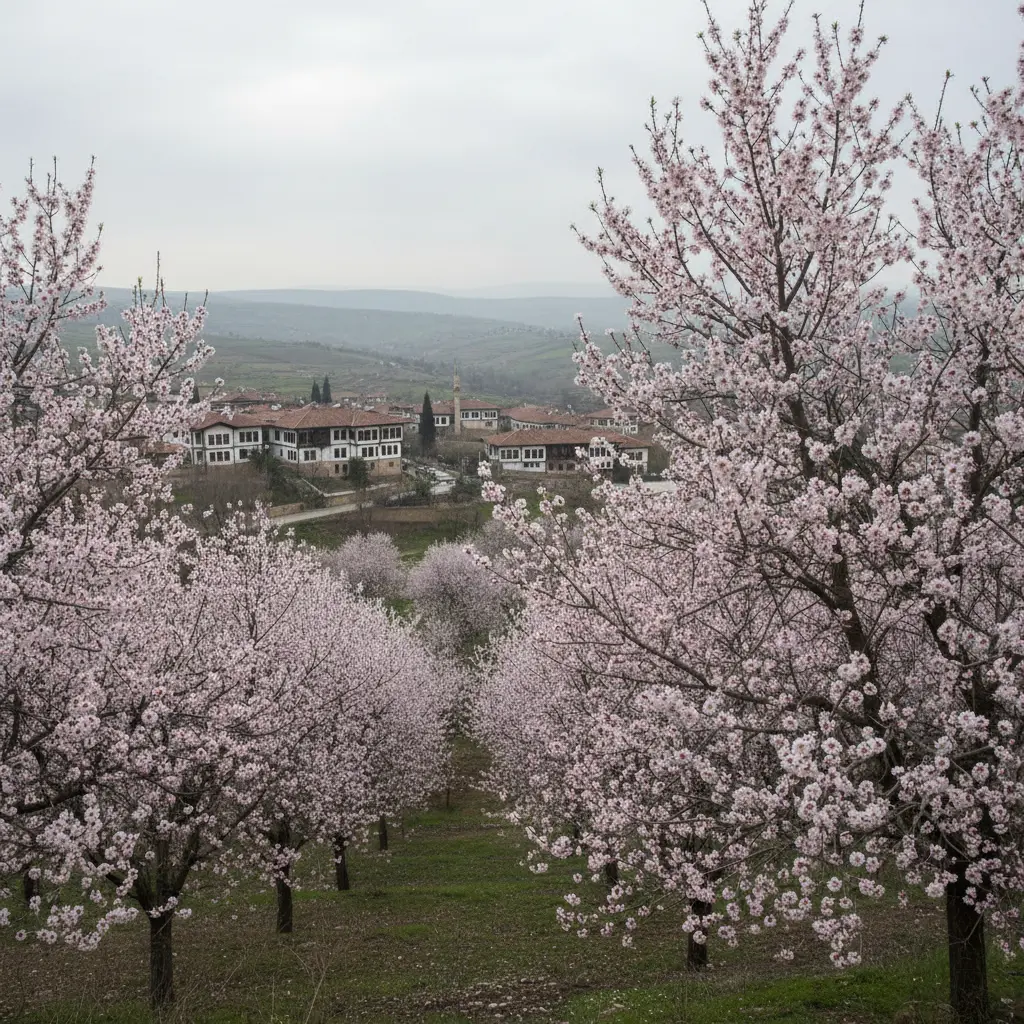
Early Blossom in Beypazarı: A Sign of Climate Volatility
Ankara, February 27 – Almond trees in the Beypazarı district of Ankara have unexpectedly burst into bloom, weeks ahead of their usual schedule. This phenomenon, observed on February 27, 2026, has been attributed to unseasonably warm weather, even as higher elevations in the region continue to experience snowfall.
The early blossoming was particularly noticeable in the garden of İsmail Yılmaz in the Kuyumcutekke neighborhood. Yılmaz expressed his apprehension regarding the unpredictable climate.
Local Concerns Over Frost Damage
“The weather has been fluctuating between warm and cold,” Yılmaz stated. “
I believe these blossoms will be hit by severe cold. We still have March ahead of us.” His concerns highlight a broader worry among local farmers and residents about the impact of climate change on agricultural cycles and potential crop losses.
The region has seen a mix of weather conditions, with some areas experiencing snowfall while others enjoy sunny, spring-like days. This contrast underscores the erratic nature of the current climate, creating uncertainty for agricultural practices that rely on stable seasonal patterns.
Impact on Agriculture and Local Economy
The premature blooming of almond trees is not merely a botanical curiosity; it carries significant economic implications for the Beypazarı region. Almond cultivation is an important part of the local agricultural economy, and a damaged crop due to late frosts could lead to substantial financial losses for farmers like İsmail Yılmaz.
Agricultural experts often warn that early blossoming, while seemingly a sign of an early spring, exposes delicate flowers and young fruits to the risk of freezing temperatures that are common in March. This vulnerability means that the current beautiful display of blossoms could quickly turn into a setback for the upcoming harvest season.
Broader Climate Trends in Turkey
This incident in Beypazarı is part of a larger pattern of changing weather phenomena observed across Turkey. Scientists and environmentalists have noted an increase in extreme weather events, including unseasonal warmth followed by sudden cold snaps, prolonged droughts, and intense rainfall.
These changes are consistent with global climate change trends, which are increasingly affecting local ecosystems and traditional agricultural calendars. The Beypazarı case serves as a vivid example of how these macro-level changes manifest at the local level, directly impacting the livelihoods of communities.
Community and Official Response
While there has been no immediate official response from agricultural ministries or local government bodies regarding the early almond blossom, the concerns raised by residents like Yılmaz are likely to prompt further discussion on climate resilience strategies for local agriculture.
Farmers in the region may need to consider adopting new techniques, such as frost protection measures or diversifying their crops, to mitigate the risks associated with unpredictable weather patterns. The event serves as a reminder of the urgent need for adaptation in the face of a changing climate.
The situation in Beypazarı will continue to be monitored as the region progresses through late winter and early spring, with particular attention to how the weather unfolds in March and its ultimate impact on the almond crop.
Source: Anadolu Agency