


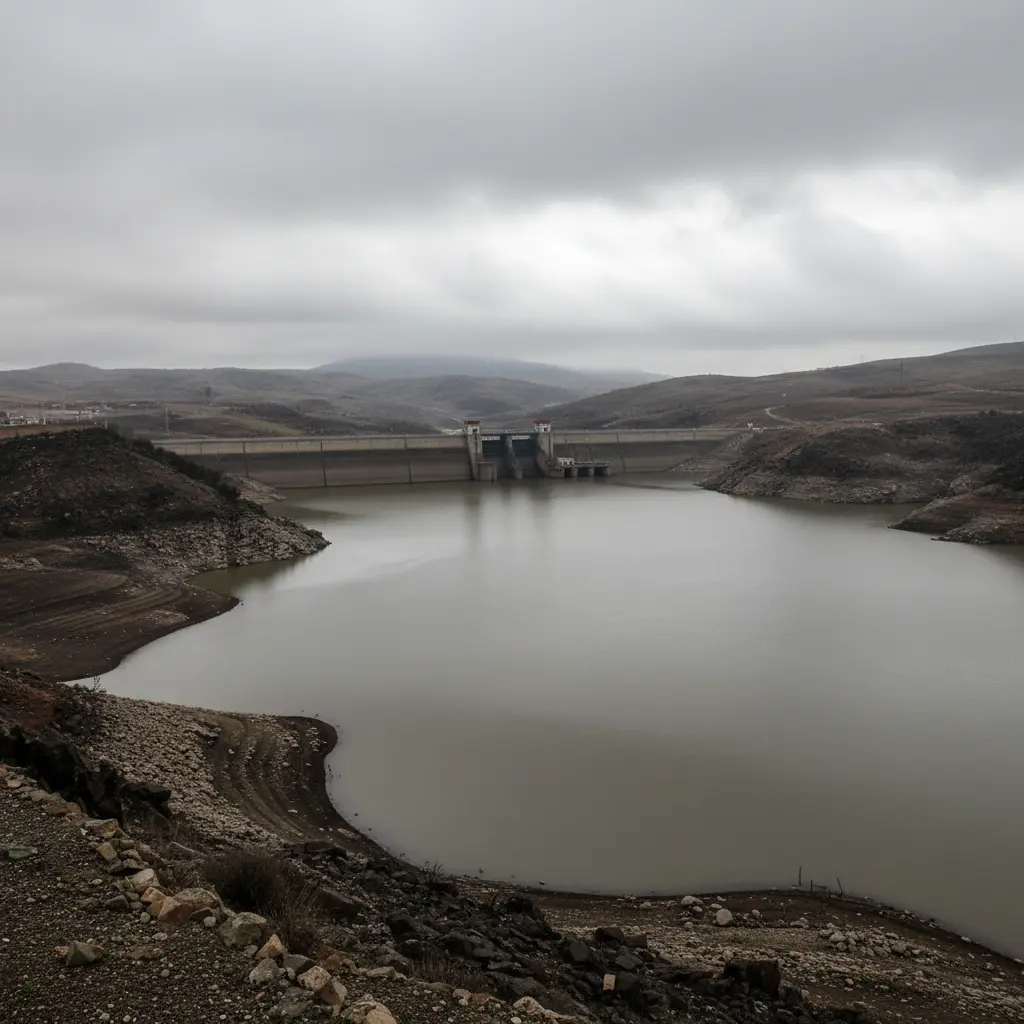
Increased Rainfall Offers Partial Relief to Ankara’s Dams, Drought Threat Remains
Ankara, March 6, 2026 – Heavy snowfall and rainfall in Ankara during the first two months of the year have led to a significant increase in the amount of water entering the city’s dams. Dursun Yıldız, President of the Water Policies Association, analyzing data from the Ankara Water and Sewerage Administration (ASKİ) General Directorate’s Dam Information System, stated that the amount of water entering the dams in January 2026 nearly doubled compared to the same month last year, reaching 55 million cubic meters. In February, 236 million cubic meters of water entered the dams, marking the second-highest February figure in the last 26 years.
Yıldız noted that while the precipitation positively impacted dam occupancy rates, it is crucial to continue using water efficiently in Ankara. He emphasized, “The increase in water levels in Ankara’s dams has brought partial relief, but the threat of hydrological drought from last year has not been completely eliminated.”
Significant Increase in Water Entering Dams
“Since the beginning of this year, there has been a large increase in the amount of water entering Ankara’s dams, especially in February,” said Yıldız. “In January 2026, the amount of water entering the dams increased by approximately twofold compared to January of last year, reaching 55 million cubic meters. In February, 21 times more water entered Ankara’s dams than in the previous year.”
According to ASKİ data, the 236 million cubic meters of water that entered the dams in February 2026 was the second-highest amount recorded in February over the last 26 years. The highest was in February 2010, when 261 million cubic meters of water entered the dams. The snowfall in the catchment areas of Ankara’s water supply dams in January and February, followed by rain, caused a rapid increase in water levels.
This situation positively affected the dam occupancy rates. As of March 4, 2026, the total occupancy rate of the dams was 27.34%, with a usable active water rate of 18.88%.
As of March 5, according to ASKİ’s data, the dam occupancy rates in Ankara were as follows:
- Akyar Dam: 47.54%
- Çamlıdere Dam: 23.23%
- Çubuk 2 Dam: 41.86%
- Eğrekkaya Dam: 47.95%
- Kargalı Dam: 100%
- Kavşakkaya Dam: 34.92%
- Kesikköprü Dam: 100%
- Kurtboğazı Dam: 33.33%
- Peçenek Dam: 21.74%
Notably, the total occupancy rate of Çamlıdere Dam reached 23.50%, surpassing the amount of water drawn from Kesikköprü Dam.
Efficient Use and Continued Controls are Essential
Yıldız reiterated previous statements by the association, highlighting that 65% of the water entering Ankara’s dams typically arrives in January, February, March, and April. He had previously indicated a potential increase in water levels in the coming months. “Last year was very dry, and the expected level of rainfall in autumn caused concerns about Ankara’s water supply security. However, the significant increase in water flow, especially after the February rains, has compensated for this deficit.”
Despite the recent improvements, Yıldız stressed that for the dams, which fell below dead storage levels at the end of last year, to reach normal operating levels, rainfall in March and April must also be above average. This would further reduce the current 46% proportion of water drawn from Kesikköprü in the total water supply.
“Therefore, while the increase in water levels in Ankara’s dams has brought partial relief, the threat of hydrological drought from last year has not been completely eliminated,” Yıldız concluded. He urged continued efficient water use, monitoring of excessive water consumption, and efforts to minimize water loss and leakage in Ankara.
Source: Ankara Water and Sewerage Administration (ASKİ), Water Policies Association