


400-Year History of Time Exhibited in Istanbul
Istanbul, March 24 – A captivating exhibition, “Magnificent Pocket Watches from the Mehmet Çebi Collection,” has opened its doors to art enthusiasts at the Tophane-i Amire Culture and Art Center in Beyoğlu. Curated from the extensive collection of Mehmet Çebi, a renowned collector of traditional arts, the exhibition traces the 400-year journey of pocket watchmaking, from the 16th to the early 20th century.
The exhibition offers a multi-layered perspective on the technical evolution of pocket watchmaking, the artistic sensibilities of the era, and its role in diplomatic history. It highlights the Ottoman market’s significant influence on global watchmakers, showcasing how their creations were tailored for this discerning clientele.
A Collection Born from Passion and Dedication
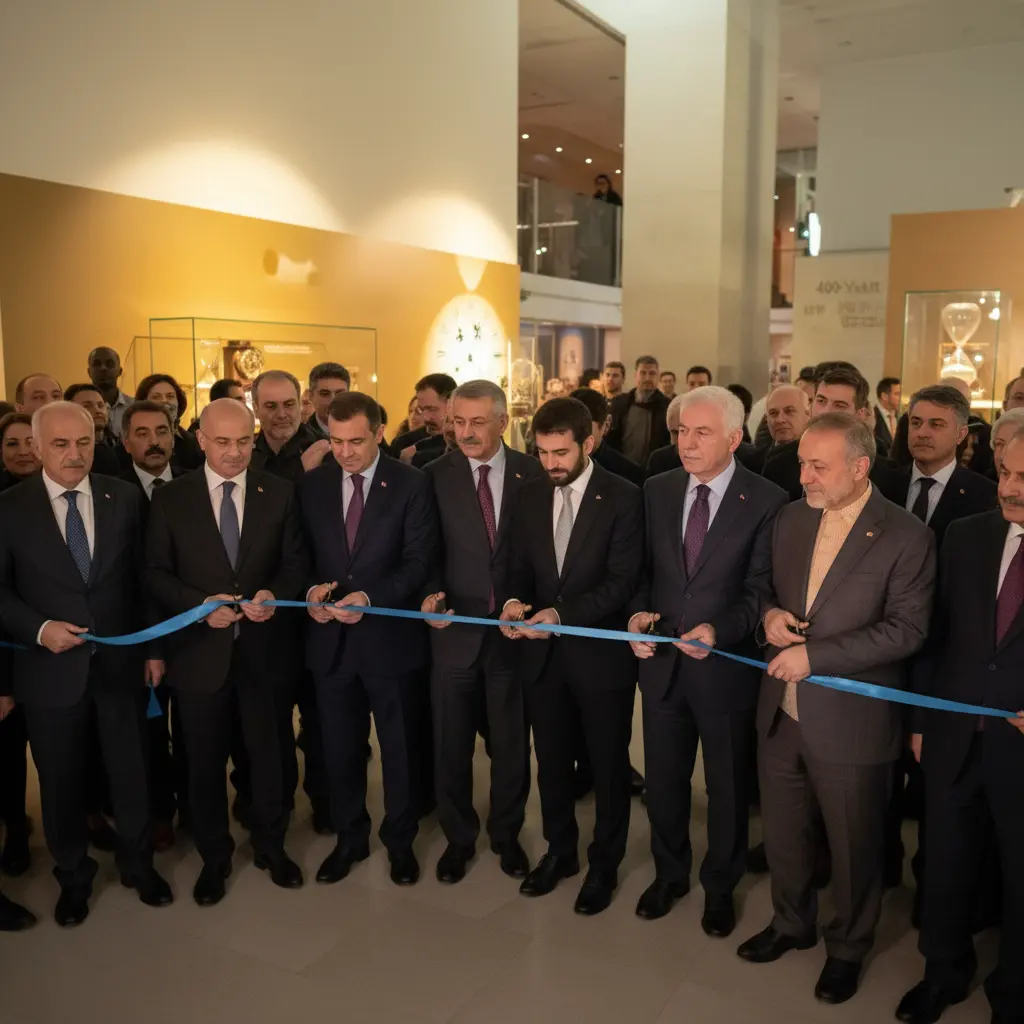
Mehmet Çebi, also a leading collector in Islamic artifacts and Ottoman calligraphy, meticulously assembled this collection over many years. The opening ceremony was attended by prominent figures including Istanbul Governor Davut Gül, Istanbul Provincial Police Chief Selami Yıldız, President of the Turkish Manuscript Works Institution Coşkun Yılmaz, and Fatih Mayor Mehmet Ergün Turan, alongside fellow collectors and journalists.
Governor Gül, after cutting the ribbon, toured the exhibition, paying special attention to a section featuring watches specifically designed as gifts for the Ottoman Palace, and received detailed information about the artifacts.
Insights from the Curator and Visitors
Yusuf Şimşekçaktı, the collection’s consultant, revealed that the exhibition is the culmination of two years of dedicated work. “We are exhibiting 305 watches from Mehmet Çebi’s collection. We embarked on this journey knowing it would be a challenging, pioneering endeavor. We are grateful to have completed this collection over a two-year period,” Şimşekçaktı stated. He added that the collection predominantly features watches from the 18th, 19th, and mid-20th centuries, ranging from chain-driven mechanisms to more advanced designs. “We want everyone to come and see this. There are many works belonging to the Ottoman period; the whole world should see this. There is very important information for the future, and we plan to turn this into a museum eventually. God willing, we will have a second catalog and a second exhibition soon.”
Journalist Fatih Altaylı, a visitor to the exhibition, praised its quality, saying, “This is a museum-quality work. It’s not a collection that a normal, sane person would put together. It’s magnificent. Truly, there are technologically very strange watches, watches that a watch enthusiast would be happy to see. I was very impressed here, and frankly, I will come back and visit again. I can say it’s the best single-piece watch collection I’ve ever seen.”
A Journey Through Art and Diplomacy
The exhibition not only presents watches of high aesthetic value but also illuminates the historical connections between European watchmaking mastery and Ottoman court culture. The hundreds of selected pieces on display showcase the most striking examples of horological art, distinguished by their historical origins, rich decorative features, and advanced mechanical systems.
The intricate gold and silver craftsmanship (savat) on the watch cases, combined with the colorful and detailed enamel techniques developed by Geneva enamel masters from the 18th century onwards, transform these objects from mere time-measuring devices into true works of art. The collection also includes rare examples of 17th-century French Blois enamel tradition, elegant chatelaine watches fashionable among aristocratic circles and worn attached to belts with chains, and special productions featuring complex alarm mechanisms.
A particularly striking section of the exhibition is dedicated to special watches produced within the context of inter-state diplomatic relations. These unique pieces include historically significant items such as the pocket watch presented by Russian Tsar Nicholas I to Queen Victoria of England at Windsor Castle in 1844, bearing the Tsar’s portrait.
Hope for a Future Watch Museum in Istanbul
Mehmet Çebi, known for establishing the Hilye-i Şerif and Rosary Museum in Istanbul, has sparked greater anticipation within art circles with this collection. The goal is to display the more than 300 extraordinary pieces under the roof of a permanent museum in the future. Discussions are already underway for a museum that would significantly contribute to both Turkey’s cultural life and the international horological world.
The exhibition will be open to visitors free of charge from March 24 to April 9, between 10:00 AM and 6:00 PM, at the Tophane-i Amire Culture and Art Center.
Source: iha.com.tr