

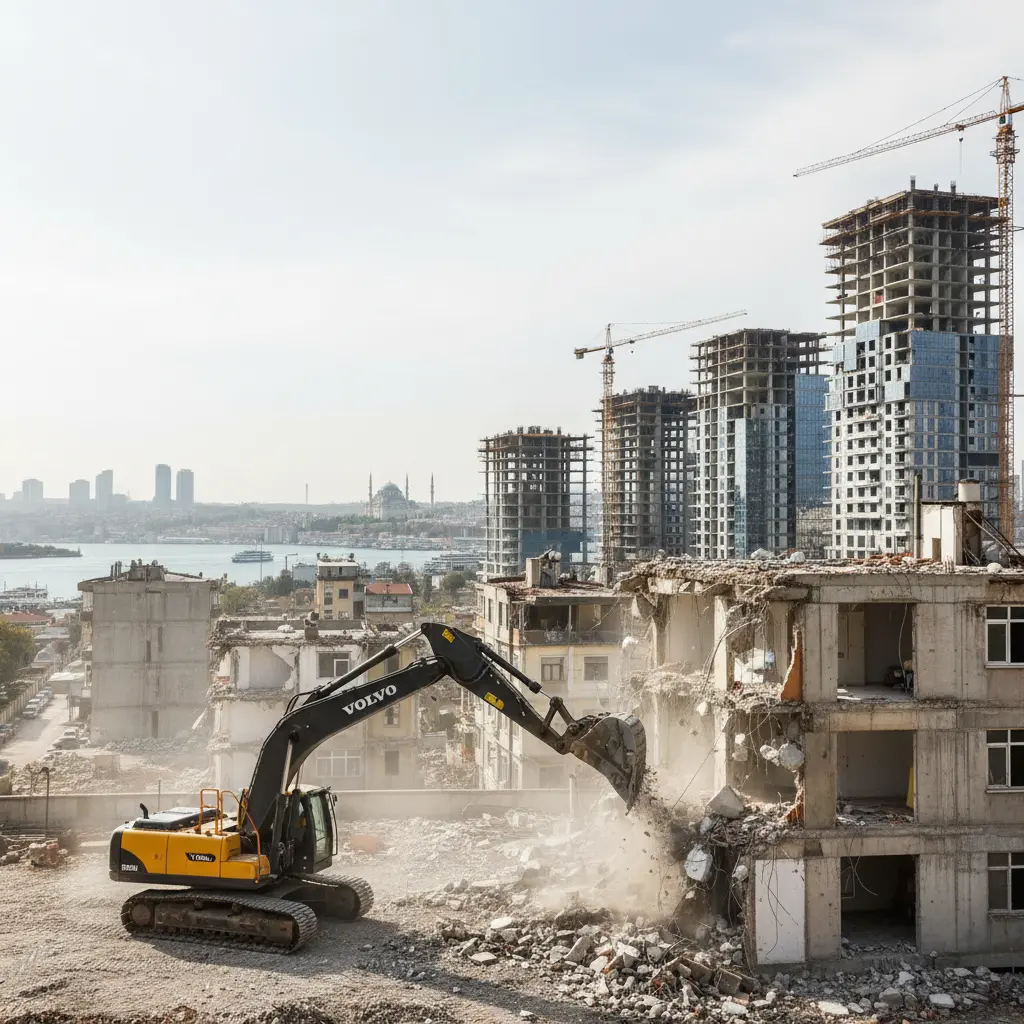
Urban transformation remains a top priority for both citizens and the government in Istanbul, a city grappling with 1.5 million risky housing units. While significant progress has been made in recent years through various support programs, the pace of advancement varies sharply across different districts. An analysis by Denge Real Estate Valuation reveals a complex picture of Istanbul’s transformation map, characterized by distinctly divergent speeds, opportunities, and bottlenecks. Here are the key findings:
Bahçelievler Leads Urban Transformation Efforts
Bahçelievler stands out as the most striking example of transformation. Under the ‘Half of It Is Ours’ campaign, Bahçelievler single-handedly implemented approximately 5,781 of the 25,000 independent unit transformations carried out across Istanbul in 2024 and 2025, making it a leader in urban transformation across Turkey. In 2025, the district achieved a record momentum with the demolition of 1,087 buildings and the issuance of 641 construction permits.
Esenler and Küçükçekmece Show Significant Progress
In Esenler, 56,000 of the 98,160 risky structures identified over 12 years have been renewed. This process has been driven by both public and private sector partnerships. The district is poised to be the first in Turkey to implement a smart city transformation model.
In Küçükçekmece, out of 7,307 risky structures identified since 2012, the demolition of 6,709 has been completed.
Legal Processes Slow Down Transformation in Some Areas
In Kartal, 5,203 of 5,717 risky structures have been transformed over the last 10 years. In Kağıthane, 5,500 independent units were demolished, and 9,000 new housing units were built between 2019 and 2023.
However, Fikirtepe has seen little actual progress in many parcels due to ownership disputes and zoning issues. In Adalar, comprehensive transformation programs have not been initiated due to its protected status, while in Arnavutköy, the majority of the building stock is relatively new.
Legal processes also contribute to the slowdown of transformation; 43 lawsuits filed in five districts directly impact ongoing projects.