


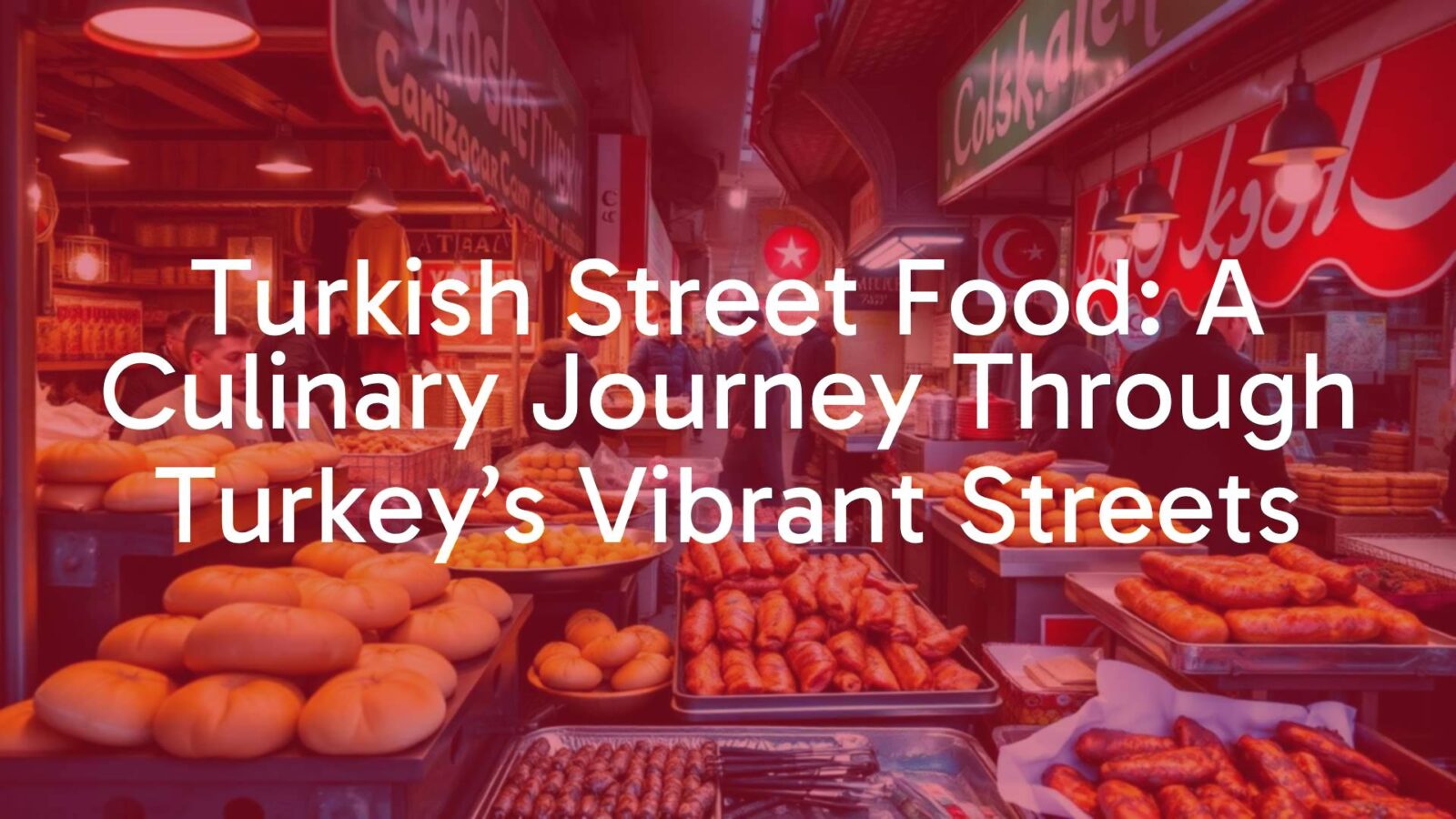
Turkish street food is more than a quick snack. It’s a lively, great-smelling way to experience Turkish culture, with food sold on busy streets, old bazaars, and along the water. It’s part of everyday life and includes many dishes shaped by long-held cooking traditions, Ottoman influence, and local styles from different regions. You’ll find foods that are savory and sweet, heavy and light, and they often taste more “real” than the same type of dish in a formal restaurant.
What Is Turkish Street Food?
Turkish street food is food made and sold in public places by vendors, meant to be eaten right away. It’s known for being fresh, low-cost, and full of variety, with something for every taste and any time of day. In many Turkish cities, it’s part of the daily rhythm: you hear sizzling grills, vendors calling out, and you smell spices, roasted meat, and fresh bread that make it hard to walk past without stopping.

Historical Roots and Cultural Importance
Street food in Turkey goes back hundreds of years and connects closely with Turkey’s history as a meeting point for many cultures. During the Ottoman Empire, quick, easy meals mattered for merchants, travelers, and people working in cities. Many street foods we see today come from that time, kept alive through families and street sellers who have made them better over generations.
Turkish street food also matters socially. People from all backgrounds eat it, from students to office workers. It brings people together, since many stalls become small meeting spots where people chat while drinking tea. For many, it also feels like home-familiar tastes linked to daily life. In its own way, street food tells the story of Turkey.
Common Locations to Find Turkish Street Food
Finding Turkish street food is easy because it’s almost everywhere. Big cities like Istanbul, Izmir, and Ankara can feel like open-air food courts. Vendors often set up near metro stops, ferry docks, market entrances, and tourist areas, ready for crowds. In Istanbul, places like the Grand Bazaar and Spice Market are famous for shopping, but they’re also great for eating.
If you walk away from the main tourist streets, you’ll often find small neighborhood carts and simple local shops that people love. Go around lunchtime or early evening, and you’ll likely see locals lining up for their favorites. Waterfront walks-especially near the Bosphorus-also have their own street food style, often with amazing views.
Most Popular Turkish Street Foods
Simit: The Sesame-Covered Street Bread
Simit is one of the most common street foods in Turkey. It’s a round bread covered in toasted sesame seeds, crisp outside and chewy inside. Many vendors sell simit from carts with glass cases, and some carry big stacks that stand out from far away.
People often eat it plain, but it also goes well with cream cheese, aged cheese, or a simple glass of Turkish tea. It’s basic, easy to find, and very satisfying-one of the clearest examples of how good simple Turkish food can be.

Döner: Rotisserie Meat Wraps and Sandwiches
Döner kebab is Turkey’s most well-known food abroad, but eating it fresh on the street in Turkey feels different. Thin slices of marinated meat (usually lamb, beef, or chicken) cook on a vertical rotisserie and are shaved off as needed. It’s served in warm flatbread (like lavash or pita) with vegetables such as lettuce, tomato, and onion, and sometimes a yogurt-based or spicy sauce. It’s quick, filling, and packed with flavor.
A good döner depends on the marinade and the slow cooking that keeps the meat juicy. You can order it as a full plate with rice and salad, or as a wrap for eating on the go. It’s a reliable meal at almost any hour.
Lahmacun: Crispy Flatbread with Spiced Meat
Lahmacun is often called “Turkish pizza,” but it’s thinner, lighter, and crispier. It’s a round, thin dough topped with minced meat (lamb or beef), chopped vegetables (tomatoes, peppers, onions), and herbs and spices. It bakes fast in a very hot oven, so the edges turn nicely crisp.
Many locals squeeze lemon over it, add a little sumac, then place parsley and a few slices of onion and tomato on top. Then they roll it up and eat it like a wrap. It’s fresh, fragrant, and filling without being heavy.
Balık Ekmek: Fish Sandwich by the Bosphorus
Balık ekmek (“fish bread”) is a classic Istanbul street food: a grilled fish sandwich. You’ll mostly see it near the water in places like Eminönü and Karaköy, where boats and grills are part of the scene. The fish (often mackerel) goes into crusty white bread with raw onion, lettuce, and lemon.
Because it’s simple, the fish taste stands out. Eating balık ekmek by the Bosphorus-hearing seagulls and watching ferries-feels like an Istanbul tradition you should try at least once.

Midye Dolma: Stuffed Mussels
Midye dolma is a popular seafood street snack. Mussels are cooked and then filled with seasoned rice mixed with pine nuts, currants, herbs, and spices. Vendors display them on big trays, and you usually buy them one by one.
People eat them by hand: squeeze lemon on top, then use the empty half of the shell like a spoon. The lemon makes the rich rice and salty mussel taste brighter. Many people find them hard to stop eating once they start.
Kumpir: Loaded Baked Potatoes
Kumpir takes the baked potato much further than usual. A large potato is baked, cut open, and mashed inside with butter and cheese until creamy. Then you pick toppings from a long list-olives, pickles, corn, sausage, different salads, and sauces.
You end up with a filling meal made the way you like it. In Istanbul, Ortaköy is especially known for kumpir stalls, where picking toppings is part of the fun.
Kokoreç: Grilled Lamb Intestines
Kokoreç is for people who like to try bold foods. It’s made from seasoned lamb intestines wrapped around a skewer and grilled slowly over charcoal. After cooking, it’s chopped on a hot griddle with tomatoes, green peppers, and spices like oregano and red pepper flakes, then served in bread.
It’s a common late-night food, often eaten after going out. The taste is rich and very savory, and the texture is part of what people love about it.
Islak Hamburger: Steamed Burger
Islak hamburger (“wet burger”) is a well-known Istanbul snack, especially around Taksim Square. It’s a small beef patty in a soft bun that gets dipped in a garlicky tomato sauce, then steamed in a glass case. Steaming makes the bun very soft and soaked with sauce.
It’s messy, strong in flavor, and easy to crave-great for a quick bite, especially late at night.
Gözleme: Stuffed Anatolian Flatbreads
Gözleme are thin flatbreads filled with savory ingredients, often made fresh in front of you. The dough is rolled very thin, filled with things like spinach and cheese, minced meat, potatoes, or herbs, then folded and cooked on a curved griddle called a sac until golden and lightly crisp.
Served hot, gözleme works as a snack or a light meal. It’s common in markets and along travel routes, and it fits breakfast, lunch, or an afternoon break.
Tantuni: Spiced Meat in Lavash
Tantuni comes from Mersin and is known for its spicy, bright flavor. Thin slices of beef or lamb are cooked quickly on a flat griddle with cottonseed oil, tomatoes, and peppers, then seasoned with sumac and red pepper flakes. The mixture is wrapped tightly in lavash, often with parsley and onion.
The cooking style and spices give tantuni its punch. It’s often served with pickles and a glass of ayran, making it a strong, lively street meal.
Çiğ Köfte: Spiced Raw Seed or Meat Balls
Çiğ köfte was traditionally made with raw meat, but today the most common street version is vegetarian and uses fine bulgur. The bulgur is kneaded for a long time with tomato paste, red pepper paste, onion, garlic, and spices like isot (Urfa pepper), cumin, and mint until it becomes smooth and paste-like.
It’s often served in lettuce leaves with lemon and pomegranate molasses. The taste is spicy, tangy, and savory, and it can feel surprisingly light and fresh for something so flavorful.
Börek: Savory Stuffed Pastries
Börek is a big family of savory pastries made with thin dough layers (similar to phyllo) and filled with cheese, spinach, minced meat, or potatoes. Some types are baked in trays and cut into squares (like su böreği, which is soft and a bit like pasta), while others are rolled into small shapes (like sigara böreği, “cigarette börek”).
Börek can be flaky and crisp or soft and rich. People often eat it for breakfast or as a snack with tea, and it’s popular with both locals and visitors.
Iconic Turkish Street Sweets and Desserts
Baklava: Layers of Pastry with Syrup
Baklava is often linked to restaurants, but you can easily buy it from street pastry shops and dessert stores. Thin layers of phyllo are filled with crushed pistachios or walnuts, baked until golden, then soaked in sweet syrup. It’s flaky, nutty, and very sweet.
Baklava comes from Ottoman-era cooking traditions and is often enjoyed slowly with strong Turkish coffee. It’s famous worldwide for a reason.
Halka Tatlısı: Turkish Churro
Halka tatlısı (“ring dessert”) is similar to a churro, but it has its own style. Ring-shaped dough is fried until crisp, then dipped right away into cold sugar syrup so it soaks up sweetness. You get a crunchy outside and a soft inside.
Street vendors often sell it from small carts. It’s cheap, simple, and a common sweet after a savory meal.
Dondurma: Stretchy Turkish Ice Cream
Dondurma is more than regular ice cream. It comes from Kahramanmaraş and is known for being chewy and slow to melt, thanks to salep (made from orchid roots) and mastic (a natural resin). Vendors often serve it with playful tricks, using long metal tools to flip and stretch it before handing it to you.
After the show, the ice cream itself is rich and creamy, with a texture you don’t forget. Popular flavors include plain, pistachio, and sour cherry.

Kabak Tatlısı: Pumpkin Dessert
Kabak tatlısı is a comforting pumpkin dessert made by slowly cooking pumpkin pieces in sugar syrup until soft and shiny, sometimes with clove or cinnamon. It’s often served cold and topped with walnuts or clotted cream (kaymak).
You can find it in sweet shops and sometimes from vendors in autumn and winter. It’s a lighter choice compared to heavy pastries, and it highlights the natural sweetness of pumpkin.
Katmer: Crisp Pistachio Pastry
Katmer is a thin, crisp pastry from Gaziantep, though you can find it in specialty shops elsewhere too. The dough is stretched very thin, then filled with pistachios, sugar, and often kaymak. It’s folded, lightly fried until crisp, and served warm with powdered sugar on top.
People eat it for breakfast or as a special afternoon treat. The mix of crisp pastry, creamy filling, and sweet nuts makes it stand out.
Sambali: Moist Semolina Cake
Sambali is a dense, moist semolina cake flavored with lemon or orange zest and soaked in light syrup. It often has a slightly caramelized top and may be decorated with almonds. You’ll see it in many pastry shops and small sweet stalls.
It’s simple but very satisfying, especially with tea or coffee. Sambali is a good example of classic Turkish home-style baking.
Everyday Snacks and Drinks on Turkish Streets
Kestane: Roasted Chestnuts
In cool weather, the smell of roasted chestnuts (kestane) is everywhere. Vendors roast chestnuts over charcoal until the shells split, then serve them in paper cones. They’re warm, a little sweet, and great for cold days.
Kestane is a classic fall and winter snack, strongly linked to the cozy feel of Turkish city streets in that season.

Mısır: Roasted or Boiled Corn
Corn is a common street snack, especially in warm months. You can buy it roasted on a grill (közde mısır) for a smoky taste, or boiled (haşlanmış mısır) for something soft and juicy. Most people add a little salt.
It’s simple, natural, and filling, and it’s easy to eat while walking in parks or along the sea.
Fresh Fruit Juice and Seasonal Fruits
Many street stalls sell fresh-squeezed juices, especially orange, pomegranate, and cherry. They’re made right in front of you and taste bright and natural. Pomegranate juice is especially popular in winter for its tart taste.
You’ll also see stands with seasonal fruit-cherries, mulberries, figs, watermelon-sold whole or in small cups. It’s an easy way to snack and stay hydrated during the day.
Regional Variations in Turkish Street Food
Differences between Istanbul and Anatolian Cities
Istanbul has a huge range of street food, including national favorites and foods brought in from many parts of Turkey. The size and variety match Istanbul’s role as a major, mixed city. But if you travel to Anatolian cities, you often find stronger local identity in the street food, with dishes and flavors that may be harder to spot in Istanbul.
Döner is sold everywhere, but the spice mix and serving style can change. Istanbul may feel more “standard,” while places like Adana or Gaziantep have their own kebab styles, often with different cuts of meat or hotter seasoning.
Local Specialties and Unique Regional Dishes
Many regions are proud of their local street foods. Gaziantep, often seen as a food capital, offers special kebabs, local pastries, and dishes like beyran çorbası (a filling lamb soup often eaten for breakfast). Mersin is best known for tantuni. The Black Sea area has foods like kuymak (a cheesy cornmeal dish) and many fish snacks.
Even small towns can have their own version of a famous dish-or something you can’t find elsewhere. Trying street food in different parts of Turkey is a great way to learn how diverse Turkish cooking can be.
Health, Safety, and Etiquette
Tips for Enjoying Street Food Safely
Turkish street food is usually safe and tastes great, but a few simple habits help. Choose busy stalls where food moves fast, since that often means fresher ingredients. Check basic cleanliness: is the work area clean, does the vendor handle food well, and is it stored correctly? For grilled foods, make sure meat looks fully cooked. For juices and produce, look for clean equipment.
You can also watch what locals do and how they choose stalls. If something looks or smells off, just move on. Many vendors take real pride in what they sell and keep good standards.
Dietary Considerations and Allergen Awareness
Many Turkish street foods include meat, but vegetarians still have plenty of choices: spinach-and-cheese gözleme, vegetarian çiğ köfte, kumpir with veggie toppings, and simit. If you have allergies, be careful, since it may be hard to ask about every ingredient if you don’t speak the language.
Common allergens include gluten (bread and pastries), dairy (cheese, yogurt, some desserts), and nuts (especially pistachios in baklava and katmer). If your allergy is serious, it helps to carry a translation card or choose simple foods you can easily identify. Many vendors understand requests like “etsiz” (meatless) or “süt ürünleri olmadan” (without dairy).
Cultural Etiquette When Eating Street Food in Turkey
Street food in Turkey is casual. There isn’t much special etiquette beyond being polite. It’s normal to eat standing up or while walking. Many places prefer cash, so it helps to have small bills. Sometimes a vendor may offer a small taste, which is a friendly gesture.
Locals often drink tea or ayran (a salty yogurt drink) with their food. Saying “teşekkür ederim” (thank you) after buying something is always welcome.
Turkish Street Food FAQs
Is Street Food in Turkey Affordable?
Yes. One big reason people love Turkish street food is the price. You can get a filling snack or meal for much less than a restaurant. A simit may cost only a few lira, and even a larger item like döner or kumpir is usually easy on the budget. That makes it great for travelers and a daily habit for locals.
Low prices don’t mean low quality. Many vendors keep costs down by working fast and selling directly to customers, without the overhead of a full restaurant.
Can Vegetarians Find Options at Turkish Street Stalls?
Yes. Even though many famous street foods include meat, vegetarian options are common. Vegetarian çiğ köfte is sold almost everywhere, and gözleme can be made with spinach, potatoes, or cheese. With kumpir, you can build a full meal from vegetables and salads. Simit and corn are also safe picks.
Many börek types use cheese or vegetables too. Ask for “etsiz” (meatless) and vendors will often point you to what works. Fresh fruit and juices are also easy to find.
How Do I Order Like a Local?
Ordering is usually simple. Point to what you want and show the number with your fingers. For döner, you can say “dürüm” (wrap) or “ekmek arası” (in bread). For midye dolma, you can ask “kaç tane?” (how many?) and choose the amount. Helpful phrases include “bir tane” (one), “iki tane” (two), and “teşekkür ederim” (thank you).
Vendors are usually friendly and used to tourists. Watch how others order, copy what they do, and you’ll get comfortable quickly.
Final Thoughts on Turkish Street Food
Turkish street food is more than food that keeps you full. It’s a living part of the country’s identity, and it lets you connect with Turkish culture through smell, taste, and everyday street life. It shows Turkish creativity and hospitality, and it carries a long history while still fitting modern city life. As cities grow and eating habits shift, street vendors keep these classics going by adjusting while holding onto tradition.
In the years ahead, Turkish street food will likely keep changing, with new takes on old dishes and new mixes of flavors. Still, its main charm will stay the same: it’s easy to access, it feels real, and it brings simple joy-eating something freshly made while the city moves around you. It’s the kind of food experience people remember long after the last bite.














Leave a comment