

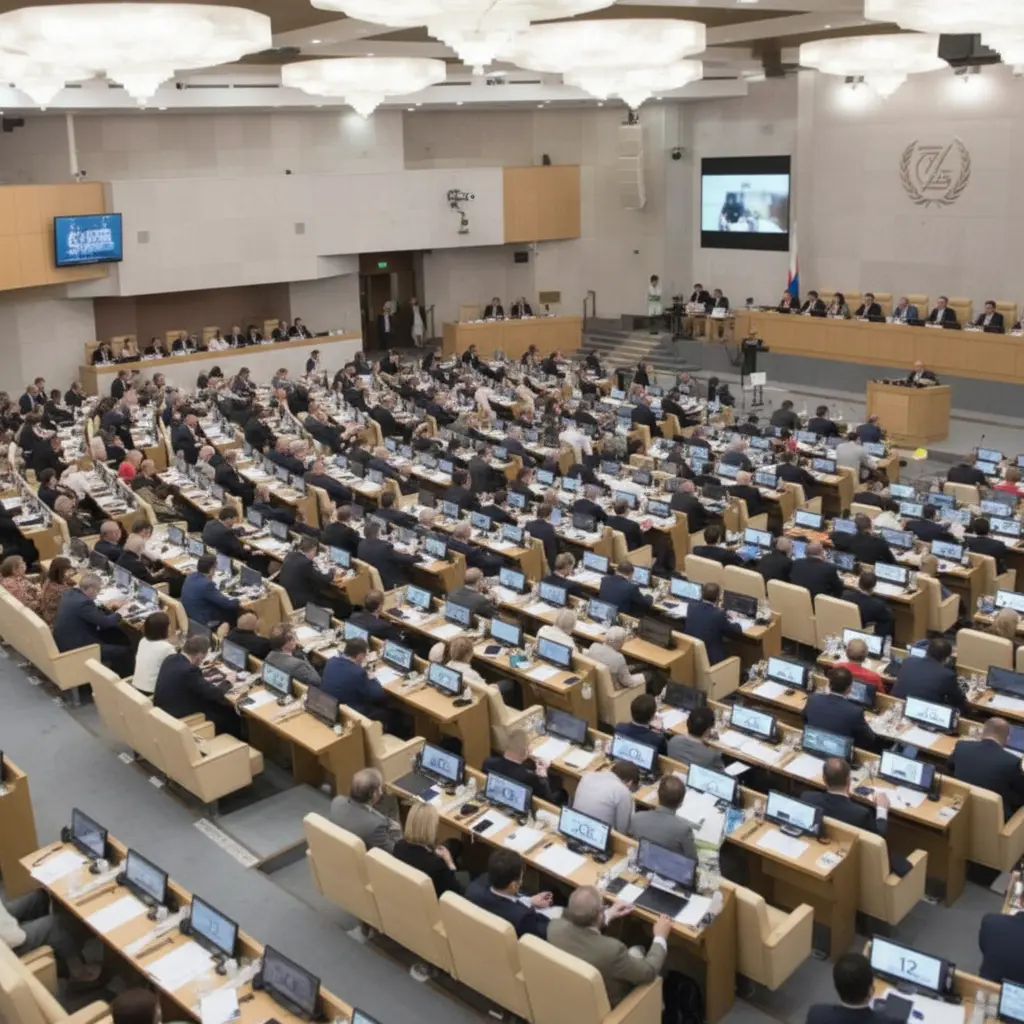
Istanbul, April 19 – Members of the Russian State Duma’s International Affairs Committee convened with a delegation from the European Parliament in Istanbul. The meeting took place on the sidelines of the 152nd General Assembly of the Inter-Parliamentary Union. Leonid Slutskiy, head of the committee and leader of the Liberal Democratic Party of Russia (LDPR), confirmed the discussions.
Constructive Dialogue with European Politicians
In a statement posted on his Telegram channel, Slutskiy noted, “We continue our contacts with European politicians who demonstrate a constructive approach. On the margins of the 152nd General Assembly of the Inter-Parliamentary Union in Istanbul, members of the State Duma International Affairs Committee met with a group of European Parliament deputies led by Fernand Kartheiser from Luxembourg.”
Slutskiy highlighted that these meetings have become regular, despite obstacles from Brussels and some European capitals. He underscored that the crisis between the Russian Federation and the European Union is not a result of Moscow’s errors.
Importance of Sustained Dialogue Amidst Tensions
Slutskiy emphasized the critical importance of keeping the “window of opportunity” for dialogue open, especially “today, when Russophobic elites in Old World countries are in a complete frenzy, ready to start World War III on the ruins of an anti-Russian bridgehead in Ukraine.”
He further stated that the position of the Russian parliament should be heard by the “sensible part” of the European Parliament.
Context of the Meeting
The meeting occurs amidst heightened geopolitical tensions and ongoing discussions regarding Russia’s relations with European nations. The Inter-Parliamentary Union’s General Assembly serves as a platform for parliamentary dialogue and cooperation on various global issues.
The Russian delegation’s engagement with European Parliament members signifies an effort to maintain communication channels and address contentious issues through diplomatic means, even as official relations between Russia and the European Union remain strained.
Broader Regional Developments
This dialogue in Istanbul is part of a series of diplomatic engagements involving Russia in the region. Recent reports indicate discussions on various topics, including pipelines, Middle East affairs, and Black Sea issues. For instance, Russia has reportedly urged Ankara to press Kyiv regarding pipelines, and Foreign Minister Lavrov recently referenced Zelenskyy’s 2014 Donbas statements during a visit to Antalya.
Furthermore, Russian and Turkish officials have been discussing a roadmap in Antalya, and the speaker of the Turkish Grand National Assembly, Numan Kurtulmuş, met with Valentina Matviyenko, chairwoman of the Federation Council of Russia, underscoring ongoing bilateral and multilateral diplomatic activities.
The continuation of parliamentary dialogue, as demonstrated by the meeting in Istanbul, suggests an underlying recognition of the need for communication to de-escalate tensions and seek common ground, despite significant political disagreements.