

US Ambassador Barrack: Turkey’s Return to F-35 Program Strengthens NATO
Ankara, April 23 – Tom Barrack, the US Ambassador to Ankara and Special Representative for Syria, emphasized that the S-400 issue could be resolved through diplomatic means and that Turkey’s reintegration into the F-35 program would enhance NATO’s “interoperability.” Barrack conveyed these views in a written interview with Fox News Digital, following his address at the Antalya Diplomacy Forum (ADF) 2026.
S-400 Dispute and F-35 Program
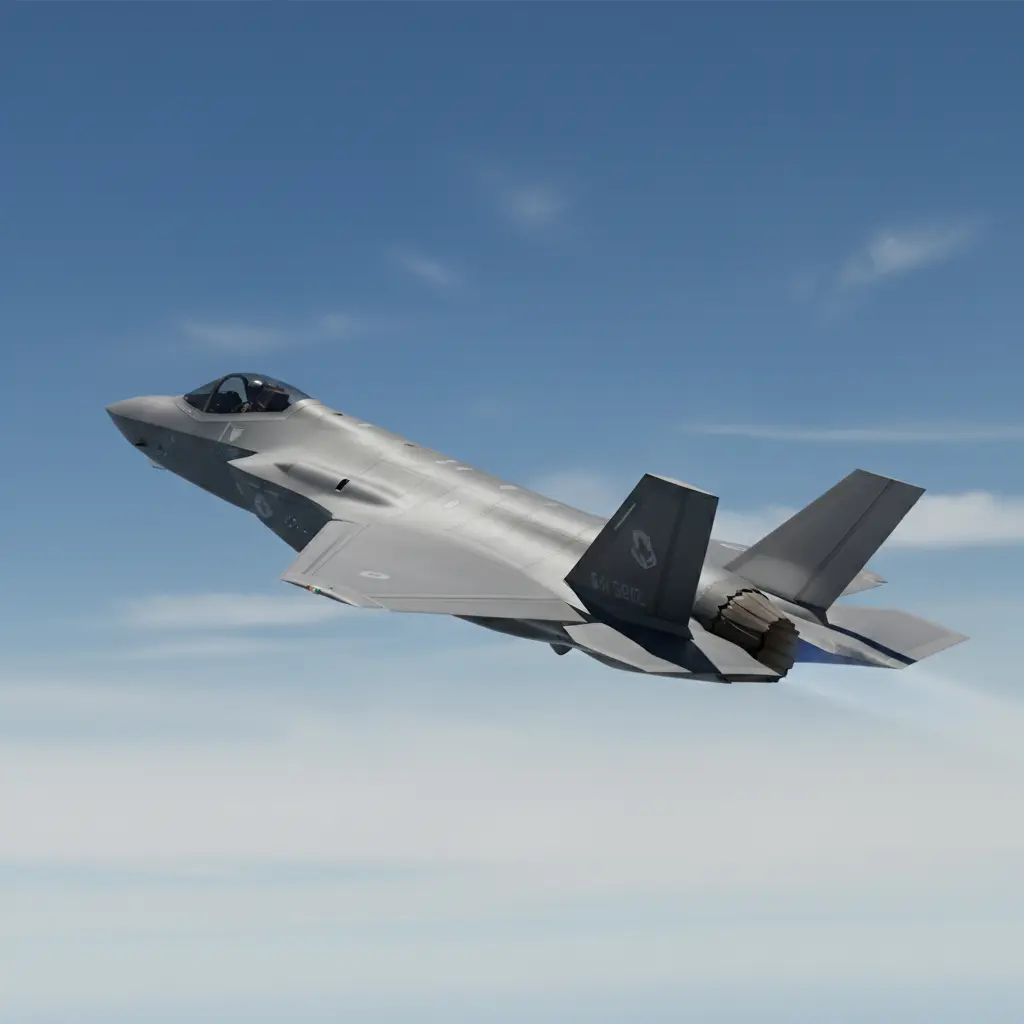
Ambassador Barrack reiterated the US’s desire for Turkey to rejoin the F-35 program, highlighting the country’s critical role within the alliance. “Turkey is a vital ally, hosting critical US assets, contributing to NATO missions, and countering common threats. The sanctions triggered by the S-400 acquisition and exclusion from the F-35 program unnecessarily strain relations, while Russia benefits from this situation,” Barrack stated.
Referring to his previous statements on resolving the S-400 issue, Barrack asserted, “The S-400 problem can and should be resolved within a few months through the delicate diplomacy of Secretary (Marco) Rubio, based on the strong personal relationship between President Trump and President Recep Tayyip Erdoğan.”
The US Ambassador referenced Section 1245 of the 2020 National Defense Authorization Act (NDAA), noting that “the verifiable termination of ownership and functionality of the Russian S-400 system” could be certified by official documents presented to Congress by the US Department of Defense and Department of State, confirming that “F-35 technology is not at risk.”
Barrack stressed that Ankara’s return to the F-35 program would not compromise American defense technologies. “What I am saying is that a real breakthrough is imminent: the re-establishment of Turkey’s role in the F-35 ecosystem, strengthening NATO’s interoperability, revitalizing US industry, and eliminating Russia’s influence,” he evaluated.
Ambassador Barrack concluded, “We believe in peace through strength, honest assessment of facts, and achieving outcomes that protect US interests without dragging America into endless conflicts. We want pragmatic cooperation with key partners like Turkey and a clear path to greater stability in an unstable region.”
Hezbollah and Israel
Addressing reactions to his comments that equated Israel with Hezbollah, Ambassador Barrack countered that his remarks merely reflected the “realism” on the ground and did not signify a change in US policy.
Barrack stated, “When I described the Israel-Hezbollah ceasefire as a pause and said that everyone was equally unreliable, I was merely stating the obvious truth on the ground. This is realism, not a criticism of any party.”
Barrack pointed out that the ceasefires in November 2024 and April 2026 demonstrated the “very fragile” nature of the situation on the ground, arguing that violations, rearmament, and proxy wars form the basis of “mutual distrust.”
The US diplomat explained, “It is precisely this mutual distrust that is the very reason this administration brokered the ceasefire agreement in the first place: to stop senseless slaughter, create breathing room, and chart a verifiable and implementable path that will strengthen Lebanon’s sovereignty and Israel’s security.”
Barrack noted that his statements regarding Hezbollah did not imply “softness.” “We have never trusted them. Within Lebanon, we recognize that the Hezbollah political party, which holds parliamentary seats in the Lebanese government, is different from the terrorist organization Hezbollah. Political trust on this issue will have to be earned,” he said.
“I stand by my words that the goal is not to destroy Hezbollah,” Barrack affirmed, adding that the root of the problem must be addressed, and Iran’s support for Hezbollah must be cut off.
Barrack also addressed the discussions surrounding his use of the phrase “strong leadership regimes” at the ADF, stating that his comments were based on observations on the ground, not ideology.
The US Ambassador remarked, “When I said that strong leadership regimes are the only structure that truly works in the Middle East, I was speaking not from ideology, but from decades of difficult observations.”
Barrack argued that countries that rapidly attempted to adopt Western-style democracy after the Arab Spring largely failed and often descended into chaos, while during the same period, “Gulf monarchies” demonstrated real improvements through stability, results-oriented leadership, security, and economic growth.
Source: http://mobil.hurriyet.com.tr/gundem/abdnin-ankara-buyukelcisi-barracktan-f-35-aciklamasi-turkiyenin-programa-donmesi-natoyu-guclendirir-43157198