


Istanbul’s Symbolic Cats Find Sanctuary in Mosque Courtyards
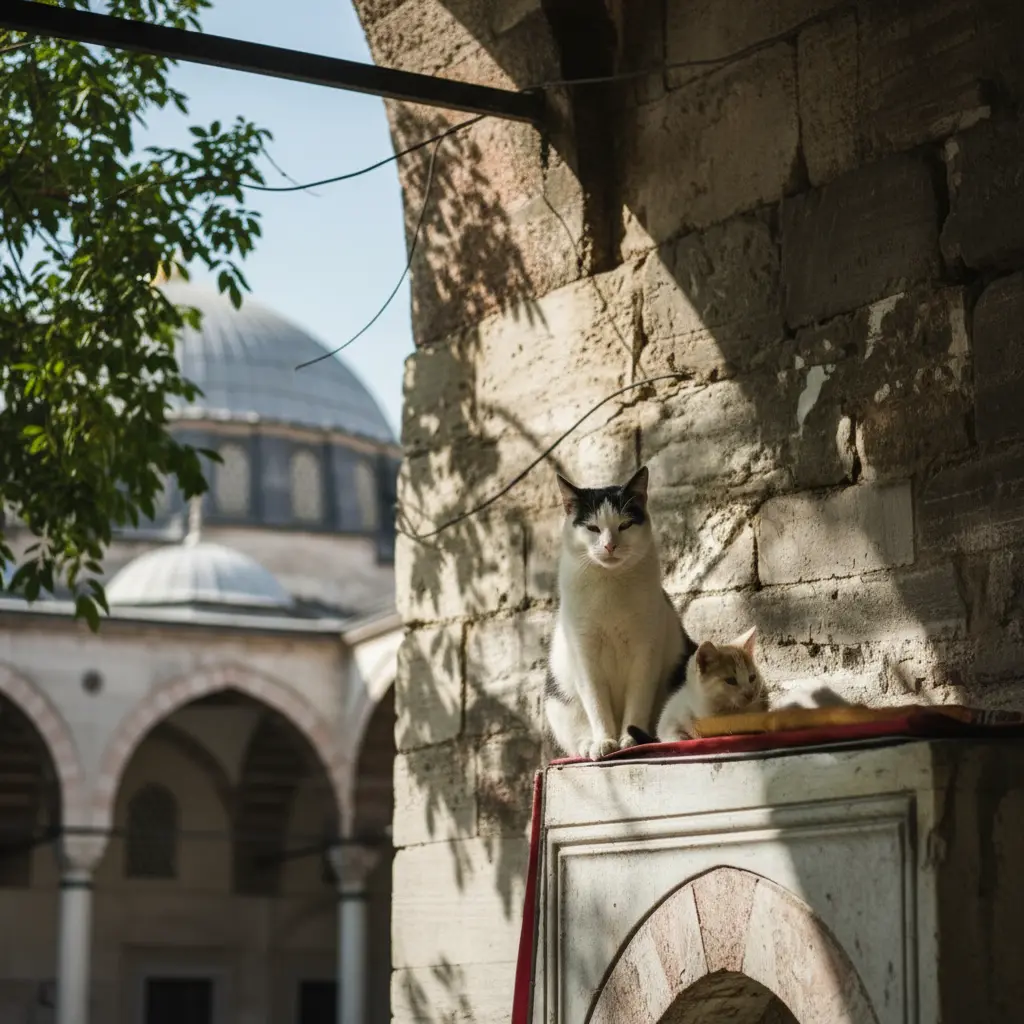
The tradition of reverence for living beings, extending from the Ottoman Empire to the present day, continues to thrive in Istanbul’s historic mosque courtyards. Cats, considered symbols of the city, especially in the historical peninsula, safely continue their lives in these courtyards, voluntarily fed by citizens. Images recorded in the courtyard of the Şehzadebaşı Mosque, showing the sweet moments of cats enjoying the sunny weather, warmed the hearts of onlookers.
Ottoman Legacy: A Deep-Rooted Respect for Animals
The Ottoman Empire’s compassionate approach to animals was not merely individual sensitivity but also rested on an institutional and legal foundation. Endowments explicitly stipulated that a share of the income from mosques, külliyes (mosque complexes), and imarets (public kitchens) be allocated for street animals. Concrete examples of this understanding included birdhouses and feeders, as well as designated areas for cats. Traditional practices, such as not working pack animals on Fridays, demonstrated that animal rights were protected with a societal consciousness. This approach, shaped by the understanding of “loving the created for the sake of the Creator,” ensured the safe shelter of cats in mosque courtyards, laying the groundwork for compassion and reverence for living beings to become an integral part of daily life in Ottoman urban culture.
Historian Highlights Institutional Support for Animal Welfare
Zafer Bilgi, a lecturer in history at Istanbul University, stated that the love for animals in the Ottoman Empire was based on a deep-rooted understanding of civilization. “The cat is, in fact, the embodiment of our feeling of reverence for living beings. In both the Ottoman and Seljuk periods, this sensitivity was not only for cats but for animals in general. When mosques and külliyes were built, animals were not neglected. When we look at the endowment deed of Sultan Bayezid Mosque, we see that even before the mosque was built, it was written how the sustenance of the surrounding cats, dogs, and birds would be provided. This clearly demonstrates the Ottoman view of animals. Harming a cat was considered contrary to worship. Foreigners observed the city with admiration in this regard, stating, ‘We see the city as a home. Just as we host guests in our home, we host cats in the city.’ They frequently reside in the courtyards of mosques like Şehzade Mehmet Mosque, Süleymaniye, and especially Fatih Mosque because these are safe areas.”
Dedicated Volunteer Feeds Dozens of Cats
Isa Yüce, who has been voluntarily feeding cats in and around the Şehzadebaşı Mosque for a long time, stated that he has continued this habit since the pandemic. “Initially, there were only a few cats here, but over time, their numbers grew. There are about 80-100 cats; this is their main center. Every day, I bring them food and meat. They even recognize the sound of my car and run to me when I arrive. My friends also support me; they take them to the hospital, spay them, and some bring special food. My days pass this way. I take food to cats in many places, from Sultangazi to Beyazıt, from Unkapanı to Edirnekapı. I never have free time. I do this voluntarily. The mosque garden is more beautiful with the cats. It becomes like their natural habitat,” he said.
A Timeless Tradition
The presence of cats in Istanbul’s mosque courtyards is a living testament to a historical and cultural reverence for animals. This tradition, deeply embedded in the city’s fabric, continues to ensure the well-being of these beloved felines, offering a heartwarming sight to both locals and visitors alike.