
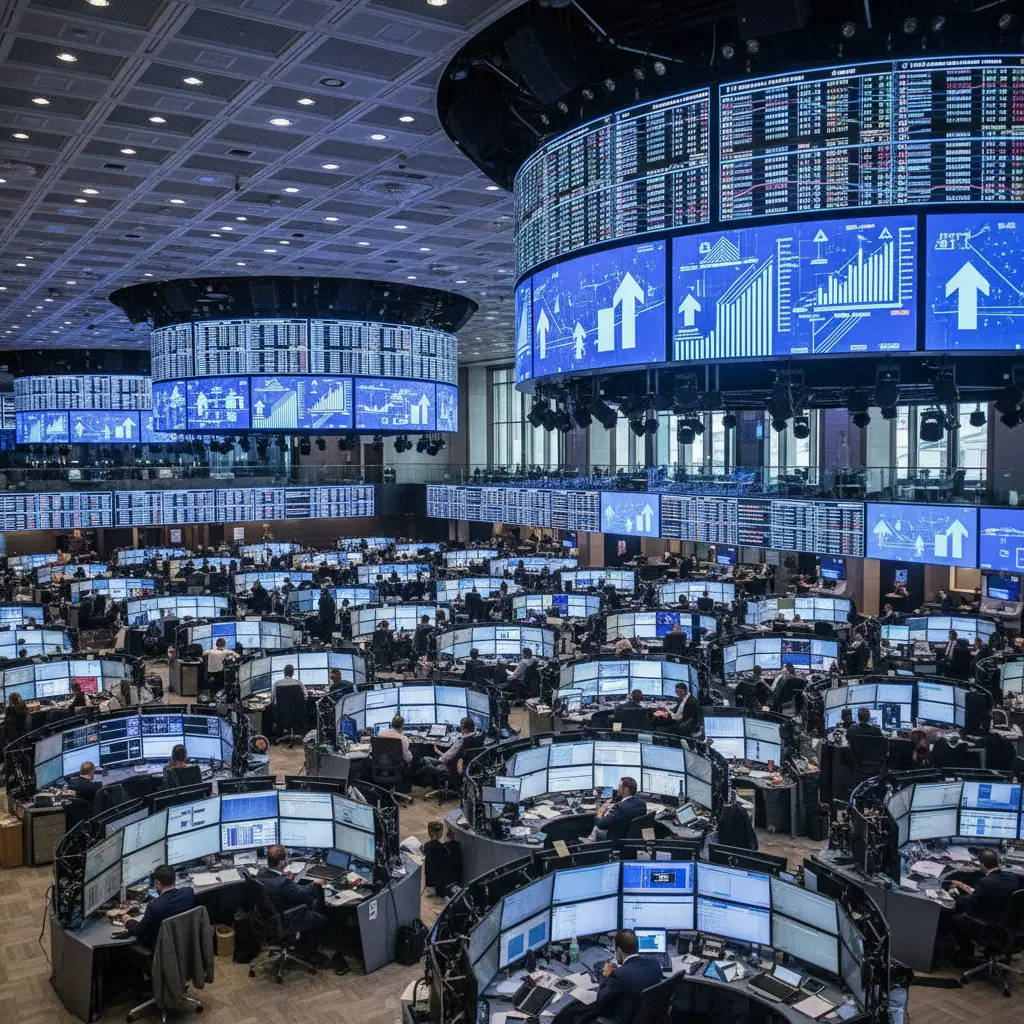
Istanbul, June 12 – The BIST 100 index of the Istanbul Stock Exchange concluded the trading day with a 1.42% increase, closing at 13,938.48 points. The total transaction volume for the day reached 229.3 billion Turkish Liras. The banking index led the gains with a 6.44% rise, while the holding index also saw an increase of 1.31%. Among sector indices, metal goods and machinery recorded the largest loss, declining by 2.51%.
Gold Prices and Market Sentiment
The ounce price of gold traded at 4,210 US dollars in international markets as of 18:20. In the Istanbul Gold Exchange, the kilogram price of standard gold increased by 2.8% compared to the previous close, reaching 6 million 277 thousand 300 Turkish Liras.
Global markets observed a positive trend, with investors’ focus remaining on geopolitical tensions in the Middle East. US President Donald Trump announced yesterday that planned attacks on Iran had been canceled and that an agreement was in the “approval stage.”
Speaking to reporters at the White House, Trump stated, “We are going through the process of finalizing the documents. This process will be completed in the next few days, and a signing ceremony will be held, perhaps in Europe.”
However, Iran’s semi-official Fars News Agency reported that claims of an agreement to be signed in Geneva on Sunday to end the war and initiate negotiations between Iran and the US were untrue. The report also emphasized that Iranian authorities were still reviewing the relevant text and had not yet made a decision on the matter.
Upcoming Data and Technical Analysis
Analysts noted that next week’s domestic agenda includes industrial production, budget balance, housing price index, housing sales, real sector confidence index, and capacity utilization rates. Internationally, the US Federal Reserve’s interest rate decision, along with inflation data from the Eurozone, the UK, and Japan, will be closely monitored.
From a technical perspective, analysts indicated that for the BIST 100 index, 14,000 and 14,100 points serve as resistance levels, while 13,800 and 13,700 points act as support levels.
The market’s positive reaction to the diplomatic efforts highlights the sensitivity of financial markets to geopolitical developments. Investors continue to seek clarity on the future of US-Iran relations, which significantly impacts regional stability and global economic outlook.
The robust performance of the banking sector suggests renewed investor confidence, possibly driven by expectations of reduced regional tensions. This sector’s strong showing contributed significantly to the overall market upswing, indicating a potential shift in investment strategies towards more cyclical sectors.
Despite the positive close, the volatility in gold prices reflects ongoing uncertainties. Gold, traditionally a safe-haven asset, remains a key indicator of investor sentiment regarding global risks. Its current trading levels suggest that while immediate concerns may have eased, underlying anxieties persist.
The upcoming economic data releases, both domestic and international, will provide further insights into the health of various economies and central bank policies. These data points will be crucial in shaping market expectations and influencing investment decisions in the coming weeks. The Federal Reserve’s interest rate decision, in particular, will be a focal point, as it could signal future monetary policy directions with global implications.
The mixed signals from US and Iranian sources regarding the peace talks underscore the delicate nature of international diplomacy. While initial statements from the US President provided a boost to market sentiment, the subsequent denial from Iran introduces an element of caution. This dynamic suggests that markets will remain highly responsive to any new developments on this front.
The overall market activity, characterized by a substantial transaction volume, indicates active participation from investors. This high liquidity suggests that market players are actively adjusting their portfolios in response to evolving geopolitical and economic landscapes. The divergence in performance between sectors, with banking outperforming and metal goods underperforming, points to sector-specific reactions to the current environment.
Looking ahead, market participants will be closely watching for any concrete outcomes from the diplomatic efforts between the US and Iran. The resolution of these tensions could provide a more sustained boost to market confidence, while any setbacks could lead to renewed volatility. The interplay of geopolitical events, economic data, and central bank policies will continue to shape the trajectory of the Istanbul Stock Exchange and global markets.