


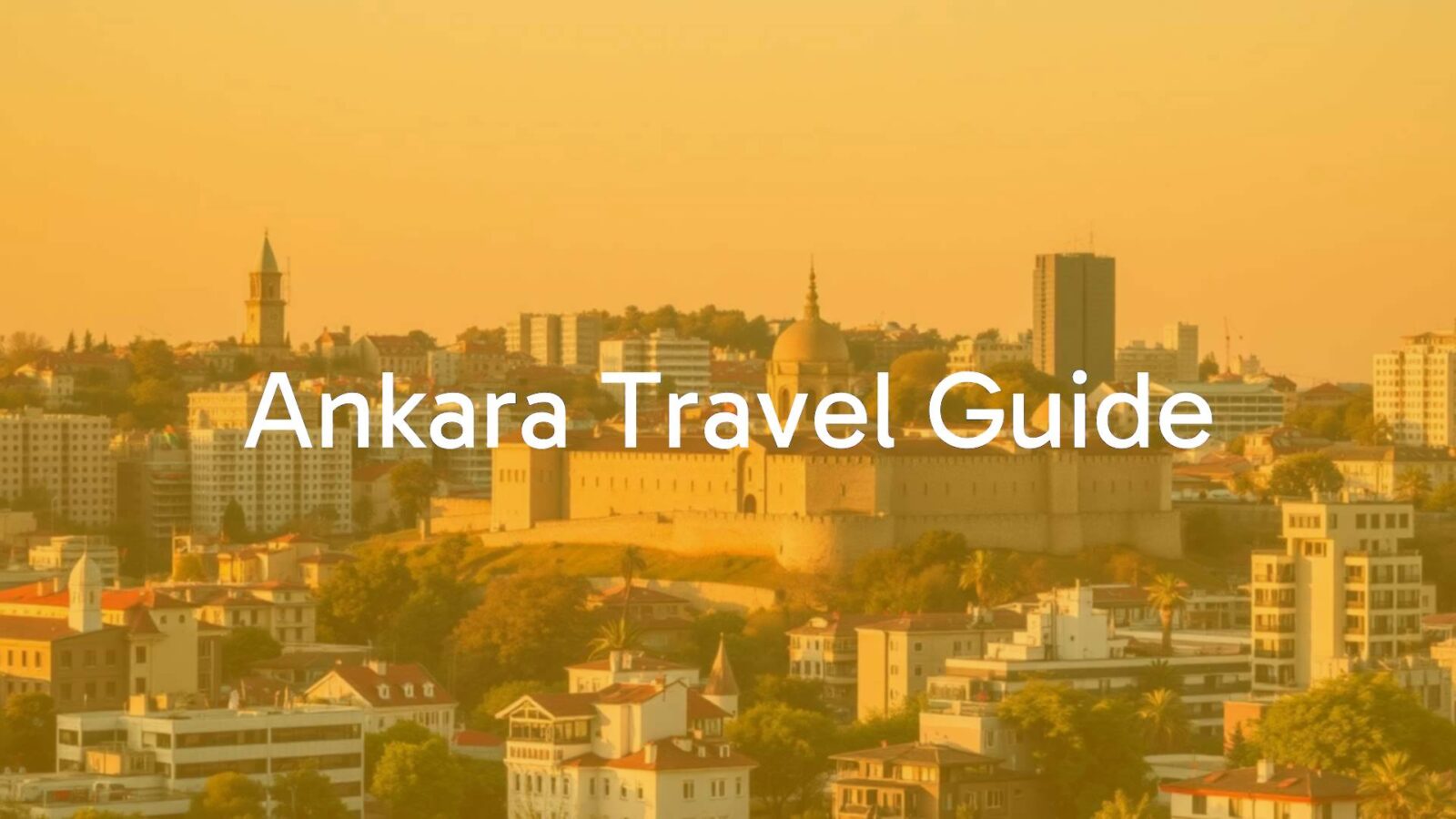
If you are wondering what the capital of Turkey is, the answer is Ankara. Istanbul often gets more attention with its Bosphorus views and Ottoman palaces, but Ankara is the country’s political, cultural, and artistic center. Sitting on the central Anatolian plateau at 848 meters above sea level, this city of over five million people offers a calmer, more genuine atmosphere where old history and modern Republican values sit side by side.
Ankara rewards curious visitors. It is far from a dry office town for diplomats and officials; it is lively, young, and energetic thanks to its many universities and an active arts scene. From the rough stone walls of its ancient castle to the solemn majesty of Anıtkabir, Ankara tells the story of Turkey’s change into a modern state, making it an important stop for anyone who wants to understand the country beyond Istanbul.
Ankara at a Glance: Key Facts and History
Why Is Ankara the Capital of Turkey?
Ankara became the capital of the new Republic of Turkey in 1923, chosen by Mustafa Kemal Atatürk. Before that, Istanbul was the capital of the Ottoman Empire, but its tangled politics and its exposure during World War I made it less suitable for a new beginning. Atatürk selected Ankara because it is in the center of Anatolia and remained unconquered during the War of Independence, symbolizing a move toward a modern, secular, Anatolia-focused country.
The change from a small town of fewer than 30,000 people to a modern capital was a conscious project of building a nation. City planners set it up as a model of Republican progress, with wide boulevards, parks, and grand government buildings. Today, Ankara is still home to the Grand National Assembly and the President, and it is the main base for the country’s military and diplomatic institutions.
What Is the Historical Background of Ankara?
Ankara’s story goes back thousands of years, long before the Republic. The area saw many civilizations, including the Hattians, Hittites, Phrygians, Lydians, and Galatians. The ancient Greeks called the city Ankyra (the anchor), pointing to its role as a stable point in central Anatolia. During the Roman period, it became an important crossroads between East and West, and parts of that Roman past are still visible in the ruins around the city.
Later, the Byzantines, Seljuks, and Ottomans all left traces. Under the Ottomans, for about 500 years, the town was famous for its trade in “Angora” goat hair (mohair), along with Angora rabbits and Angora cats. Real growth, however, came only in the 20th century. After World War II, large numbers of people moved in from rural areas, turning Ankara into today’s wide-ranging city, the second largest in Turkey after Istanbul.
What Is the Climate and Best Time to Visit Ankara?
Ankara has a semi-arid continental climate, with hot, dry summers and cold, snowy winters. In July and August, temperatures often go above 30°C, but the low humidity makes it more bearable. In winter, temperatures often fall below zero, and snow covers the city’s red roofs, giving it a pretty winter look.
The best times to visit are spring (April to June) and early autumn (September to November). In spring, the city’s parks are full of flowers, and temperatures stay around 15-25°C. Early autumn brings mild, dry days and clear air, ideal for walking around the castle and Roman sites. Summer is hot, but this period often comes with lower hotel and flight prices.

Visa, Entry, and Travel Essentials
How to Obtain a Turkish Visa and Entry Requirements
Most foreign visitors need a valid Turkish visa to enter the country. Turkey offers an easy electronic visa (E-visa) system that you can apply for online in a short time. Your passport must be valid for at least six months from your date of arrival. You may also be asked to show return flight tickets, travel insurance, and proof of accommodation at Esenboğa International Airport.
At immigration, officers may ask about the length and purpose of your trip. Having printed copies of hotel bookings or rental contracts is a good idea. As of early 2026, entry rules are still simple, but always check the most recent information from official sources before you travel.
Currency, Language, and Cultural Tips
The local currency is the Turkish Lira (TRY). In central districts such as Kızılay and Çankaya, many shops, restaurants, and hotels accept Visa and MasterCard. Still, carrying some cash is useful for small stalls, local markets, and public transport. You can change money at the airport, in banks, or in currency exchange offices in the center.
Turkish is the main language. Many students and university staff speak some English, but people working in small shops or older neighborhoods may speak little or no English. Learning a few basic words, such as “Merhaba” (Hello) and “Teşekkür ederim” (Thank you), is very helpful. Ankara is relatively open-minded, but modest clothing is still expected in mosques.
What to Expect for Daily Expenses and Budgeting
One big advantage of Ankara is that it is much cheaper than Istanbul or the coastal resort towns. For a 3-day self-planned trip, a budget of $350-$500 per person is usually enough for good meals, transport, and comfortable places to stay. Backpackers can find hostels for $10-$15 per night, while 2-3 star hotels generally cost $20-$50.
Everyday costs are quite low. A local meal often costs between $3 and $7, and a sit-down dinner in a mid-range restaurant is around $10-$15. Most museums and historical sites are also very affordable, usually $2-$5 for entry. Public transport is cheap as well, with metro and bus trips costing under one US dollar.
Getting to and Around Ankara
Arriving in Ankara: By Plane, Train, and Bus
Most visitors arrive at Esenboğa International Airport (ESB), about 30 km north of the center. It has fewer direct international flights than Istanbul but still has good links to Europe and the Middle East. From the airport, the Belko Air bus runs every 30 minutes to Kızılay and the AŞTİ bus terminal, taking around an hour depending on traffic. EGO bus Route 442 is a cheaper local option that goes to the main train station.
Ankara is the center of Turkey’s high-speed train (YHT) network. Trains from Istanbul take about 4.5 hours, and from Konya only about 90 minutes. If you prefer to travel by road, the Ankara Intercity Terminal (AŞTİ) is one of the biggest bus stations in the country. Comfortable long-distance buses from Istanbul arrive roughly every 15 minutes, day and night.
How to Use Public Transportation in Ankara
Ankara has a modern, efficient public transport system. The Ankara Metro has four main lines (M1, M2, M3, M4) plus the Ankaray light rail, and they all connect at Kızılay station in the center. To use the metro and municipal EGO buses, you need an Ankarakart, a smart card you can top up at stations and kiosks. One paid ride allows a transfer to another mode within 45 minutes.
For areas without metro coverage, city buses and dolmuş (shared minibuses) are good options. The Başkentray commuter train line also links the western suburbs with the historic center and the main train station along an east-west route.
Is It Easy to Use Taxis and Ride-Sharing Services in Ankara?
Taxis are easy to spot, bright yellow with “Taksi” signs. They are cheaper than in most European capitals, and prices stay the same day and night. Tipping is not required, but people often round up the fare. Many drivers are helpful, but using a ride-hailing app is a smart way to make sure the meter is on and avoid paying more than you should.
Traffic in Ankara can be heavy, and cars often move fast. Pedestrians should be careful, as drivers do not always stop at crossings. In compact central areas such as Kızılay and the old quarter of Ulus, walking is usually the easiest and most pleasant way to get around.
Finding Your Way: Neighborhoods and Orientation
It helps to think of Ankara in terms of its main districts. Ulus is the “old town,” with Roman ruins, the castle, and the first parliament buildings. It is busy, full of traditional shops and markets. Kızılay is the modern core, packed with stores, cafés, and the main transport links.
To the south are the higher-end districts of Kavaklıdere, Gaziosmanpaşa, and Çankaya. Here you will find the most expensive hotels, fine-dining restaurants, and most foreign embassies. Moving between these areas is simple, as Atatürk Boulevard runs through the city and connects them.
Where to Stay: Accommodation in Ankara
Best Areas to Stay for Visitors
For first-time visitors, Kızılay is often the best base because it is central and has excellent transport options. You will be in the middle of the city’s street life with quick metro access to almost anywhere. If you like a historical setting, staying near Ankara Castle or in Hamamönü lets you sleep among restored Ottoman houses and narrow cobbled streets.
Travelers looking for luxury or visiting for work usually prefer Çankaya and Kavaklıdere. These areas are quieter, greener, and home to large international hotel chains. Staying near Ankara Garı (train station) or AŞTİ (bus terminal) is handy if you plan many day trips to places such as Eskişehir or Konya.
Accommodation for Every Budget: Hotels, Hostels, and Guesthouses
Ankara has options for every budget. For low-cost stays, Bihostel (Deeps Hostel) in Kızılay is a well-liked place with dorms and private rooms. Mid-range choices include Yeni Bahar Oteli in Ulus or Hotel Midas in Kavaklıdere, both offering clean rooms and professional service at fair prices. For something special, Divan Çukurhan is a luxury boutique hotel in a beautifully restored 16th-century caravanserai near the castle.
Luxury travelers can choose from big names like the Sheraton Ankara or the Ankara HiltonSA, both major landmarks in the southern districts. If you arrive late or fly out early, hotels such as Ibis a few kilometers south of Esenboğa Airport are convenient, although the hotel inside the airport itself was still closed in the latest reports.
Where to Eat and Drink in Ankara
Local Cuisine and Signature Dishes to Try
Ankara’s food scene brings together flavors from across Anatolia. The dish you should not miss is Ankara Tava, a rich lamb and rice meal cooked with tomatoes and traditional spices. Another favorite is Ankara Yaprak Döner, famous for its quality meat and classic cooking method. For a street snack, try Ankara Simidi, a sesame ring dipped in molasses, darker and crunchier than the Istanbul version.
Also try Beypazarı Kurusu, a crispy, twice-baked biscuit that goes perfectly with tea. For dessert, you will see baklava and lokum (Turkish delight) everywhere, and Ankara has some very good examples. If you are open to more adventurous tastes, head to the Atatürk Forest Farm to sample their popular kokoreç (grilled lamb intestines) in a lively outdoor setting.
Popular Restaurants and Food Streets
Kızılay is the main area for casual eating. Sakarya Street is full of seafood places and fast options. For excellent döner, locals often recommend Karanfil Sokak. If you prefer old-style charm, the Hamamönü district is packed with cafés serving Turkish breakfast plates and slow-cooked stews in restored wooden houses.
For fine dining, Trilye Restaurant in Çankaya is one of the city’s most respected seafood restaurants, famous for its fresh fish and skilled cooking. Boğaziçi Lokantası is another classic place, serving traditional Turkish food since the mid-1900s. In Ulus, Kınacızade Konağı offers a memorable meal in a historic mansion just outside the castle.
Cafés, Bars, and Nightlife Hotspots
Ankara’s nightlife is more active than many people expect, mainly around Tunalı Hilmi and Bahçeli. Tunalı Hilmi Street is lined with modern cafés and bars such as Cafe des Cafes, a European-style place ideal for watching city life. For live rock and alternative music, Corvus and Manhattan Rock Bar are long-time favorites.
If you want a classic Turkish evening, visit a meyhane (tavern) for small meze dishes, rakı, and live music. Afitap is a well-known choice. For a calmer night out, Kuğulu Park is popular with locals who come for coffee and greenery. Ankara also hosts an international jazz festival in autumn and has regular performances at the Ankara Opera & Ballet.
Must-See Attractions in Ankara
Anıtkabir: Mausoleum of Atatürk
Anıtkabir is Ankara’s most important monument and the burial place of Mustafa Kemal Atatürk. Finished in 1953, this huge complex mixes classical and modern design. Visitors reach the main square by walking along the 262-meter Road of Lions, lined with stone lion statues. The Hall of Honor, where Atatürk’s symbolic tomb lies, is a place of deep respect for Turks.
Under the Hall of Honor is a large museum about the War of Independence and Atatürk’s life, with his personal items, models of famous battles, and key documents from the early Republic. The changing of the guard ceremony is very precise and draws many visitors who come to watch the soldiers’ movements.

Ankara Castle: Exploring the Ancient Citadel
Sitting on a rocky hill, Ankara Castle (Ankara Kalesi) offers the best views over the city. Many powers have repaired and rebuilt this fortress, including Romans, Byzantines, and Seljuks. Inside the double walls is a “village” full of narrow streets, old Ottoman houses, small art galleries, cafés, and souvenir shops.
Walking here feels like stepping into another time. The Sultan Alaeddin Mosque, the oldest in the city and dating from 1178, is inside the complex. The climb to the top towers is a bit steep, but the view of red tiled roofs and distant Anatolian hills at sunset is a highlight of any trip.
Museum of Anatolian Civilizations
Just below the castle, this museum is one of Turkey’s finest. It sits in a beautifully restored 15th-century caravanserai and takes you through thousands of years of Anatolian history, from the Stone Age to the Roman era. The Hittite section is especially famous.
Major pieces include 8,000-year-old wall paintings from Çatalhöyük and detailed bronze artifacts from the Phrygians. The museum is well-organized and easy to follow, and its courtyard displays Roman sculptures in a quiet outdoor space. Anyone curious about early human history will find this visit very rewarding.
Kocatepe Mosque: The Largest Mosque
Kocatepe Mosque dominates Ankara’s skyline with its four high minarets. Built between 1967 and 1987 in a style inspired by classical Ottoman mosques, it can hold up to 24,000 worshippers. Inside, the huge central dome, white marble, and stained glass decoration create a bright and impressive space.
Non-Muslim visitors are welcome outside prayer times. Women should cover their hair, and everyone should dress modestly. The calm courtyard and the scale of the building offer a quiet break from the busy city streets around it.
Roman Baths and Temple of Augustus
Ankara’s Roman past is clear at the Roman Baths, a large bath complex from the 3rd century built under Emperor Caracalla. Only the foundations and heating systems (hypocausts) remain today, but they still show how large and well-built the ancient city of Ancyra was. Nearby stands the Temple of Augustus and Rome, underlining the city’s status in the Roman world.
The temple is special because its walls carry the Res Gestae Divi Augusti, a long inscription that lists the acts of Emperor Augustus. The temple sits right against the 15th-century Hacı Bayram Mosque, giving a clear view of how ancient and Islamic periods meet in one place. The Column of Julian, a column from 362 AD, is close by and worth a short stop.
Historic Districts: Ulus, Samanpazarı, and Beypazarı Houses
Ulus is the district where the Republican era began, with the first and second Parliament buildings that now serve as museums. Samanpazarı, one of the oldest quarters, is a great place for antiques and traditional Turkish crafts, spices, and fabrics. It is ideal for buying meaningful souvenirs instead of standard mall goods.
Not far away, Hamamönü offers carefully restored Ottoman wooden houses and cobbled streets. If you can travel further, the Beypazarı district, around 100 km from Ankara, is famous for its three-story white mansions, which are among the best-kept examples of old Anatolian town houses.
Parks and Green Spaces: Kuğulu Park, Atatürk Orman Çiftliği
Ankara is greener than many visitors expect, and its parks play an important role in daily life. Kuğulu Park (Swan Park) in Kavaklıdere is a small but beloved park known for its clear pond and black swans gifted from China. Students and families often come here to relax, eat simit, and enjoy the flowers.
The Atatürk Forest Farm (AOÇ), founded in 1925, is a very large farm and recreation area. It has a zoo, dairy farms, and plenty of picnic spots. Locals often spend weekends here, walking around and tasting the farm’s well-known milk and ice cream products. Other key parks include Gençlik Parkı, with its big lake and funfair, and the wide, hilly Seğmenler Park.
What to Do in Ankara
Where to Shop: Bazaars, Markets, and Popular Streets
Shopping in Ankara ranges from old bazaars to modern shopping centers. Ankamall is one of Turkey’s largest malls, with hundreds of local and international brands. For more high-end shopping, Karum AVM and the stores along Arjantin Avenue in Çankaya are good choices. For modern fashion in a street setting, Tunalı Hilmi Street is hard to beat.
If you want a traditional feel, go to the bazaars of Samanpazarı and Ulus. Here you can bargain for hand-woven carpets, copper items, and spices. The steep Çıkrıkçılar Yokuşu (Weavers’ Stairway) in Ulus is famous for its mix of old-style fabrics, handicrafts, and everyday goods at low prices.
Enjoying Ankara’s Art, Museums, and Galleries
Ankara has a strong modern art scene. Cermodern, based in a converted railway power station, is the leading contemporary art center, hosting international shows and film events. The Painting and Sculpture Museum in Sıhhiye holds a permanent collection of Turkish art from the late 1800s onward, showing how local art has changed over time.
The city also has smaller, unusual museums. The Chess Museum in Hamamönü holds one of the world’s largest chess-set collections, and the Rahmi M. Koç Museum covers the history of transport, engineering, and industry with interactive displays. For a more serious visit, the Ulucanlar Prison Museum tells the story of Turkey’s political past through the former prison’s cells and exhibits.
Sports, Nightlife, and Entertainment
Sports are a big part of Ankara life. Football is especially popular, with Gençlerbirliği and Ankaragücü as the main local teams. Basketball also draws fans, and Türk Telekom BK plays in the modern Ankara Arena. Runners can take part in the annual Runkara International Half Marathon, which attracts athletes from many countries.
The city also has a full cultural calendar. Events include the Ankara Film Festival and the International Music Festival every April. The Presidential Symphony Orchestra performs often in its new concert hall, a striking glass building. Whether you prefer a loud rock bar or an evening listening to opera or classical music, you will find something that suits your taste.
Nearby Destinations and Day Trips from Ankara
Beypazarı
About 98 km west of Ankara, Beypazarı makes a great day trip for lovers of history and old architecture. The town is known for its white, two- and three-story mansions and its detailed silverwork (telkari). Walking through its streets feels like visiting a living museum of Ottoman town life.
Local treats here include the famous 80-layer Beypazarı baklava and fresh carrot juice, for which the area is known. Regular buses from AŞTİ bus terminal go to Beypazarı, making it an easy break from the city.
Cappadocia
Many travelers visit Cappadocia as a separate holiday, but it is only three to four hours by road from Ankara. With its fairy chimneys, rock-cut churches, and underground cities, it is one of Turkey’s most famous regions and a UNESCO World Heritage site. Many visitors like to combine Ankara with a 1-2 day trip here.
A hot air balloon ride at sunrise over the valleys is the most popular activity. You can reach Cappadocia by bus or car from Ankara, or take a short flight to Nevşehir or Kayseri. It is a great way to go from the city life of the capital to the surreal landscapes of central Anatolia.
Konya
Konya is only about 90 minutes from Ankara by high-speed train, which makes it an easy day outing. Once the capital of the Seljuk Empire, Konya is full of historical sites and is also the spiritual center of the Mevlana (Whirling Dervishes). The Mevlana Museum, which holds the tomb of the poet Rumi, is one of Turkey’s most visited religious and cultural sites.
Near Konya, you can visit Çatalhöyük, one of the oldest known human settlements, dating back around 9,000 years. Food lovers should try Konya’s famous Etli Ekmek, a thin, long bread topped with minced meat, similar to a local version of pizza.
Eskişehir
Eskişehir, sometimes called the “Venice of Turkey,” is a lively student city just 1.5 hours away by train. The city is known for the Porsuk River, where you can ride gondolas, and the beautifully restored Odunpazarı old town. Eskişehir has many parks, museums, and a buzzing nightlife.
Families enjoy the Sazova Science, Culture and Art Park, which includes a storybook castle and a pirate ship. Eskişehir shows a modern approach to urban design and offers a young, relaxed vibe that provides a nice contrast to Ankara’s more official image.
Safety, Health, and Practical Tips
Is Ankara Safe for Travelers?
Ankara is generally a very safe city for visitors, including solo women. As the capital, it has a strong police presence and good security. Still, you should be careful with your belongings in crowded spots like Kızılay Square and busy markets, just as in any big city. The most common risk is traffic, so always cross at lights or pedestrian crossings and stay alert.
The city is modern and mostly secular, but showing respect for local customs is important, especially in religious areas. People in Ankara are usually polite and helpful, and you will rarely face the pushy street sellers often found in major tourist hotspots.
Emergency Services and Health Care
For any emergency, dial 112. Ankara has some of Turkey’s best hospitals, including major university hospitals such as Hacettepe and many private clinics. Pharmacies (Eczane) open during normal business hours, and there is always at least one 24-hour “duty” pharmacy (Nöbetçi Eczane) in each area, listed in the pharmacy windows.
Travelers should have good travel insurance that covers medical costs. Most high-end hotels can help you contact English-speaking doctors if you need them. Tap water is usually fine for brushing your teeth, but many locals and visitors still prefer bottled water for drinking.
Staying Connected: Mobile, Internet, and Embassies
Turkey has strong 4G mobile coverage through Turkcell, Vodafone, and Türk Telekom. Full 5G coverage was still on the way in early 2026, but mobile data in Ankara is generally fast and reliable. Many cafés, hotels, and even some parks offer free Wi-Fi. For longer stays, buying a local SIM card at the airport or in Kızılay is simple and relatively cheap.
As the capital city, Ankara hosts nearly all foreign embassies, mostly located in Çankaya and Gaziosmanpaşa. This makes it a key place if you might need consular help. Before you arrive, write down the address and phone number of your country’s embassy or consulate.
Frequently Asked Questions about Traveling to Ankara
- How many days do I need in Ankara? Usually 2-3 days is enough to see the main historical sites, key museums, and enjoy the food culture.
- Is it better than Istanbul? It is different. Ankara offers a quieter, more local feel without Istanbul’s big crowds, which many people enjoy when they want to see Turkey’s modern capital life.
- Can I use my Istanbulkart in Ankara? No. Ankara has its own card system called Ankarakart.
- Is English widely spoken? In universities and higher-end hotels, yes. In bazaars, small shops, and taxis, English may be limited, so a translation app is helpful.
- What should I buy as a souvenir? Popular choices include Beypazarı silverwork (telkari), Turkish spices, and high-quality mohair products from Angora goats.
Looking ahead, Ankara continues to change and grow. New projects, such as the full return of local football matches to the rebuilt 19 May Stadium for the 2026-27 season, show a city that is always moving forward. Whether you come to honor Atatürk at Anıtkabir or to explore the deep Hittite past at the Museum of Anatolian Civilizations, you will find that Turkey’s “other” city offers rich history, modern life, and many pleasant surprises.










Leave a comment