
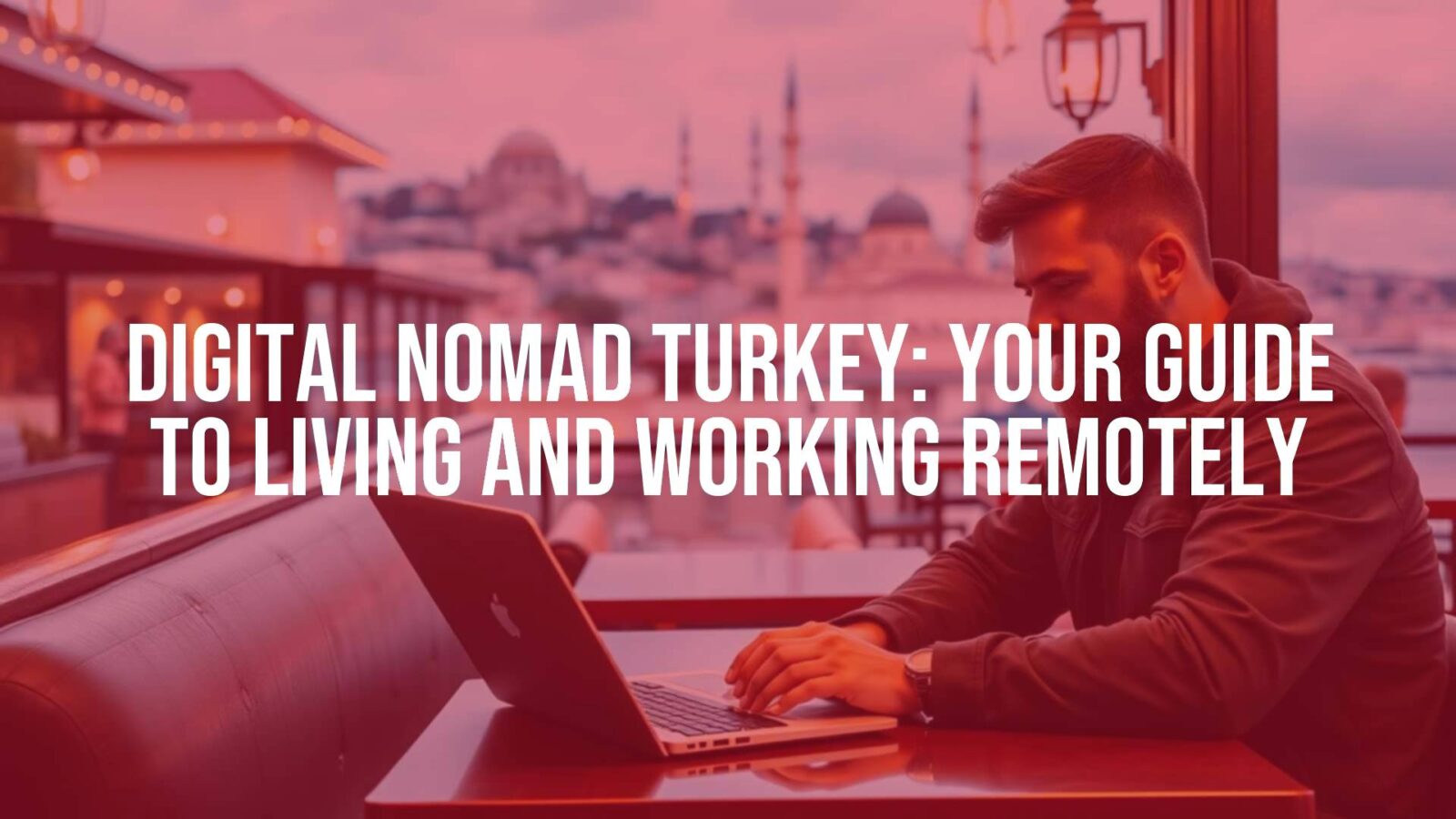
Is Turkey a good place for digital nomads? Yes, very much so. Since the official launch of the Turkish Digital Nomad Visa in 2024, the country has gone from a simple tourist stop to a major base for remote workers. Turkey combines fast internet, a very low cost of living for those earning in foreign currencies, and a handy location between Europe, Asia, and the Middle East. Whether you like the busy streets of Istanbul or the blue waters of Antalya, Turkey now offers both the legal setup and cultural depth you need for a smooth long-term remote work stay.
Living as a digital nomad in Turkey is more than having strong Wi-Fi; it is about living in a place where old traditions sit side by side with modern life. From Istanbul’s crowded, lively districts to quiet Aegean villages, the country has quickly adjusted to people who work from anywhere. As of January 23, 2026, the remote work scene is well-developed, with options like special co-living houses and a simpler residence process for many foreigners.

Why Choose Turkey as a Digital Nomad Destination
Active digital nomad community in Turkey
One of the main reasons people pick Turkey is its energetic and welcoming digital nomad community. In cities like Istanbul and Izmir, you will find strong groups of locals and foreigners who all work remotely. These groups are social but also very useful professionally: you can build your network, find new projects, and share advice on dealing with local rules and paperwork. Areas such as Kadıköy and Beyoğlu in Istanbul attract younger professionals and freelancers, giving the city a lively, creative feel.
Besides casual meetups in cafes, the digital nomad scene now includes many co-living spaces made for this lifestyle. These places usually offer private rooms, shared kitchens, and built-in workspaces, which makes arriving in a new city much easier. You quickly get both a place to live and a community. This sense of connection can be very helpful if you sometimes find nomad life lonely.
Quality of life and cultural diversity
Turkey offers a high quality of life, with low costs and good services. Many people quickly fall in love with the classic “Turkish breakfast“-a large spread of breads, cheeses, olives, eggs, and fresh vegetables. The country’s geography is very varied: you might spend the morning working from a rooftop near an old mosque and the evening walking among the rock formations of Cappadocia or swimming in the Mediterranean Sea.
The culture is rich and layered. You can visit the ruins of Ephesus, see old underground cities, or tour museums filled with artifacts from many empires, sometimes all in one weekend. This mix of history and modern comfort is very inspiring, which is why so many writers, creatives, and tech workers now base themselves in Turkey for longer periods.

Strategic location and connectivity
Turkey sits in a key spot between three continents. This makes it an excellent base if you like to travel often. Istanbul Airport is one of the largest and busiest in the world, with flights to almost everywhere. Turkish Airlines serves over 200 international routes, making weekend trips to places like Greece, the Balkans, or Western Europe quick and easy.
Travel connections are not only about planes. Internet access is strong and improving. High-speed fiber is common in big cities, and eSIMs or local SIM cards give you stable 4G and 5G coverage, even in many smaller coastal areas.
Safety and local infrastructure
Although people’s views on safety can differ, most big Turkish cities are quite safe for residents and visitors. Authorities put a lot of effort into keeping busy areas and tourist spots secure. Public transport is cheap and well-organized, and daily life is made easier by apps for food delivery (like Yemeksepeti and Getir) and taxi services (like BiTaksi).
Turkey also offers good medical services, especially in private clinics, where staff often speak several languages. This strong infrastructure, together with relatively low crime levels in many areas, makes Turkey appealing for digital nomads who want both flexibility and a stable daily life.
Advantages and Challenges of Being a Digital Nomad in Turkey
Key benefits for remote workers
The biggest benefit is cost of living. If you earn in USD, GBP, or Euro, the weaker Turkish Lira (TL) makes daily life very cheap. You can often enjoy a lifestyle that would be seen as luxury in cities like London or New York-eating at good restaurants and renting nice apartments-for much less money. The food culture is another highlight: fresh vegetables, fruits, and meats at local markets, and traditional “lokantas” serving full meals at very low prices.
Turkish hospitality is famous. People are usually warm and open, and learning a few simple Turkish phrases can lead to real friendships. The country also offers many types of landscapes-from green mountains by the Black Sea to sandy beaches on the Mediterranean-so you will always have new places to visit in your free time.

Potential challenges and how to overcome them
There are, however, some downsides. The economy can be unstable, and prices in supermarkets and shops often change quickly, sometimes even from one day to the next. This can be surprising if you follow a strict budget. Many nomads handle this by holding most of their savings in foreign currencies and only changing what they need into TL, using services like Wise or Revolut.
Language can be another issue outside big tourist centers like Istanbul or Cappadocia. Many young people in big cities speak some English, but in smaller towns, life is much easier with basic Turkish. Also, scams do happen in busy tourist areas, especially around taxis and “foreigner prices” in cities like Antalya. Using apps like BiTaksi or Uber and learning a few key Turkish words can help you avoid most of these problems.
Visa Types for Digital Nomads in Turkey
Tourist visa: short-term stay options
If you just want to try Turkey first, a tourist visa is the simplest option. Many nationalities can stay up to 90 days in a 180-day period. Digital nomads often use this time to test different cities before making longer-term plans. It is not a work visa, but many people on tourist visas work online for foreign clients while they are in the country.
Short-term residence permit
The short-term residence permit, or “ikamet,” has long been popular with people staying up to one year. It lets you live in Turkey and work remotely for companies based abroad. Since 2022, rules have become stricter for ikamet applications based on “tourism,” especially in popular areas of Istanbul and Izmir. Applying in a smaller or less busy town can sometimes make approval more likely.
Digital nomad visa requirements and eligibility
The official Digital Nomad Visa is the main option for remote workers. To apply, you must:
- Hold citizenship from an approved country (such as the USA, UK, Canada, or most EU countries).
- Be between 21 and 55 years old.
- Show proof of income of at least $3,000 USD per month or $36,000 USD per year.
- Be a university graduate (with a diploma or degree).
- Provide a valid work contract or proof of self-employment with a non-Turkish company or clients.
Moving between Turkish visas
One helpful feature of the Turkish system is that you can often move from a tourist visa to a residence permit without leaving the country, as long as you apply before your current visa or allowed stay ends. This gives you the chance to arrive as a visitor, choose an area you like, and then request a longer stay once you are settled.
Applying for the Turkey Digital Nomad Visa
What documents are required for application
The process starts with getting a Digital Nomad Identification Certificate. To do this, you upload scanned copies of several documents:
- A passport that will be valid for at least 6 months after you arrive.
- Your university diploma or certificate.
- Proof of employment: a work contract or employer letter (for employees) or client contracts/business documents (for freelancers and business owners).
- A biometric photo.
- Proof of income showing at least $3,000 USD per month.

Step-by-step visa application process
Create an account on the official Digital Nomad Identification Certificate website and upload your documents. After review, you receive your certificate if approved. With this certificate, you then go to a Turkish visa center or consulate (for example, Voya Visa in London) with the rest of your documents to finish the visa process. So there are two steps: online approval of your status, followed by an in-person visa application.
Visa fees and payment methods
The Digital Nomad Identification Certificate itself may not have a fixed cost, but the visa at the consulate does. For British citizens, the fee has recently been around £644, often including required travel insurance organized through the visa center. Payment is usually by credit or debit card at the appointment.
Application processing time and duration of stay
Processing normally takes 4 to 6 weeks. Applying well before you plan to travel is a smart idea. Most Digital Nomad Visas are valid for one year, and you can usually renew them if you still meet the conditions.
Cost of Living for Digital Nomads in Turkey
Accommodation prices and housing options
Housing is your biggest cost, but it is still low compared to Western Europe. In Istanbul, a private apartment in a good neighborhood usually costs between €400 and €800 per month. In coastal cities such as Izmir or Antalya, co-living spaces or shared apartments may start around €300. Many landlords prefer rent in USD or Euro, but by law contracts should be in Turkish Lira, which protects you if there is a dispute.
Average food costs in Turkey
Food is where you save the most. Cooking at home, one person can expect to spend about €150 per month on groceries. Eating out is also cheap: a full meal at a traditional lokanta often costs between €4 and €8. Even big international chains tend to be cheaper than in Western countries, but local restaurants are usually better value and use fresher ingredients.
Transportation expenses
Public transport is very affordable. A monthly card for buses, metro, and trams is usually around €30. Single trips often cost about €0.50. For longer distances, high-speed trains between cities like Istanbul and Ankara are comfortable and cheap, and domestic flights can be very affordable if you book in advance.
Typical coworking space fees
Coworking spaces are common and growing in number. Daily passes for places like Workinton or CoBAC start at about €20. Monthly memberships usually range from €150 to €200 and often include fast internet, free tea or coffee, and access to events where you can meet other professionals.
Budget breakdown for major cities
Istanbul is the priciest city and generally needs a budget of about $1,500-$2,000 per month for a comfortable “expat style” life. Izmir and Ankara cost a bit less. Smaller coastal towns and inland cities like Bursa can often be managed on $1,000-$1,200 per month, depending on your housing choice and how often you eat out or travel.
Best Turkish Cities and Regions for Digital Nomads
Istanbul: balancing tradition and modernity
Istanbul is the first choice for many digital nomads because it offers almost everything: many coworking spaces, endless cafes, and famous historical sites. Areas like Cihangir attract artists and writers, while Kadıköy on the Asian side has a relaxed, creative, and youthful feel. Rent is higher here than in most Turkish cities, but many people feel the culture, nightlife, and variety make the extra cost worthwhile.
Antalya: coastal lifestyle and community
Antalya is often called the “tourism capital” and has a growing digital nomad scene. With its Mediterranean weather, mild winters, and hot summers, it suits people who want to live close to the beach and enjoy a slower pace. There are several co-living and coworking options specifically focused on remote workers.
Izmir: relaxed pace in a dynamic setting
Many digital nomads choose Izmir if Istanbul feels too busy. The city offers a calm seaside atmosphere, long promenades, and good access to sights like Ephesus and the Çeşme Peninsula. Izmir has a reputation for being open-minded and relaxed, with a strong emphasis on community life, outdoor activities, and nature.

Other emerging destinations in Turkey
Bursa provides lower costs, Ottoman-era streets, and mountain views, all a short ferry ride from Istanbul. Çanakkale is getting attention thanks to the ruins of Troy and a friendly foreign community. For something different, Trabzon on the Black Sea offers lush green hills and is close to Georgia, which is handy for quick “visa runs” if needed.
Living in Turkey as a Digital Nomad: Practical Insights
Finding short- and long-term accommodation
For short stays, Airbnb is available but may not always be reliable for several-month rentals. For mid- to long-term stays, locals usually use Sahibinden, a popular property website that works best from inside Turkey. Facebook groups like “Foreigners in Istanbul” or “Rent in Izmir” are also useful for finding apartments and agents who regularly work with foreigners.
Coworking spaces and internet quality
Internet speeds are generally good in large cities. Many people work from cafes like Starbucks or EspressoLab, although power outlets are not always easy to find. Dedicated coworking spaces such as Impact Hub or DAM in Istanbul offer more stable internet, desks, meeting rooms, and community events. If you plan to work from home, ask your landlord if the building has fiber internet before signing any lease.
Transport options: public, private, and shared
In Istanbul, you will need an Istanbulkart for buses, ferries, trams, and metro lines. For taxis, using BiTaksi or Uber helps you avoid price arguments and overcharging. Shared e-scooters from companies like Martı are very common for short rides. High-speed trains are an easy way to travel between cities like Ankara, Konya, and Istanbul.
Daily life and blending in with locals
You will fit in more easily if you follow local habits, such as taking off your shoes when entering homes or mosques. Turkish people often show hospitality by offering tea or small snacks, even if you are just browsing in a shop. Learning basic Turkish greetings and numbers will make shopping and daily chats much simpler and help you make friends faster.
Food scene: supermarkets, markets, and dining out
Supermarket chains like Migros and CarrefourSA stock nearly everything, but the weekly street markets (“pazar”) usually have better prices and fresher produce. There you can buy fruits, vegetables, olives, cheeses, and spices directly from vendors. For quick and cheap street food, watch for “dürüm” (wraps) or “kebap” stands, which you will see almost everywhere.
Leisure, free time, and local attractions
Your free time in Turkey can be full of memorable activities. You can ride a hot air balloon over Cappadocia, walk on the white terraces of Pamukkale, or take a ferry to the Princes’ Islands near Istanbul. In historic districts like Sultanahmet, simply walking around can feel like visiting an open-air museum.
Best seasons and climate for working and exploring
Spring (April-June) and autumn (September-November) are usually the best times to stay in Turkey. The weather is mild and pleasant, good for both city exploring and outdoor trips. Summers can be extremely hot, especially in Antalya where temperatures often go above 35°C, while winters in Istanbul tend to be cold, rainy, and sometimes snowy.
Financial and Legal Considerations for Digital Nomads in Turkey
Taxes: residency, income taxes, and double taxation treaties
If you stay in Turkey for more than 183 days during one calendar year, you are generally viewed as a tax resident. In that case, you may have to pay tax on your worldwide income. Turkey has double taxation agreements with many countries, which can stop you from paying tax both at home and in Turkey on the same income. Talking to a tax advisor who knows both Turkish rules and your home country’s rules is usually a smart step.
Managing finances: banking for foreigners and money transfers
You do not strictly need a Turkish bank account to live in the country, but having one helps with bills and rent. Ziraat Bankası and Garanti BBVA are common choices; Garanti often has English-language services and apps. Most shops and restaurants accept cards, but carrying some cash is useful for markets, small cafes, and tipping.
Using Wise and other payment solutions
Wise is very popular with digital nomads in Turkey. It lets you hold balances in TL and convert from your home currency at close to the market rate, with low fees. The Wise debit card works well in most Turkish ATMs and stores, helping you avoid the heavy conversion fees that many traditional banks charge.
Health, Insurance, and Safety Tips
Health insurance: private vs public coverage
Private health insurance is usually required for the Digital Nomad Visa. Providers like Allianz and Cigna Global offer broad international plans. After you get a residence permit, you may be able to join the state system (SGK), but many nomads prefer private insurance because of shorter waiting times and easier access to English-speaking doctors.
Quality of healthcare services
Healthcare in Turkey is strong, especially in private hospitals in cities like Istanbul, Ankara, and Izmir. Turkey is a major center for international patients, so hospitals tend to be modern, and doctors are often experienced and well-trained. Pharmacies (“Eczane”) are easy to find and pharmacists can usually give good advice for minor health issues.
General safety and emergency information
The general emergency number in Turkey is 112, covering ambulance, police, and fire services. Crime levels are relatively low in many areas, but as in any large city, stay alert in crowded places to avoid pickpocketing. You will notice metal detectors and bag checks at malls, some public buildings, and airports; these are standard safety checks and usually nothing to worry about.
Frequently Asked Questions About Digital Nomad Life in Turkey
Is Turkey good for digital nomads?
Yes. Turkey works very well for digital nomads because of its low prices, rich culture, strong internet, and the special Digital Nomad Visa introduced in 2024. Many people find they can live comfortably while staying connected to clients and teams worldwide.
How long can I stay in Turkey as a digital nomad?
The Digital Nomad Visa usually lets you stay for one year, with a chance to renew if you still meet the requirements. A normal tourist visa allows 90 days of stay within a 180-day period.
Can I legally work for a foreign company from Turkey?
Yes. With the Digital Nomad Visa or a suitable short-term residence permit (ikamet), you can work remotely for companies or clients outside of Turkey.
Does the digital nomad visa lead to citizenship or permanent residency?
No. The Digital Nomad Visa does not directly lead to permanent residence or citizenship. If you want longer-term options, you need to look into other paths such as the Citizenship by Investment program or long-term residence routes.
Can my family join me in Turkey on a digital nomad visa?
In many cases, family members can join you, but they usually must apply for their own dependent or residence visas and meet certain rules. Check the latest requirements with the Turkish consulate or an immigration advisor before planning a family move.
Conclusion
Beyond the simple paperwork and 2024 visa rules, living in Turkey can change how you think about balancing work and life. In Turkish daily culture, social time and enjoyment often sit at the center of the day. The idea of “keyif”-taking time to relax and enjoy the moment-encourages you to slow down, sip tea from a tulip-shaped glass, and watch the sun go down over the Bosphorus without rushing. At the same time, Turkey is quickly becoming a test ground for new co-living and co-working models that mix wellness, community, and productivity. For anyone wanting to rethink office life and build a new routine as a digital nomad, Turkey offers both the setting and the tools to make that change real.










Leave a comment