


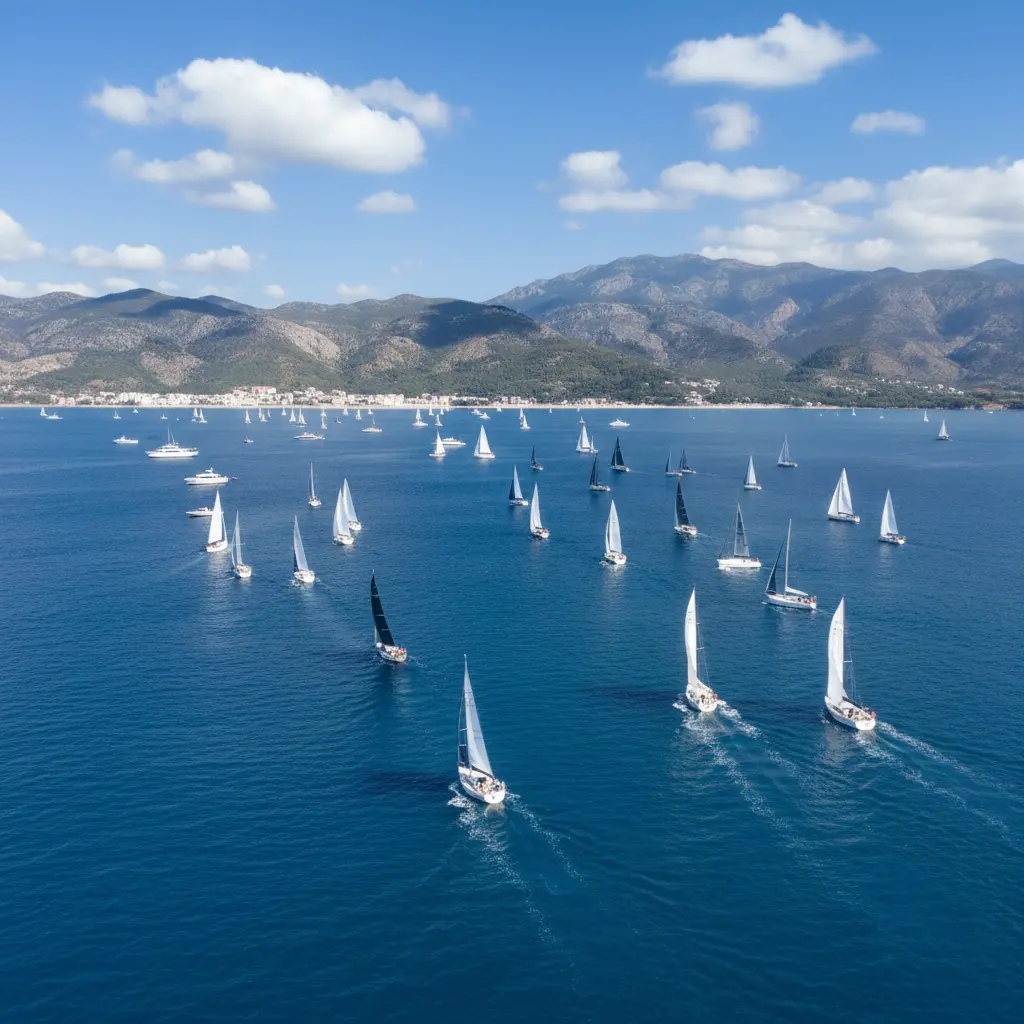
ANKARA – Minister of Transport and Infrastructure, Abdulkadir Uraloğlu, announced that 47 million Turkish Lira, generated for the year 2025, has been allocated to 80 sailing clubs. This support is part of an implementation training protocol between the Turkish Sailing Federation and the Directorate General of Maritime Affairs, aiming to bolster amateur seafaring in Turkey.
Boosting Amateur Seafaring Culture and Accessibility
In a written statement regarding amateur seafarer practices, Uraloğlu emphasized that the implementation trainings are transforming amateur seafaring into a more conscious and systematic structure. He highlighted ongoing efforts to conduct theoretical, online, and practical trainings on boats in maritime environments to strengthen the amateur seafaring culture, increase access to the sea, and raise awareness in this field.
“Through these trainings, we are making it easier for citizens to connect with the sea, making amateur seafaring more widespread, and supporting clubs within the scope of the process carried out with the Turkish Sailing Federation,” Uraloğlu stated. He further added, “Thanks to the implementation training protocol signed between the Turkish Sailing Federation and the Directorate General of Maritime Affairs, 47 million Turkish Lira obtained for 2025 has been distributed among 80 sailing clubs. This resource will be used primarily for the infrastructure and equipment needs of our sailing clubs, as well as for developing amateur seafaring activities.”
The Minister also noted the continuous work to expand the implementation trainings to more locations. In 2025, the number of individuals who received applied training increased by 44% to 27,879, compared to 2023 when the trainings began. Over three years, 70,167 trainees were reached in implementation trainings organized in 80 locations across 22 provinces, with over 66,000 of them receiving certification.
Uraloğlu stressed that seafaring is viewed not just as an industry but also as a culture. He expressed belief that today’s amateur seafarers, especially children and young people, will become a significant source of qualified human resources for the Turkish maritime sector in the future, and that efforts are being directed accordingly to expand these trainings.
New Regulations for Private Boat Qualifications
Uraloğlu also recalled that amateur seafaring practices were re-regulated with the “Regulation on the Equipment of Private Boats and the Qualifications of Persons Who Will Use Private Boats,” published in the Official Gazette on January 17. He noted that the new regulation introduces significant changes in many areas, from document types to penalties, and from training to equivalence principles.
He pointed out that amateur seafaring has been disciplined by implementing an authorization system based on boat length, strengthening training processes, and expanding digitalization. The Minister indicated that with the new regulation, the single type of “Amateur Seafarer Certificate” (ADB) application has ended. Now, “ADB 10” will be valid for private boats up to 10 meters, and “ADB 24” for private boats up to 24 meters.
Existing certificate holders will retain their acquired rights, but to maintain the validity of their certificates, they will need to complete theoretical training once within 5 years. Uraloğlu also mentioned that the concept of a private yacht has been clearly defined in the regulation for the first time. Yachts larger than 24 meters, with cabins and intended for private use, will be treated like commercial yachts in terms of inspection and personnel equipment. This aims to increase navigation safety and protect lives at sea. The durations of theoretical and practical trainings for ADB 24 have also been extended.
Uraloğlu further elaborated: “The right to re-take the exam has been granted to candidates who complete the training, with at least a 1-day interval. ADB 10 holders under the age of 18 will only be able to use a boat if accompanied by an adult ADB 10 holder. Notary approval will not be required for authorization letters given by private boat owners to their spouses and children. If mooring registry licenses and registration documents can be verified online, physical documents will not be requested, thus preventing administrative sanctions for boat owners during inspections. Health reports issued in the last 2 years with the phrase ‘driver/seaman fit for duty’ will be considered valid. An equivalence and verification process has been introduced for private boat certificates obtained from foreign countries. These regulations will also enable citizens to use boats abroad. The effective date of the regulation has been postponed by 6 months to allow time for both digital system compatibility and adaptation for stakeholders.”
This comprehensive support and regulatory framework are expected to significantly enhance the amateur seafaring sector in Turkey, promoting safety, accessibility, and a deeper connection with the country’s maritime heritage.