


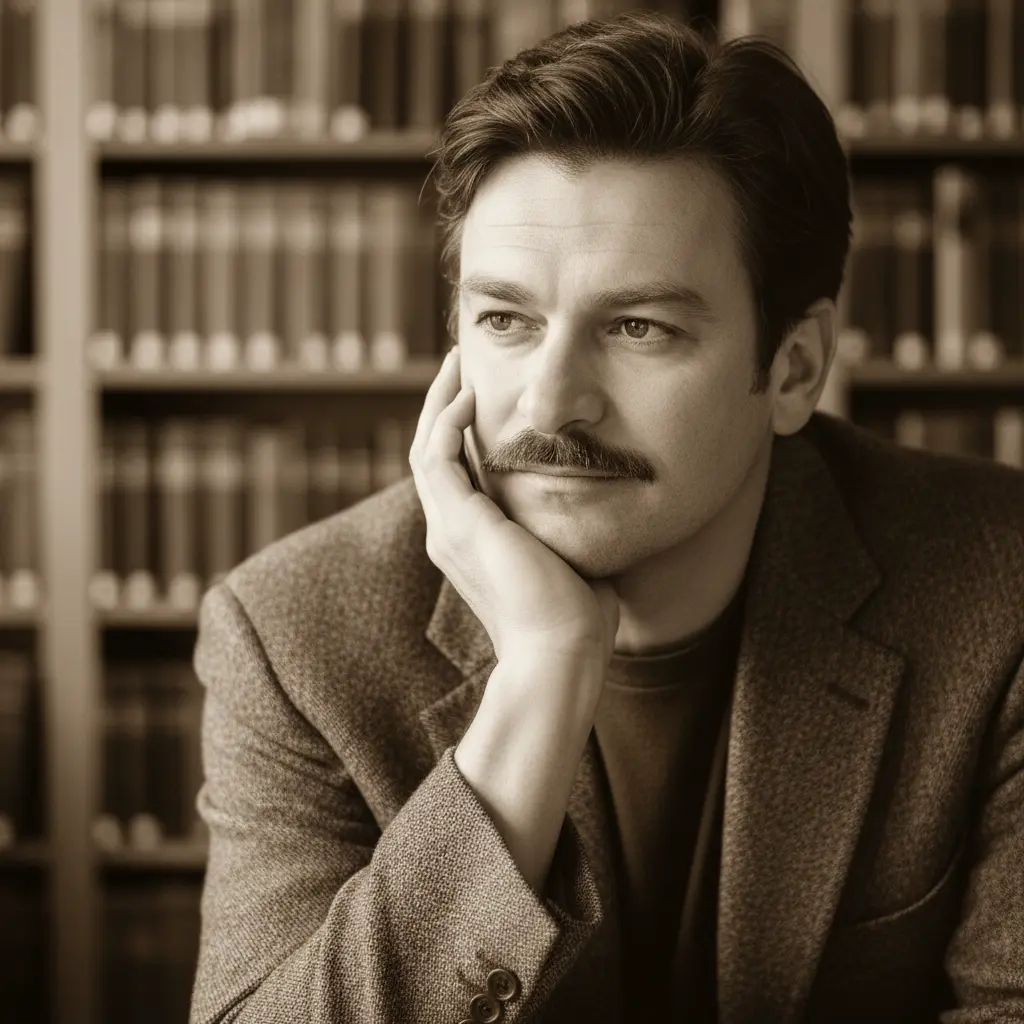
Oğuz Atay, one of the most original and influential writers in Turkish literature, passed away on December 13, 1977, at the age of 43 due to a malignant brain tumor. He left behind not just a few books, but a powerful legacy that reshaped the direction of Turkish literature.
Who Was Oğuz Atay?
Born on October 12, 1934, in İnebolu, Kastamonu, Oğuz Atay grew up in an enlightened family of the Republic. His father, Cemil Atay, served as a chief criminal judge and was a Member of Parliament for the CHP. Atay completed his education in Ankara, graduating from Ankara Maarif College before attending Istanbul Technical University’s Faculty of Civil Engineering. Combining his engineering profession with academia, Atay became a lecturer at the Istanbul State Academy of Engineering and Architecture (now Yıldız Technical University), earning the title of associate professor in 1975 and authoring a professional book titled ‘Topography’.
A Rebellion: ‘The Disconnected’
However, the work that cemented his place in literary history was ‘The Disconnected’ (Tutunamayanlar), published between 1971 and 1972. The novel sparked intense debate upon its release and won the 1970 TRT Novel Award. As critic Berna Moran described it, ‘The Disconnected’ was ‘a rebellion both in what it said and how it said it,’ bringing the Turkish novel in line with contemporary novelistic understanding. In 1997, on the 20th anniversary of Atay’s death, UNESCO selected the work as one of the most distinguished literary pieces of 20th-century Turkish literature.
The Novel of a Scientist
Following this major novel, Atay further deepened the individual’s inner world with ‘Dangerous Games’ (Tehlikeli Oyunlar, 1973). He compiled his short stories in ‘Waiting for Fear’ (Korkuyu Beklerken) and brought a unique approach to biography in literature with ‘The Novel of a Scientist’ (Bir Bilim Adamının Romanı, 1975), which chronicled the life of his mentor, Professor Mustafa İnan. His play, ‘Those Who Play with Plays’ (Oyunlarla Yaşayanlar), was staged at the State Theatres. With works where dream and reality intertwined and metafiction became a fundamental narrative principle, Oğuz Atay is considered a pioneer of the postmodern novel in Turkish literature.
Works That Defy Time
During his lifetime, Atay’s books did not receive sufficient attention, but his value was better understood after his death. ‘Diary’ (Günlük, 1987) and ‘Actology’ (Eylembilim, 1998) were published; his works have been re-printed countless times and adapted for the stage. Plays still being performed today and new readings continue to demonstrate the timelessness of Atay’s texts.
Sharp but Ironic
The loneliness of the individual in modern urban life, problematic relationships with society, sharp but ironic criticisms directed at conventional thinking… Oğuz Atay masterfully wove all these themes together with humor and a deep intellectual background. The Oğuz Atay Literature Awards, presented by the Kastamonu Governorship since 2007, also serve as a testament to the enduring nature of this powerful legacy.
Oğuz Atay, buried in Edirnekapı Cemetery, is remembered once again on the anniversary of his death: ‘The Disconnected’ is not just a novel, but a mirror of an era still searching for answers.