


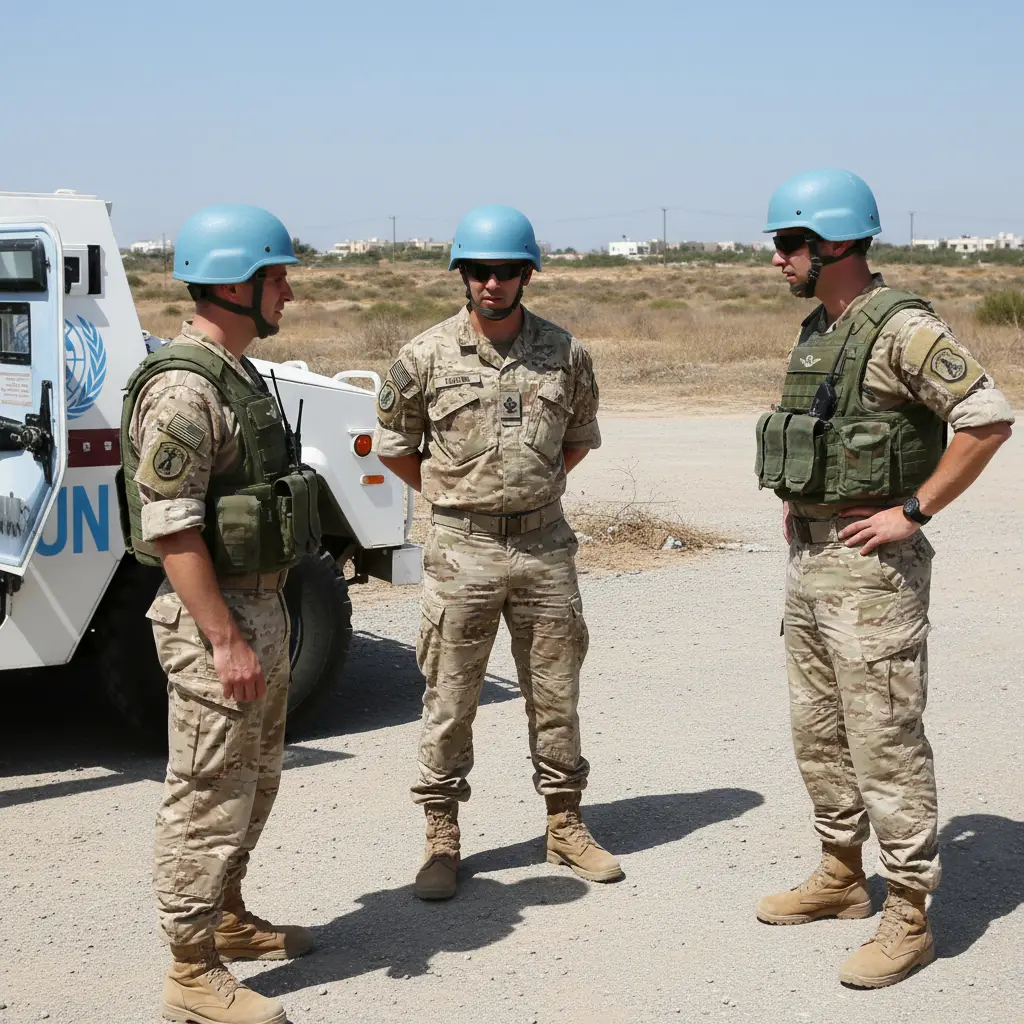
Ankara Strongly Condemns UN Peacekeeping Force Decision in Cyprus
Ankara, February 1 – Turkey has expressed strong disapproval regarding the United Nations (UN) Security Council’s decision to extend the mandate of the UN Peacekeeping Force stationed on the island of Cyprus for another year.
A written statement from the Ministry of Foreign Affairs highlighted the following points: “The extension of the UN Peacekeeping Force’s mandate without obtaining the consent of the Turkish Cypriot side, one of the two sovereign equal peoples on the island, for yet another time, is contrary to the UN’s established practices and principles. The sovereignty of the Greek Cypriot Administration does not extend to the north of the island, nor does it cover the buffer zone in any way.”
The statement further emphasized, “Considering that the element ensuring peace on the island of Cyprus for half a century is not the UN Peacekeeping Force but the presence of the Turkish Armed Forces and Turkey’s effective guarantee, serious question marks arise regarding the raison d’être of the UN Peacekeeping Force, which does not even exhibit a fair and balanced approach to both sides in the buffer zone under its administration.”
Ankara also criticized the resolution’s continued reference to methods for resolving the Cyprus issue that have been tried for decades and have repeatedly failed, stating that such references do not contribute positively to resolution efforts.
Background of the UN Peacekeeping Force in Cyprus
The UN Peacekeeping Force in Cyprus (UNFICYP) was established in 1964 to prevent further fighting between the Greek Cypriot and Turkish Cypriot communities. Its mandate typically involves maintaining a buffer zone, undertaking humanitarian activities, and contributing to the return to normal conditions. However, the presence and operational scope of UNFICYP have been a long-standing point of contention, particularly for the Turkish Cypriot side and Turkey, who argue that the force’s mandate should be reviewed and its operations should be conducted with the consent of both communities on the island.
Turkish Cypriot Perspective and Sovereignty Claims
The Turkish Cypriot side has consistently asserted its sovereign equality and has argued that any decision concerning the island, including the mandate of the peacekeeping force, must be made with its explicit consent. The lack of such consent, as highlighted by Ankara, is seen as a direct violation of their rights and an undermining of efforts towards a just and lasting settlement based on the realities of the island.
International Reactions and Future Outlook
The UN Security Council’s decision reflects the ongoing international efforts to maintain stability in Cyprus, despite the persistent disagreements between the parties involved. The resolution typically calls for all parties to engage constructively in finding a comprehensive settlement. However, Ankara’s strong reaction underscores the deep divisions that remain and the challenges in achieving a mutually acceptable solution. The diplomatic exchanges are expected to continue, with Turkey and the Turkish Cypriot side reiterating their position on the necessity of a two-state solution based on sovereign equality.
The current situation suggests that the path to a lasting resolution in Cyprus remains complex, with significant hurdles related to sovereignty, security, and the role of international actors.