
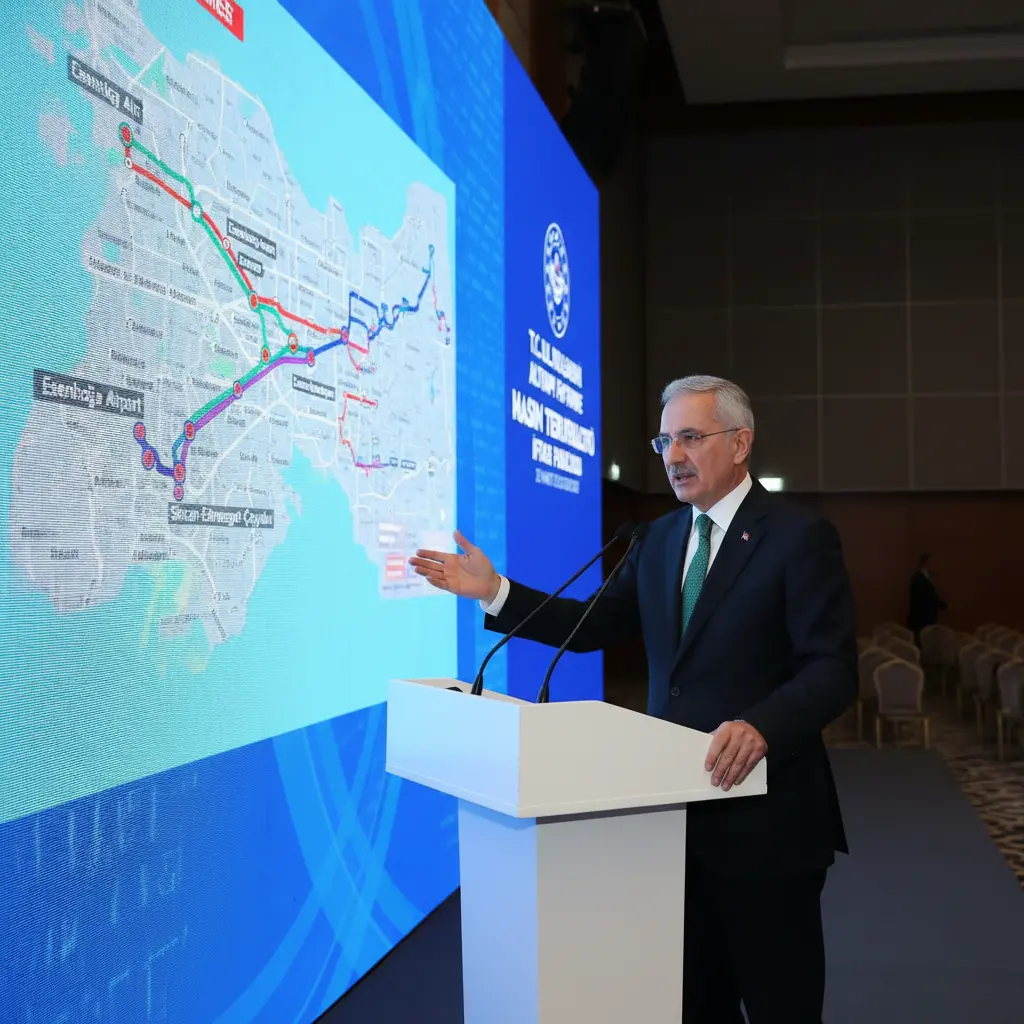
Ankara to Get New Metro Lines: Minister Uraloğlu Details Esenboğa and Sincan Projects
Ankara, March 14 – Abdulkadir Uraloğlu, Turkey’s Minister of Transport and Infrastructure, has unveiled ambitious plans for Ankara’s urban transportation network, announcing two major new metro lines: a 36-kilometer route connecting the city center to Esenboğa Airport and a new rail system project covering the Sincan-Etimesgut-Çayyolu areas. These developments aim to alleviate the growing traffic congestion in the capital, a problem exacerbated by a fourfold increase in vehicle ownership over the past two decades.
Esenboğa Airport Metro Line: A 5-Year Vision
Minister Uraloğlu provided details on the Esenboğa Airport Metro Line, a significant undertaking designed to enhance connectivity between the city’s High-Speed Train (YHT) Station, Esenboğa Airport, and the university district. The Minister stated that the tender for this 36-kilometer line would be issued within the next month, with an estimated completion target of five years. “This will be a modern line befitting our capital,” Uraloğlu remarked, emphasizing the project’s importance for Ankara’s future transportation infrastructure.
New Rail System for Sincan-Etimesgut-Çayyolu
In addition to the airport line, Uraloğlu confirmed that a new rail system project is in the planning stages for the Sincan, Etimesgut, and Çayyolu districts. While still in its preliminary phase, this project is also under the ministry’s purview and is expected to contribute significantly to addressing the transportation needs of these densely populated areas. The Minister highlighted that such underground rail systems are becoming increasingly crucial for managing urban traffic in large cities like Ankara.
16 Billion Lira Investment in Ankara’s Metro System
Uraloğlu also reflected on the substantial investments already made in Ankara’s metro infrastructure. He noted that approximately 16 billion Turkish Lira has been invested by the ministry in metro and rail system projects in Ankara to date. These completed projects have been handed over to the municipality, with the ministry having received around 5 billion Lira in payments. The Minister explained that this model, which does not involve interest, often makes it more attractive for municipalities to have the ministry undertake such large-scale projects.
Addressing Ankara’s Traffic Congestion: A Shift to Underground Solutions
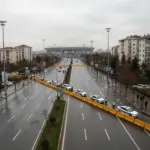
The Minister underscored the escalating challenge of traffic congestion in Ankara, stating that surface-level road solutions are becoming increasingly difficult to implement, mirroring the situation in Istanbul. “In Ankara today, solving transportation problems on the surface, just like in Istanbul, is becoming increasingly difficult. We need to go underground more and increase rail systems,” Uraloğlu asserted. He attributed this necessity to the dramatic increase in vehicle ownership and mobility, which has quadrupled since 2002, far outpacing population growth. This trend necessitates the development of new roads and alternative transportation solutions.
Significant Growth in Highway Investments
Uraloğlu also touched upon the broader advancements in Turkey’s transportation infrastructure, particularly in highways. He reported that the length of divided roads in Turkey has expanded from 6,101 kilometers to 30,049 kilometers, while the total length of motorways has reached 3,796 kilometers. The Minister affirmed that investments in both highway and rail systems would continue to grow, with metro projects expected to form the backbone of Ankara’s transportation in the coming years.
These new metro lines are anticipated to significantly improve public transport efficiency, reduce traffic congestion, and support the sustainable development of Ankara’s urban landscape. The projects represent a strategic shift towards more integrated and environmentally friendly transportation solutions for the capital.