


Following the signing of the Armistice of Mudros on October 30, 1918, the Ottoman Empire effectively ceased to exist, and occupations began. Mustafa Kemal Pasha, after the dissolution of his army, went to Istanbul to implement the idea of “national resistance.” However, the environment in Istanbul was not conducive to organizing a national resistance. Failing to succeed there, he moved to Samsun with the duty of the 9th Army Inspector. Evaluating the developments on the spot, Pasha, at a much earlier date in February 1919, had shared with his close circle that Ankara should be the center of this resistance.
Ankara’s Gradual Centralization
As Mustafa Kemal Pasha’s organization in Anatolia gained momentum, the strategic move of shifting the 20th Corps to Ankara and appointing Ali Fuat Pasha to its command was crucial. Ankara became a secure base for both communication and transportation. After the Erzurum and Sivas congresses, the city transformed into a “headquarters.” The Istanbul Government’s attempts to hinder these developments proved futile through Ankara, leading them to try other means. However, these efforts also failed to break the resistance in Ankara.
The people of Ankara rapidly organized under the umbrella of the Society for the Defense of Rights, and national ideas were disseminated through local press and public meetings. With the arrest of Governor Muhittin Pasha and the appointment of Yahya Galip Bey as acting governor, a truly national administration was established in the city.
December 27, 1919: A Day of Arrival and Hope
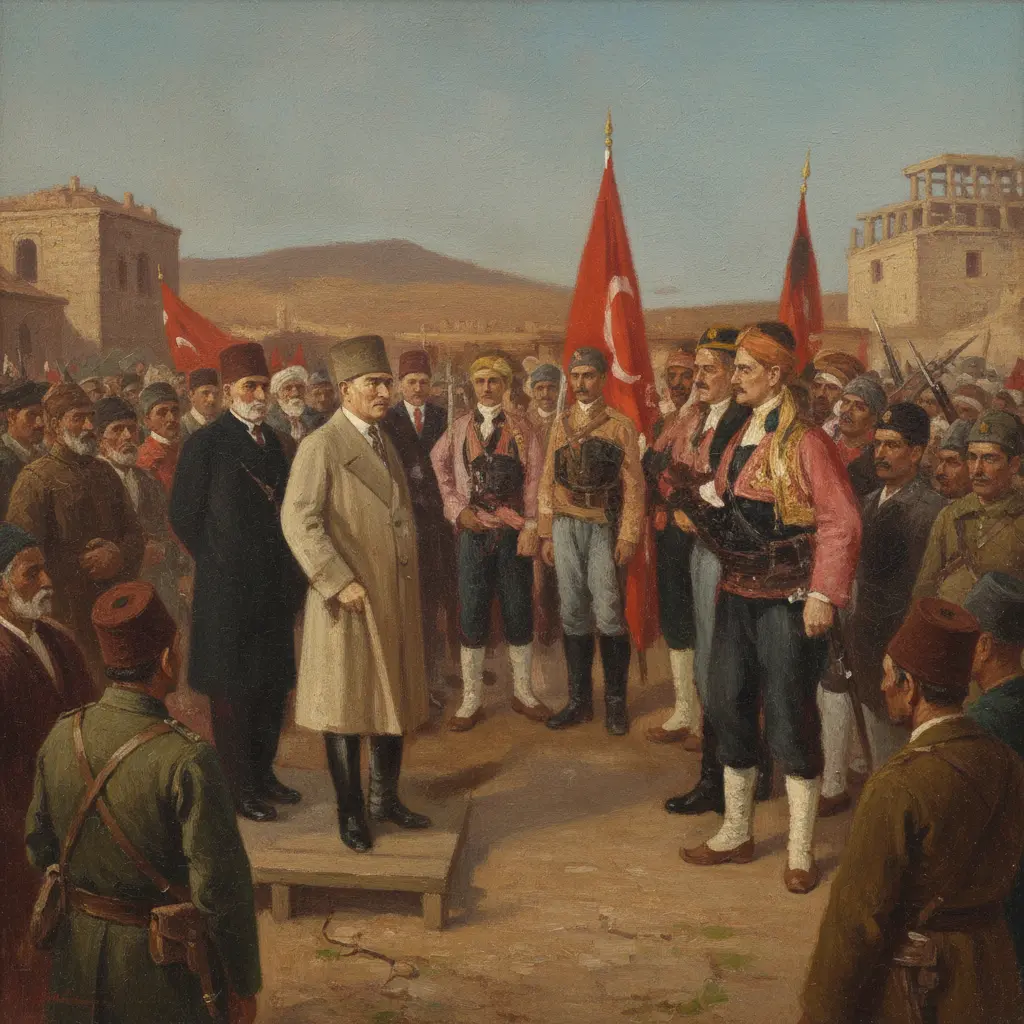
Mustafa Kemal Pasha and the members of the Representative Committee arrived in Ankara on the morning of December 27, 1919. The city had turned into a festival. Thousands of people gathered from early morning around Çankaya, Dikmen, and Hacı Bayram; prayers were recited, and the public enthusiastically prepared to welcome them with drums and zurnas. Zeybeks and seymen took their place at the forefront. Mustafa Kemal Pasha shook hands with the seymen, and upon hearing the words, “We have come to shed our blood for the nation,” he expressed his feelings by saying, “Well done, brave ones!”
The presence of British and French soldiers at the station was noticeable. Despite this, the public openly showed their support for Pasha. After a religious ceremony at Hacı Bayram Mosque, the delegation moved to the Government House, where they addressed the enthusiastic crowd. Mustafa Kemal Pasha delivered his message, centering on the will of the people, stating, “Our self-sacrificing and courageous people like you will save us.”
Ankara: The Headquarters of Resistance
Mustafa Kemal Pasha stayed at the Agricultural School for 118 days. A telegraph center established here ensured communication throughout the country. On December 28, 1919, he held a conference for the notables of Ankara, explaining the developments. Deputies from Istanbul also visited Ankara and met with Pasha.
During this period, Ankara made great financial sacrifices. The city, devastated by fires and suffering from malaria and scarcity, supported the National Struggle with over 900,000 liras. Through newspapers, guidance committees, and society activities, the people of Ankara were mobilized.
The Process of Becoming a Capital with the Opening of the Assembly
After the occupation of Istanbul on March 16, 1920, the Ottoman Parliament (Meclis-i Mebusan) was dissolved. This event further highlighted Ankara’s central role. Mustafa Kemal Pasha announced that an “assembly with extraordinary powers” would be opened in Ankara. With the opening of the Grand National Assembly of Turkey on April 23, 1920, Ankara assumed the mission of being the capital not only de facto but also politically.
Atatürk’s Expressions on the Importance of Ankara
In later years, Mustafa Kemal Pasha summarized Ankara’s role in this process with these words:
“In the history of the War of Independence, the name Ankara will preserve a most cherished position… Thanks to the patriotic courage you showed then, it was possible to open the Parliament, which was closed in Istanbul due to foreign intervention, in Ankara with broader authority and a national honor befitting its independence.”
Source: https://www.kocaelitv.com.tr/ankaranin-milli-mucadeledeki-yeri-bir-baskentin-dogusu