

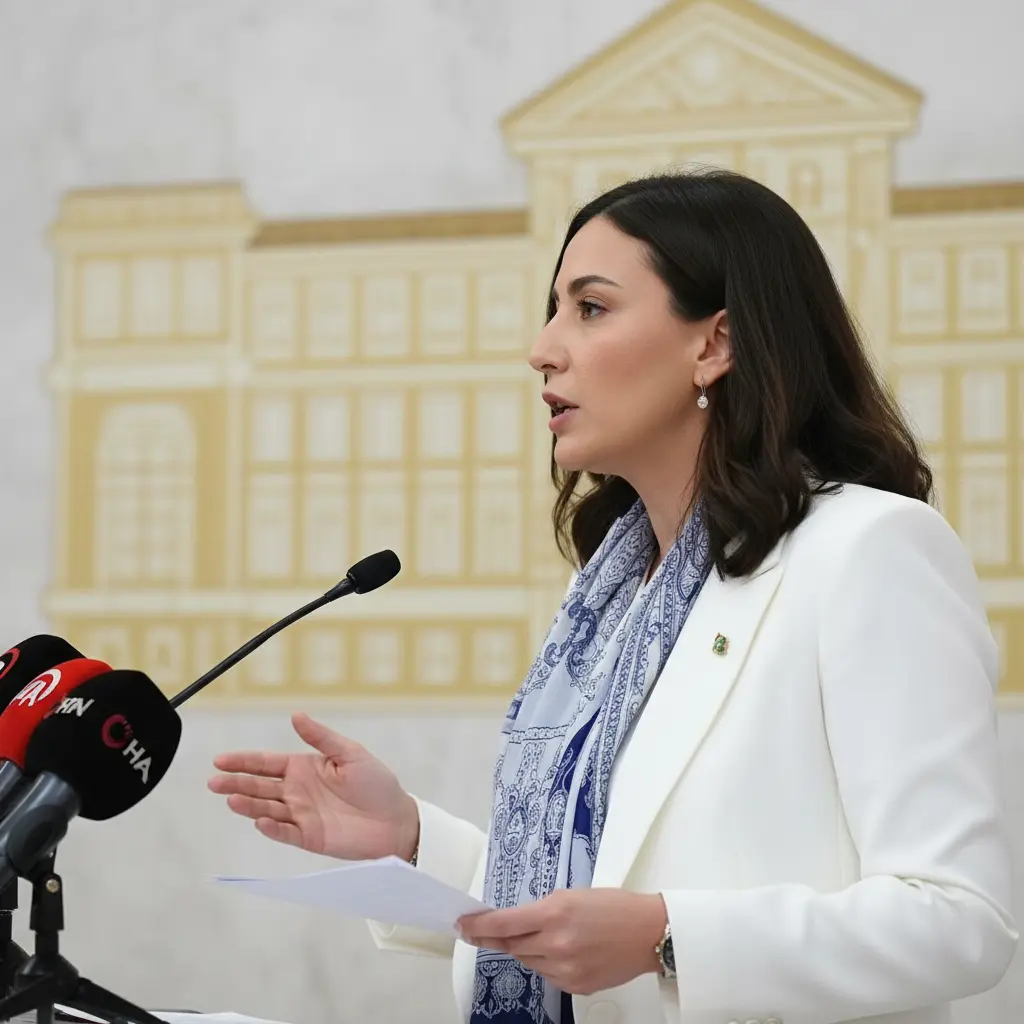
Istanbul, Turkey – December 24, 2025 – Evrim Rızvanoğlu, the Republican People’s Party (CHP) Vice Chair responsible for Nature Rights and Environmental Policies, has formally addressed the Turkish Grand National Assembly regarding the alarming expansion of quarry operations in Silivri Danamandıra, Istanbul. Rızvanoğlu’s two separate written parliamentary questions highlight the significant dangers these activities pose to Istanbul’s critical drinking water reserves, extensive forest areas, and invaluable historical sites, including ancient Roman aqueducts.
Environmental and Water Security at Risk
Rızvanoğlu underscored the severe risks associated with numerous quarries, some utilizing explosive production methods, operating in Danamandıra. She emphasized that these operations should no longer be viewed as isolated projects but must be assessed within the framework of cumulative environmental impact, given their direct connection to Istanbul’s water supply systems.
In her parliamentary question directed to the Ministry of Environment, Urbanization, and Climate Change, Rızvanoğlu articulated the region’s sensitivity: “Danamandıra Neighborhood is located in an area directly linked to forest lands, the Mandıra Stream, the Terkos Basin, and Istanbul’s drinking water systems. Therefore, quarry activities conducted in this region cannot be treated as ordinary mining operations.”
She questioned why the cumulative environmental impact of multiple quarries in the same area has not been considered by the Ministry, asking: “Has the combined environmental impact of quarries located in the same region been evaluated by your Ministry within the scope of cumulative impact assessment?”
The parliamentary question also sought information on whether hydrogeological and water quality analyses have been conducted regarding the quarries’ effects on the Mandıra Stream, Terkos Basin, and groundwater. Furthermore, it inquired about the nature of inspections carried out to assess the impact of explosive activities on forest areas, soil structure, and residential zones.
Threat to Forest Assets
Addressing the forest resources, Rızvanoğlu drew attention to planned tree felling in Danamandıra and its surroundings, posing critical questions: “How many trees are projected to be cut down in this context? How does your Ministry reconcile such a large-scale tree felling with Article 169 of the Constitution, which stipulates the protection and non-reduction of forests?”
Cultural Heritage: Roman Aqueducts in Peril
Rızvanoğlu also warned that quarry activities, particularly those involving explosives, in Danamandıra and its vicinity, not only endanger the environment but also directly threaten thousands of years of cultural heritage. In her parliamentary question to the Ministry of Culture and Tourism, she defined the cultural sensitivity of Danamandıra as follows: “There are reports in the public domain and local applications indicating the presence of multiple quarries in Danamandıra Neighborhood and its surroundings, some of which use explosive production methods, and these activities are practically intertwined with areas containing registered Roman aqueducts. This situation raises questions about how the protection areas determined by the High Council decision are practically implemented on the ground, how they are supervised, and whether cultural assets are affected by these activities.”
Highlighting that the vibrations, ground movements, dust, and noise generated by explosive production cannot be ignored, Rızvanoğlu posed several questions to the Ministry:
- “Following the High Council’s decision dated September 24, 2025, how many on-site inspections have been carried out by your Ministry in these protected areas? What were the results of these inspections?”
- “Are quarry activities conducted within or at a distance that could directly interact with the protected area known to your Ministry?”
- “Has any technical examination or expert report been prepared by your Ministry regarding the potential effects of vibrations and ground movements caused by explosive production on Roman water galleries?”
- “Has it been evaluated whether the presence of multiple quarries in the same area creates a cumulative impact on registered cultural assets?”
- “In case of violations of protected areas, have any administrative or penal sanctions been applied to date? If so, what were they?”
- “Is there any ongoing work to establish continuous monitoring, periodic reporting, or an area management plan for the Roman aqueducts in Danamandıra?”
- “Is it on the agenda to impose additional distance requirements, activity restrictions, or special protection decisions for quarry activities to protect cultural assets?”
Rızvanoğlu’s inquiries underscore a growing concern among environmental and cultural conservationists regarding the unchecked industrial expansion in Istanbul’s critical ecological and historical zones.