


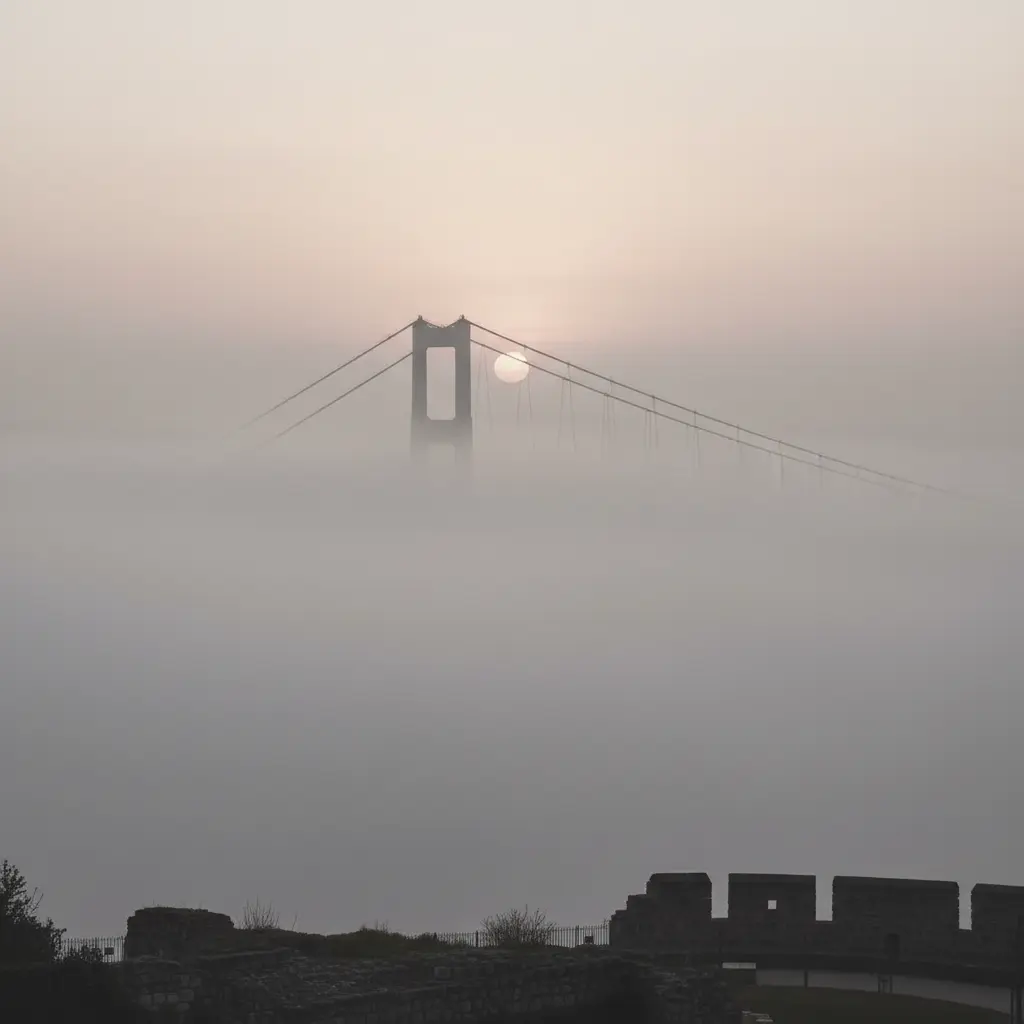
Istanbul, April 11 – Dense fog enveloped the Istanbul Strait this morning, leading to significantly reduced visibility. The Fatih Sultan Mehmet Bridge was completely obscured by the thick fog, rendering it invisible.
Dense Fog Blankets Istanbul Strait
Starting from the morning hours, dense fog began to affect the areas around the Bosphorus in Istanbul. As visibility decreased, the Fatih Sultan Mehmet Bridge became entirely hidden beneath a blanket of fog. The dense fog continued to impact the entire Bosphorus line, with the monumental structure disappearing from view and foggy weather prevailing in the region. According to meteorological data, the fog is expected to clear in the later hours of the day.
Impact on Visibility and Landmarks
The Fatih Sultan Mehmet Bridge, a prominent landmark connecting the European and Asian sides of Istanbul, was completely swallowed by the fog. This natural phenomenon significantly impaired visibility across the strait, affecting both sea and potentially air traffic, although no immediate reports of disruptions were mentioned in the provided data. The persistence of the fog throughout the Bosphorus area created a dramatic visual, transforming the city’s iconic skyline.
Weather Outlook
Meteorological forecasts indicate that the dense fog will gradually dissipate as the day progresses. Residents and commuters in Istanbul are advised to exercise caution due to the reduced visibility in affected areas. This event highlights the dynamic weather patterns that can influence the city’s unique geography.
Previous Incidents and Context
While the provided data does not detail past fog incidents, dense fog in the Istanbul Strait can occasionally lead to disruptions in maritime traffic, particularly for large vessels. Such conditions underscore the importance of weather monitoring and timely information dissemination for public safety and operational efficiency in one of the world’s busiest waterways.
Authorities continue to monitor the situation and will provide updates as conditions change. The primary concern remains the safety of navigation and public well-being during periods of low visibility.