

Espionage in the Grand Bazaar: A Century-Old Spy Map Uncovered
Istanbul, a city bridging continents and cultures, was not just a battleground of arms during World War II, but a strategic hub for a quieter, yet equally fierce, war of information. Amidst the bustling heart of neutral Turkey, in the labyrinthine alleys of the Grand Bazaar, a century-old spy map has come to light, revealing a clandestine operation that went unnoticed by its perpetrators but not by their adversaries.
The Unseen War: Istanbul’s Strategic Role
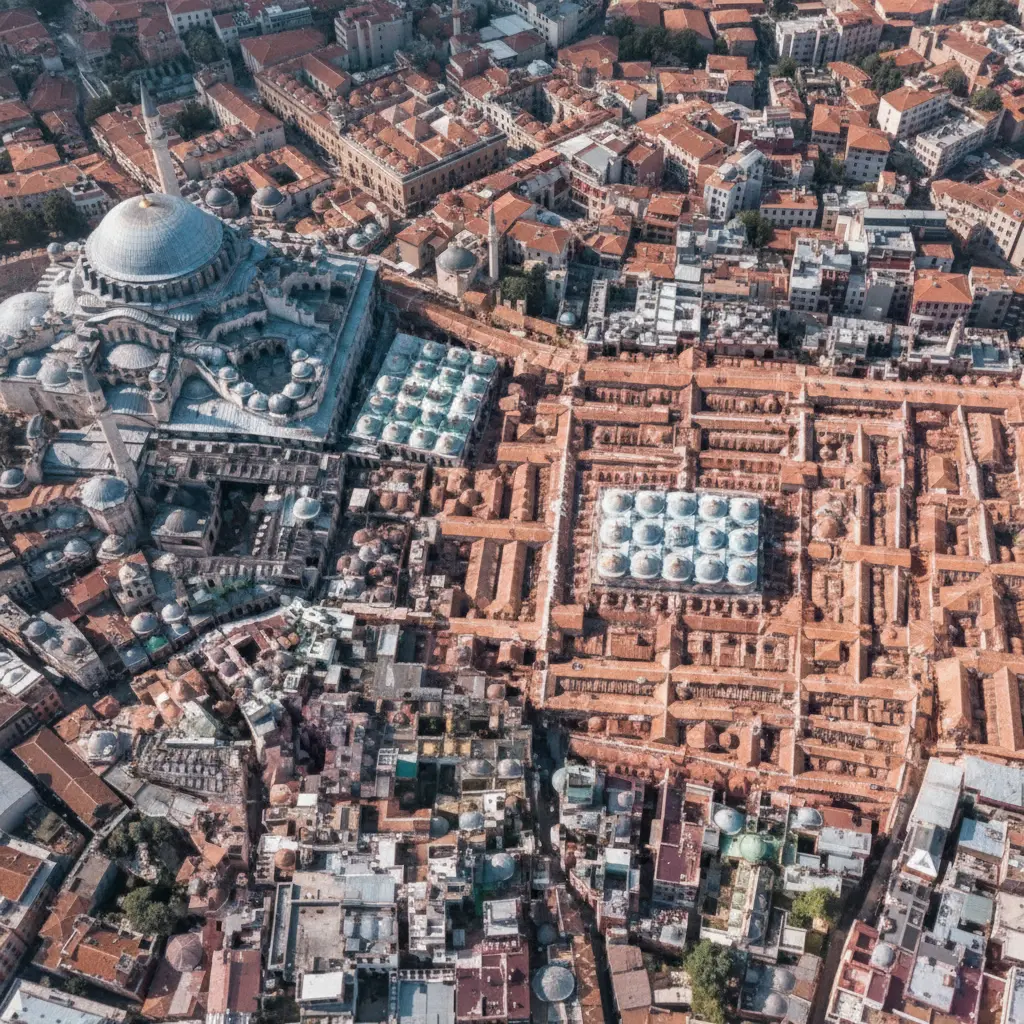
Before and after the world wars, and even during periods of peace, intelligence was a highly valued commodity, capable of weakening nations. Countries established covert espionage units, operating in plain sight within cities and squares, including Istanbul, a city of immense strategic importance connecting Asia and Europe. The Grand Bazaar, the world’s oldest covered market, became an unwitting stage for this information warfare. A recently unearthed German intelligence document from the era when Turkey maintained its neutrality exposes a network of spies attempting to smuggle information.
Spies Among Us: The Early Republic Era
In the early republican period, much like today, spies walked among ordinary citizens, shopped at the same stores, and even lived in adjacent apartments. The Grand Bazaar, a magnet for millions of tourists and known globally as the Grand Bazaar, bore witness to these clandestine battles. Just as Turkey tracked foreign agents, other secret services intensely monitored each other. During World War II, with Turkey remaining neutral, efforts to expose spies were a global priority.
Unaware They Were Being Watched
The document, titled “Situation of Jewelry shops of two Agents in Capali Carsi (Bazaar), Istanbul,” reveals that the German secret service, Abwehr, uncovered two agents who were funneling intelligence obtained from the Middle East to Russia via Sofia, Bulgaria. These agents conducted their operations discreetly from a jewelry shop within the Grand Bazaar. Their method was deceptively simple: a hidden compartment within the business housed their communication technology, while all other activities appeared normal. However, these agents, believing themselves to be concealed, were oblivious to the fact that they had been exposed. The Abwehr had identified both the agents and their operational base, marking the exact location on a detailed sketch that was then sent to senior management.
Every Detail Etched into the Map
The discovered drawing bears the title “Situation of Jewelry shops of two Agents in Capali Carsi (Bazaar), Istanbul,” describing the locations of two distinct jewelry shops used by the agents within the Grand Bazaar. The narrow street and courtyard connections where the two shops were situated are meticulously drawn. Notes such as “Court,” “very narrow lane,” and “15-20 yards approx.” describe the distances and spatial relationships between the shops. The exit route from the Grand Bazaar leads to a square featuring prominent institutions of the time, such as Deutsche Bank and Banca di Roma. The bottom of the sketch includes the note “Towards Bridge across Golden Horn,” indicating that the street flow on the map continues towards the Galata Bridge.
Code Names: White Russian and German
The document identifies two agents, codenamed “White Russian” and “German,” operating their jewelry shops in the narrow streets of the Grand Bazaar, with their activities spanning the years from the 1920s to the 1940s. The term “White Russian” was commonly used to describe pro-Tsarist Russian emigrants who sought refuge in Istanbul after the Bolshevik Revolution. Records of individuals from this community involved in trade or intelligence activities frequently appeared in reports of that period.
What Was the Abwehr?
The Abwehr, established in the late 1920s as Nazi Germany’s military intelligence and counter-espionage organization, was tasked with both gathering foreign intelligence and conducting sabotage and special operations throughout World War II. Under the leadership of Admiral Wilhelm Canaris, it was responsible for uncovering foreign agent activities, providing intelligence to the German military, and organizing covert operations in critical regions. During Hitler’s reign, the Abwehr engaged in a fierce power struggle with the SS and Sicherheitsdienst, largely losing its influence in the final years of the war and being completely dismantled in 1944.
Unanswered Questions
- How many other such clandestine operations were active in Istanbul’s Grand Bazaar during World War II?
- What specific intelligence were these agents attempting to transmit, and what was its impact?
- Are there more undiscovered documents in archives that could shed further light on Istanbul’s role in the intelligence wars of the 20th century?
- What was the ultimate fate of the “White Russian” and “German” agents?
The unearthing of this century-old spy map offers a rare glimpse into the hidden world of espionage that unfolded in one of the world’s most iconic markets. It serves as a stark reminder that history often holds secrets, waiting to be uncovered, revealing the intricate webs of intrigue woven beneath the surface of everyday life.
Source: https://www.sabah.com.tr/pazar/2026/03/01/kapalicarsida-bir-asirlik-casusluk-krokisi