


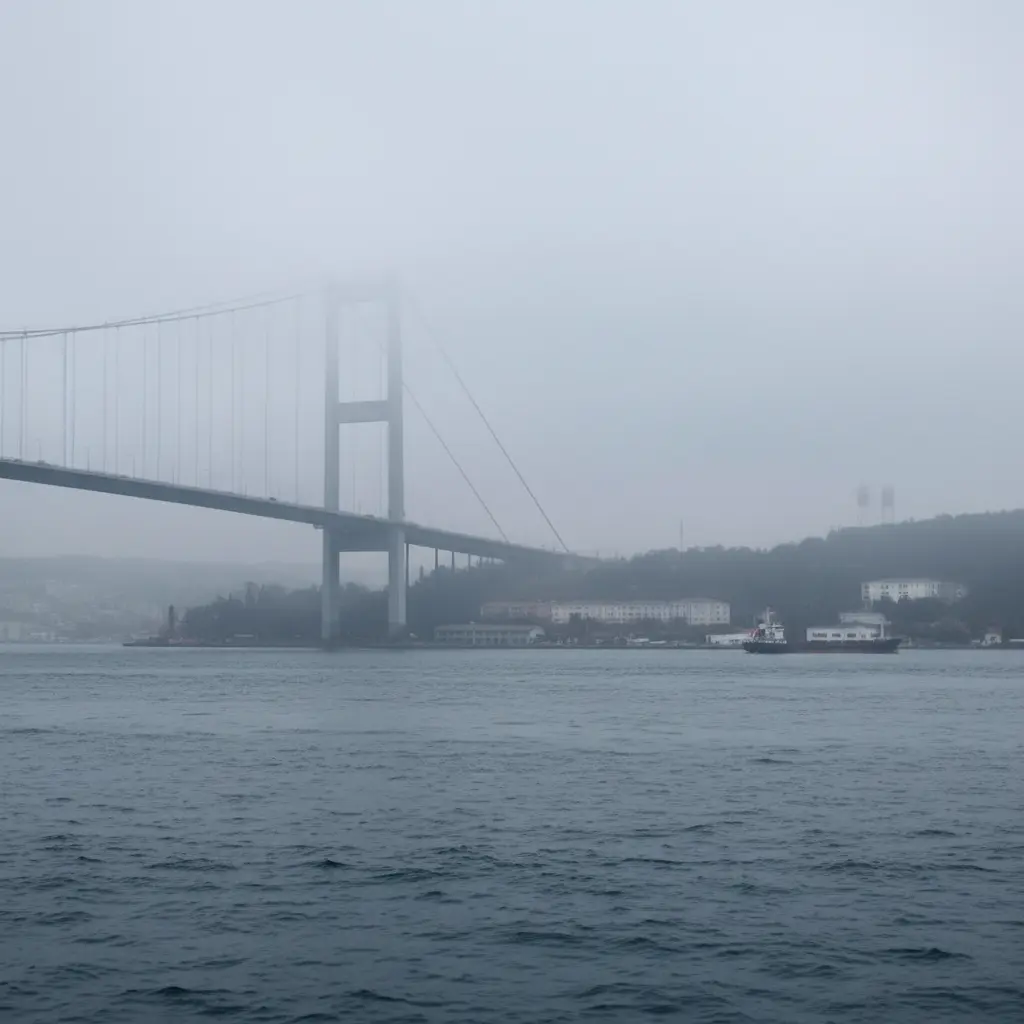
Istanbul Strait Closed to Vessel Traffic Due to Dense Fog
Istanbul, March 17 – The Istanbul Strait has been closed to two-way vessel traffic since 04:53 AM on Tuesday, March 17, 2026, due to dense fog observed in the northern parts of the city. The decision was announced by the Ministry of Transport and Infrastructure’s General Directorate of Coastal Safety via its official website.
The closure, implemented for safety reasons, affects all maritime traffic navigating through the critical waterway that connects the Black Sea to the Sea of Marmara. The northern sections of Istanbul have been particularly impacted by the thick fog, significantly reducing visibility and making safe passage for vessels impossible.
Details of the Closure
The General Directorate of Coastal Safety issued a statement confirming the immediate suspension of vessel traffic in both directions. This measure is standard procedure during adverse weather conditions to prevent accidents and ensure the safety of navigation. The duration of the closure will depend on the improvement of weather conditions and visibility levels in the strait.
Impact on Maritime Traffic
The Istanbul Strait is one of the world’s busiest maritime passages, with thousands of commercial and passenger vessels transiting through it annually. The closure is expected to cause delays for ships awaiting passage, potentially affecting supply chains and shipping schedules. Authorities are closely monitoring the situation and will reopen the strait as soon as it is deemed safe for navigation.
Previous Incidents and Safety Measures
Such closures are not uncommon in the Istanbul Strait, especially during the colder months when fog is more prevalent. The General Directorate of Coastal Safety regularly implements stringent safety protocols to manage traffic in challenging weather. These measures include real-time monitoring of weather conditions, radar surveillance, and communication with vessels to provide timely updates and instructions.
Local Reactions and Expectations
While the closure is a temporary inconvenience, it underscores the importance of maritime safety in such a vital and geographically complex waterway. Local authorities and maritime operators are prepared for such events, with contingency plans in place to minimize disruptions. The public is advised to follow official announcements for updates regarding the reopening of the strait.
The city of Istanbul, known for its strategic location, relies heavily on the smooth operation of its maritime routes. The current fog-induced closure serves as a reminder of the powerful influence of natural elements on urban infrastructure and international trade.
Authorities have not yet provided an estimated time for the reopening of the strait, emphasizing that safety remains the top priority. Further announcements will be made as weather conditions evolve.
Source: https://www.yenisafak.com/gundem/istanbul-bogazinda-gemi-trafigi-cift-yonlu-kapatildi-4806629