

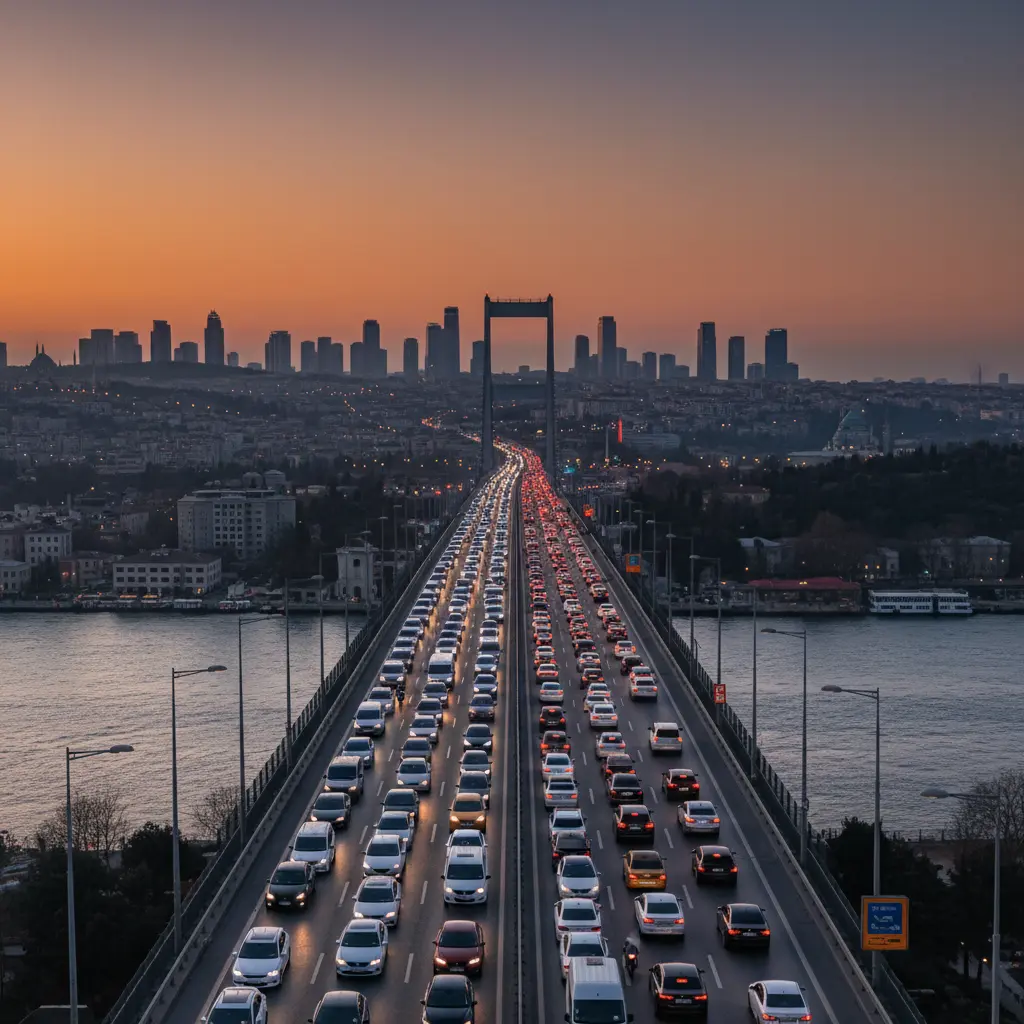
Istanbul, March 9 – On the first workday of the new week, Istanbul residents faced substantial traffic congestion, with the overall traffic density across the city reaching 62%. This figure, recorded by the Istanbul Metropolitan Municipality (IMM) Traffic Density Map, highlights the persistent challenge of urban mobility in the metropolis.
High Congestion on Both Sides of the City
As of 08:30 AM, the European side of Istanbul reported a traffic density of 51%, while the Asian side experienced a more severe congestion level of 72%. One of the particularly affected areas was the Kozyatağı D-100 Motorway, where vehicles were observed moving slowly due to the heavy traffic towards Kadıköy.
By 09:00 AM, the city-wide traffic density slightly decreased to 60%, but the impact on daily commutes remained significant for thousands of drivers. The images from Kozyatağı D-100 Motorway depicted long lines of cars, underscoring the daily struggle faced by commuters.
Factors Contributing to Istanbul’s Traffic Woes
Istanbul, a city straddling two continents, is known for its vibrant economy and large population. However, this growth also brings challenges, particularly in urban planning and transportation. Several factors contribute to the recurring traffic congestion:
- High Population Density: With a population exceeding 15 million, Istanbul is one of the most populous cities in the world, leading to a high number of vehicles on its roads.
- Limited Infrastructure: Despite ongoing investments in public transport and road networks, the infrastructure often struggles to keep pace with the rapid urbanization and increasing vehicle ownership.
- Commuting Patterns: A significant portion of the workforce commutes between the Asian and European sides, especially during peak hours, causing bottlenecks at bridges and major arteries.
- Public Transportation Usage: While extensive, the public transportation system, including metro, Marmaray, and bus lines, is often overwhelmed, prompting many residents to rely on private vehicles.
The city authorities have been implementing various strategies to alleviate traffic congestion, including expanding metro lines, introducing new bus routes, and promoting alternative transportation methods. However, the sheer scale of the city’s population and daily movements means that traffic remains a persistent issue.
Impact on Daily Life and Economy
Traffic congestion in Istanbul has a direct impact on the daily lives of its citizens, leading to longer commute times, increased stress levels, and reduced productivity. Economically, it results in significant losses due to wasted fuel, delayed deliveries, and decreased efficiency in business operations.
The current traffic situation serves as a stark reminder of the ongoing need for comprehensive and sustainable urban planning solutions to manage the challenges of a rapidly growing megacity. As Istanbul continues to grow, so does the urgency to develop more effective strategies to ensure smoother and more efficient urban mobility for its residents.
Source: https://www.yenisafak.com/foto-galeri/gundem/istanbulda-haftanin-ilk-is-gununde-trafik-yogunlugu-yuzde-62ye-cikti-4804287