


Istanbul, a city brimming with history at every turn, serves as an open-air museum. Among its most vibrant sections is the Aksaray district in the Fatih municipality. This district, named after families brought from various parts of Anatolia for settlement by Fatih Sultan Mehmet and Sultan II. Bayezid Han after the conquest of Istanbul, was notably shaped by those who came from the Aksaray province. Consequently, many street and neighborhood names in the district bear resemblances to those in Aksaray province. A tangible example of this cultural heritage is the Red Minaret Mosque, located on Horhor Street.
The Red Minaret Mosque: A Complex of Two Structures
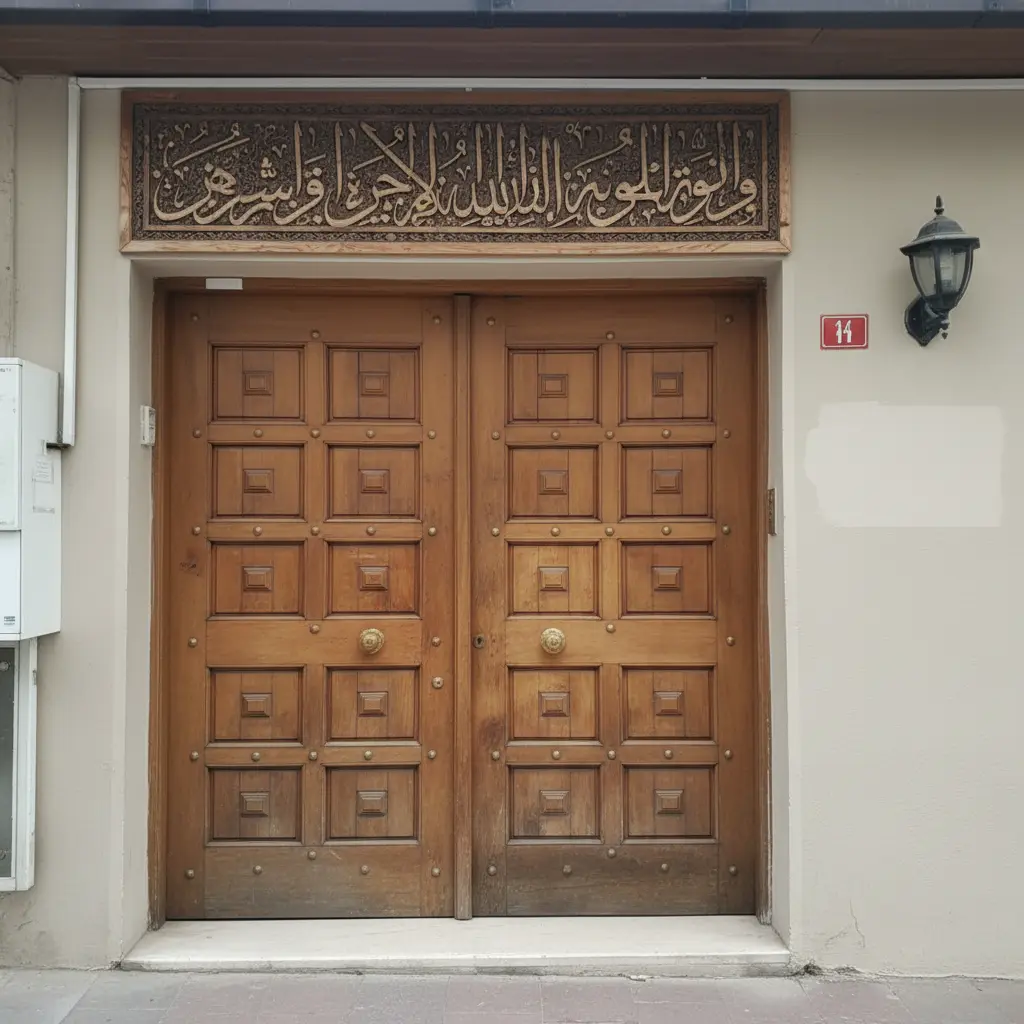
The Red Minaret Mosque, situated at the intersection of Horhor Street, which leads from Vatan Street to Fatih, and Halit Ağa Street in Gureba Hüseyin Ağa Quarter, presents itself as a complex composed of two distinct structures. The first structure is a domed mosque, distinguished by its red brick minaret. Adjacent to it on the right is a second structure, a mescit (small mosque) with a lower ceiling. While the domed mosque is currently not in use, prayers continue to be held in the mescit section.
The Secret of the Minaret’s Color
The mosque’s history dates back to Pir Mehmet bin İlyas, the chief tile maker during the reign of Fatih Sultan Mehmet. Constructed as a mescit in 1521, the structure suffered significant damage during the great Unkapanı Fire of 1718. Following the fire, a benefactor named Halil Ağa rebuilt the mescit, which then underwent subsequent renovations to achieve its present appearance. Although the apartment-like last congregation area added later in front of the mosque overshadows the original structure’s grandeur, the section on the right, referred to as the ‘Small Mosque,’ actually functions as a mosque with its minbar (pulpit). Between these two structures rises a single-balcony minaret built with glazed red bricks. This unique minaret, which has retained its color to this day, is the most crucial element that gave the mosque its name, ‘Red Minaret.’
A First in Turkey: Minaret Base Inside the Mosque
One of the most striking features distinguishing the Red Minaret Mosque from other mosques in Turkey is that its minaret’s base is located inside the mosque. This architectural detail stands out as a rare characteristic that surprises those who enter. Additionally, the interior walls of the mosque, covered entirely with tiles, are another dazzling detail.
Its Anatolian Sibling: The Leaning Minaret in Aksaray
A counterpart to Istanbul’s Red Minaret can also be found in Aksaray province. This structure, popularly known as the ‘Leaning Minaret’ or ‘Red Minaret,’ was commissioned by I. Gıyaseddin Keyhüsrev, the father of Seljuk Sultan Alaaddin Keykubat, between 1221 and 1236 in the 13th century. Built with red bricks and Khorasan mortar, the minaret boasts an impressive silhouette with its height of 30.6 meters. Its four-sided base, zigzag-patterned lower section, and upper part adorned with blue-green tile mosaics make it a unique example of Seljuk architecture.
The Red Minaret Mosque in the heart of Istanbul, preserving the memory of those who came from Aksaray province, continues to serve as a bridge between the two cities through its architectural features and its connection to its Anatolian sibling.