


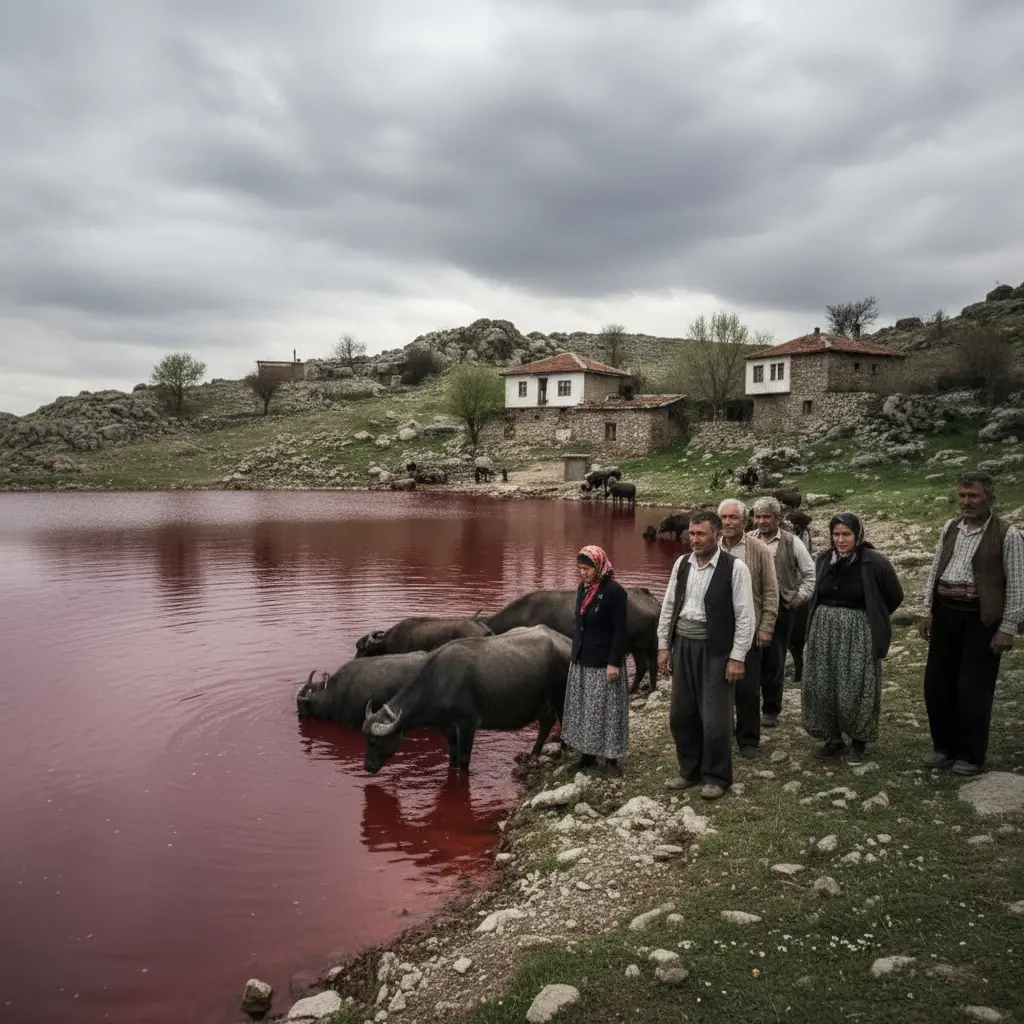
The air in Kızılcahamam, Ankara, often carries the scent of pine and fresh mountain breezes, but for those who know its history, there’s a lingering whisper of tragedy around a place now known as Kanlıgöl, or ‘Bloody Lake’. It’s a story etched into the landscape, a tale of a devastating drought, desperate animals, and a community forever marked by loss. This isn’t just a geographical feature; it’s a living memory, passed down through generations, reminding us of nature’s raw power and the resilience of those who live by its whims.
The Drought That Stained a Lake Red
The year was 1950, and the Salın Plateau in Kızılcahamam was in the grip of a relentless drought. For the villagers, whose livelihoods depended on animal husbandry, every drop of water was precious. The scorching heat was particularly unbearable for the buffaloes, creatures known for their love of water and their need to cool themselves in its depths. Day after day, they searched, their instincts driving them towards any hint of moisture.
According to accounts from the local people, the desperate herd, guided by an innate sense of where water might be, turned towards the steep, rocky cliffs where they sensed its presence. But the terrain was treacherous, a cruel barrier between life-giving water and the parched animals. The buffaloes, especially the younger, less experienced ones, pressed forward, their thirst overriding caution. They reached the edge of the precipice, unable to stop, and plunged to their deaths.
The villagers watched helplessly as their herds, their very means of survival, perished before their eyes. The clear waters of the lake below were soon tainted, not by mud, but by blood. The sheer number of buffaloes that fell meant their blood dyed the lake a chilling crimson. From that day forward, the locals renamed it Kanlıgöl – the Bloody Lake.
A Legacy of Sorrow, Seventy Years On
Even after nearly seven decades, the name Kanlıgöl persists. It’s a testament to the profound impact this event had on the community. The elders of Salın Village have ensured that this painful chapter of their history is not forgotten, relaying the story to their children and grandchildren. What appears today as a beautiful natural landscape, attracting photographers and trekking groups, secretly holds the scars of a great tragedy.
Visitors to the area, often drawn by its scenic beauty, are frequently taken aback when their guides share the harrowing tale of Kanlıgöl. It’s a stark reminder that beneath the surface of natural beauty can lie profound stories of hardship and survival. The lake, once a source of life, became a symbol of a community’s struggle against the unforgiving forces of nature.
Beyond the Lake: The Broader Context of Kızılcahamam
Kızılcahamam itself is renowned for its thermal springs and natural wonders, making it a popular destination for those seeking both relaxation and adventure. However, the story of Kanlıgöl adds a layer of depth to its identity, showcasing the rich, often poignant, history that shapes the region. It’s a place where the grandeur of nature meets the raw realities of life, where every rock and every ripple can tell a story.
The tale of Kanlıgöl is more than just a local legend; it’s a powerful narrative about the delicate balance between humanity and the environment. It speaks to the enduring connection between a community and its land, and how historical events, even those from long ago, continue to resonate through the generations. The crimson stain may have faded from the water, but the memory of the ‘Bloody Lake’ remains, a poignant reminder of a past that shaped the present.