

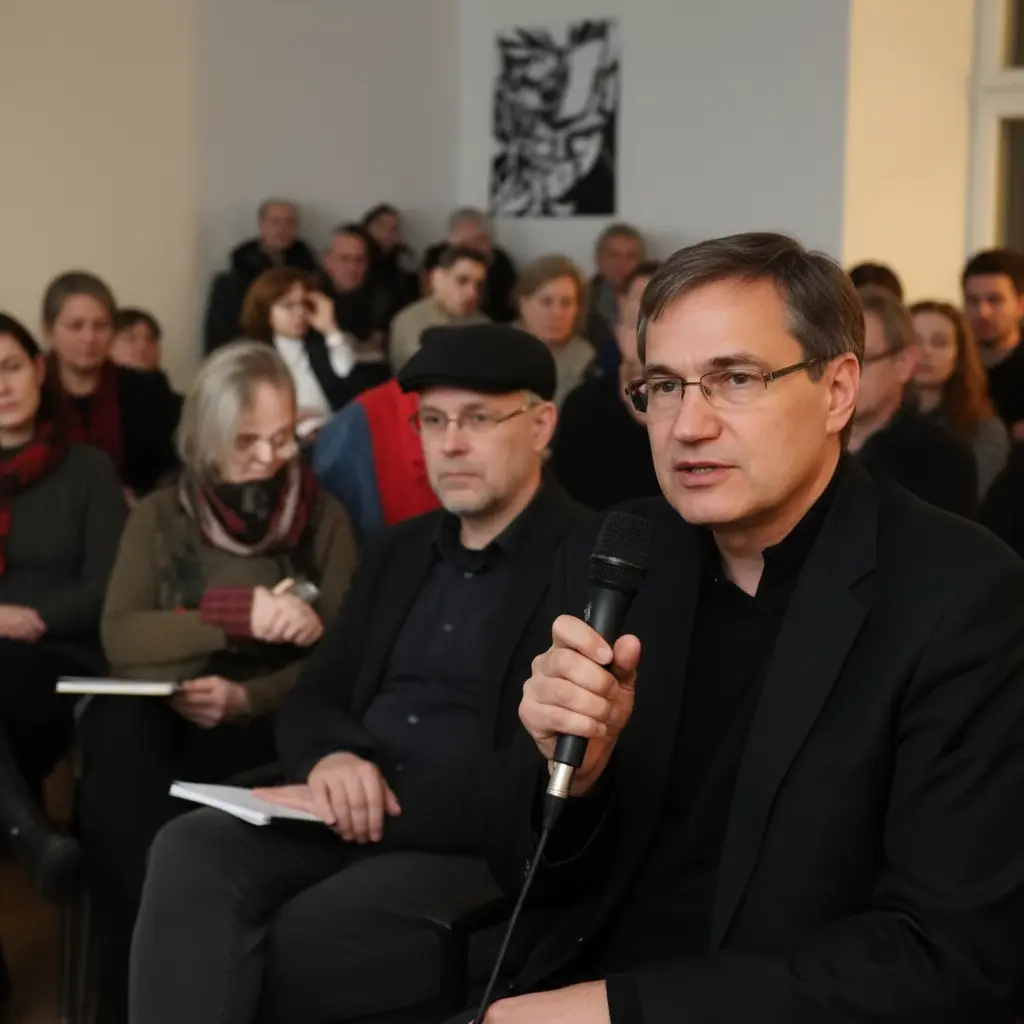
Ankara, February 17 – Ahmet Yıldız, Editor-in-Chief of Gerçek Edebiyat and a prominent author, delivered a conference in Ankara titled ‘The Political Economy of Contemporary Literature.’ The event delved into various aspects of Turkish book publishing, including the quality and diversity of published books, the status of libraries, and readership statistics across different provinces.
Criticism of Varlık Magazine and Orhan Pamuk’s Alleged Influence
During his speech, Yıldız extended his respect to all literary magazine editors, acknowledging their challenging and often unrewarding work. However, he critically assessed the current publications of Varlık magazine, which he described as the ‘flagship of Turkish literary magazines.’
Yıldız claimed that the tradition of Varlık magazine being managed by a respected writer or poet for two years without compensation, before being passed on, was disrupted by Enver Ercan’s 20-year tenure. He alleged that while Ataol Behramoğlu was expected to take over from Hilmi Yavuz, Orhan Pamuk and Hasan Bülent Kahraman intervened, pressuring the magazine owners to appoint Enver Ercan instead. This, according to Yıldız, led to the magazine losing its original character.
The ‘Three Sisters’ of Publishing and the Decline of Criticism
Yıldız further asserted that Turkish publishing is being ‘usurped and directed’ by what he termed the ‘three sisters’ – bank-affiliated publishing houses. He argued that the development of Turkish poetry and novels is thus limited by the capacities of these publishing houses’ editors. He emphasized the importance of boutique publishing in this context.
The speaker also lamented the ‘death of the criticism mechanism’ in Turkish literature. He criticized prominent literary critics such as Doğan Hızlan, Metin Celal, and Hasan Bülent Kahraman, suggesting their roles in the literary establishment were problematic.
The Legacy of the September 12th Coup and ‘Cronyism’ in Publishing
Yıldız stated that the effects of the ‘September 12th literature’ continue to influence the entire literary bureaucracy. He praised Yalçın Küçük’s ‘Küfür Romanları’ and Mustafa Yıldırım’s ‘Ortağın Çocukları’ for successfully challenging this ‘dark network.’
He went on to accuse publishing organizations of becoming ‘lumpenized and corrupt’ through ‘cronyism,’ where individuals in positions of power refuse to relinquish them and become ineffective. Yıldız also highlighted the negative impact of the closure of paper factories on Turkish publishing, emphasizing the country’s continued inability to produce cellulose.
Ideological Impasses and the Disconnect from the Public
Yıldız cited examples of Orhan Pamuk and Elif Şafak to illustrate the ‘ideological impasses’ of Turkish writers and poets, which he believes have alienated Turkish literature from the general public.
The conference provided a critical look at the contemporary landscape of Turkish literature, publishing, and the figures who shape it, sparking debate on the future direction of the country’s literary scene.
Source: https://www.odatv.com/kultur-sanat/orhan-pamuk-ankarada-masaya-yatirildi-120136098