
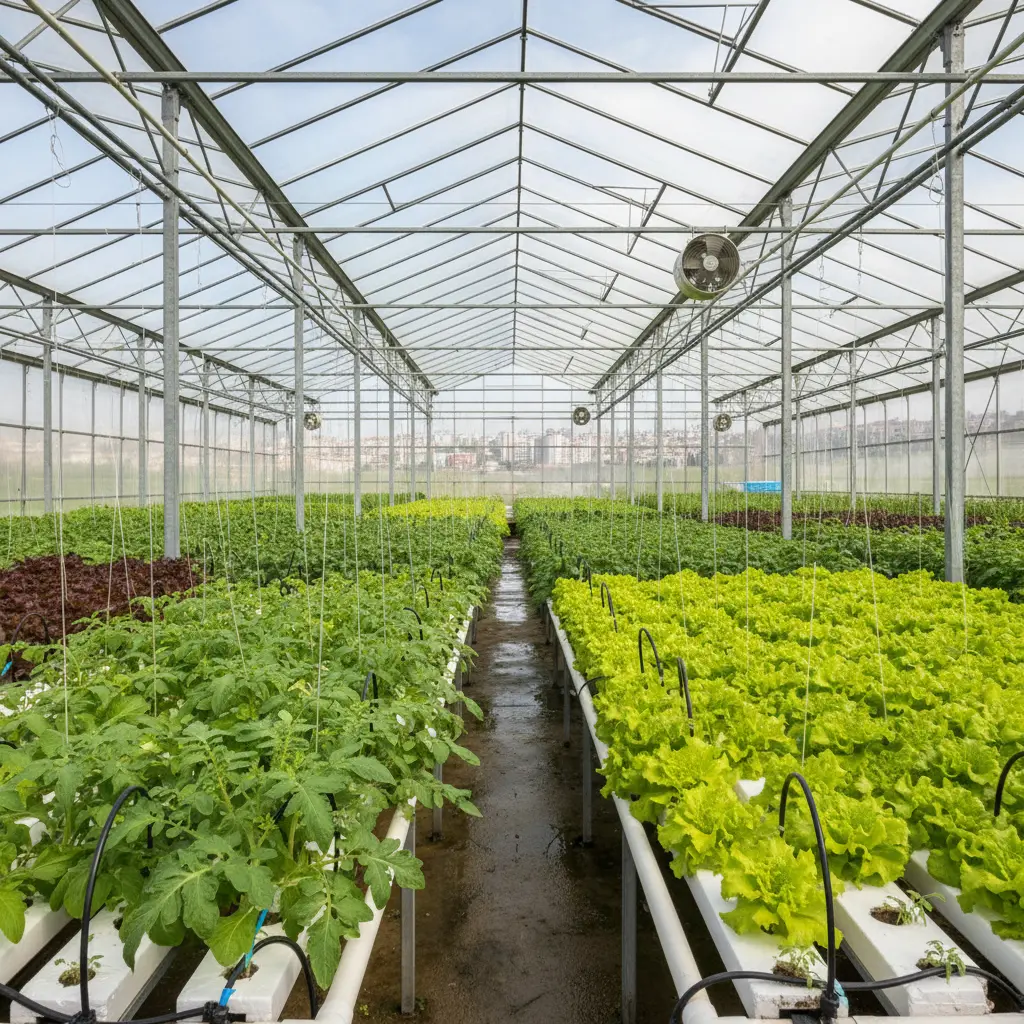
Istanbul, June 27 – Soilless farming practices have accelerated in Istanbul in recent years, significantly increasing production and enabling more efficient use of agricultural resources. Currently, 29 businesses across the city are producing 5,897,25 units of leafy greens such as lettuce, curly lettuce, parsley, and arugula.
Soilless and Modern Controlled Production on the Rise Since 2010s
Soilless farming and modern controlled production under cover began to spread in Istanbul in the 2010s. Hydroponic systems, modern greenhouse investments, and controlled production techniques have shown significant development, especially in the last 15 years. Fully controlled indoor cultivation and soilless farming applications gained particular momentum after 2020, bringing the number of soilless farming businesses in Istanbul to 29.
Production Spreads Across Istanbul Districts
Production is carried out in districts such as Çatalca, Pendik, Beykoz, Büyükçekmece, Sarıyer, Çekmeköy, Silivri, Ataşehir, and Kağıthane. Businesses registered in the Controlled Environment Plant Production Registration System (KOBÜKS) are producing 950,712 kilograms of products like tomatoes, peppers, strawberries, and mushrooms annually across 189.5 decares. Additionally, 5,897,25 units of leafy greens such as lettuce, curly lettuce, parsley, and arugula are produced.
Interest in this field has increased in recent years due to both private sector investments and R&D studies conducted by public institutions. Soilless farming applications are becoming widespread, especially for leafy vegetables, aromatic plants, and high value-added products. This production model, used within or near the city, stands out as an alternative method to meet Istanbul’s growing food needs.
High Efficiency Compared to Traditional Production
Many factors, including climate change, drought, urbanization, and technological advancements, are behind the spread of soilless farming. Climate change-related temperature increases, irregular rainfall, prolonged dry periods, and extreme weather events make agricultural production riskier. Producers are turning to controlled production systems to mitigate these risks.
The increasing drought in recent years has made the protection of water resources imperative. Soilless farming systems provide much higher efficiency compared to traditional production by using water in a controlled and recycled manner. From an urbanization perspective, the reduction of agricultural land and rising land costs in large cities like Istanbul highlight systems that can produce more in smaller areas.
Furthermore, producing close to consumption centers reduces logistics costs, minimizes product losses, and ensures fresher products reach consumers.
Ministry of Agriculture and Forestry Offers Significant Support Mechanisms
The Ministry of Agriculture and Forestry encourages investments in soilless farming and controlled environment production systems through various support programs. These include the Rural Development Investment Support Program (KKYDP), the IPARD Program run by the Agricultural and Rural Development Support Institution (TKDK), and low-interest investment loans.
Modern greenhouse investments, soilless farming systems, automation applications, climate control systems, irrigation-fertilization units, and renewable energy integrations are supported under certain conditions. To benefit from these supports, producers must be included in relevant registration systems, meet technical and financial adequacy requirements, and submit all necessary documents during application periods.
Young entrepreneurs and women producers are among the priority groups in many support programs. Additional points advantages can be provided to young and women investors in Rural Development and IPARD supports. Entrepreneurship training, project preparation support, consultancy services, and access to finance opportunities encourage the participation of these groups in agricultural investments. The increase in investments by women producers in this area is important for both rural development and the sustainability of agricultural production.
The Istanbul Indoor Vertical Farming Application and Research Center, opened by the Istanbul Provincial Directorate of Agriculture and Forestry in December 2022, is one of the pioneering centers established by the public sector in Turkey. The center operates in a 700-square-meter area approximately 30 meters underground, with 320 square meters of this area utilizing a four-story hydroponic production system.
In the center, various plants, especially leafy vegetables like lettuce and basil, are produced. Temperature, humidity, carbon dioxide levels, light intensity, pH, and nutrient solution values are fully controlled by an automation system in the production area. This enables 365 days of production per year, independent of climatic conditions.
Soilless Production Systems Enable 6 to 12 Harvests Annually
The center achieves 95% to 99% water savings compared to traditional production methods, while also yielding much higher productivity per unit area. In soilless farming, water, nutrients, and oxygen needed by the plant are supplied in a controlled manner, leading to faster and more balanced growth. Reduced plant stress minimizes product losses and enhances quality standards.
For some products that yield one or two harvests annually in traditional farming, soilless production systems can achieve 6 to 12 harvests per year. This significantly increases the production quantity per unit area. Additionally, continuous production throughout the year helps producers supply regular products to the market and manage their incomes more predictably.
One of the most significant advantages of soilless farming is that many soil-borne diseases and pests can be largely controlled. This reduces product losses and ensures healthier and higher-quality products. Thanks to the controlled production environment, temperature, humidity, light, and nutrient balance can be continuously monitored, leading to higher quality standards in products. Producers can obtain products of similar quality with each harvest.
Another important advantage of soilless farming is the ability to produce 12 months a year. This reduces the impact of seasonal fluctuations on production and makes production planning easier. Furthermore, controlled fertilizer use can lead to significant savings compared to traditional production.
Vertical Farming Offers Significant Opportunities for Istanbul
In densely populated cities like Istanbul, where urban development pressure on agricultural land is high, vertical farming offers a significant opportunity. These systems allow warehouses, idle structures, enclosed spaces, and technological production facilities to be repurposed for agricultural production.
Soilless farming enables high yields in limited areas. Producing close to consumption centers reduces transportation costs, minimizes product losses, and lowers carbon emissions. This also contributes to strengthening the city’s food supply security.
Vertical farming is considered an innovative method that complements existing production, especially for leafy vegetables, aromatic plants, and high value-added products, rather than replacing traditional farming. It is anticipated that these technologies will play a greater role in Istanbul’s future sustainable food systems.
Source: AA News