


Turkish Defense Firm STM Achieves First NATO and EU Export for KARGU and ALPAGU UAVs
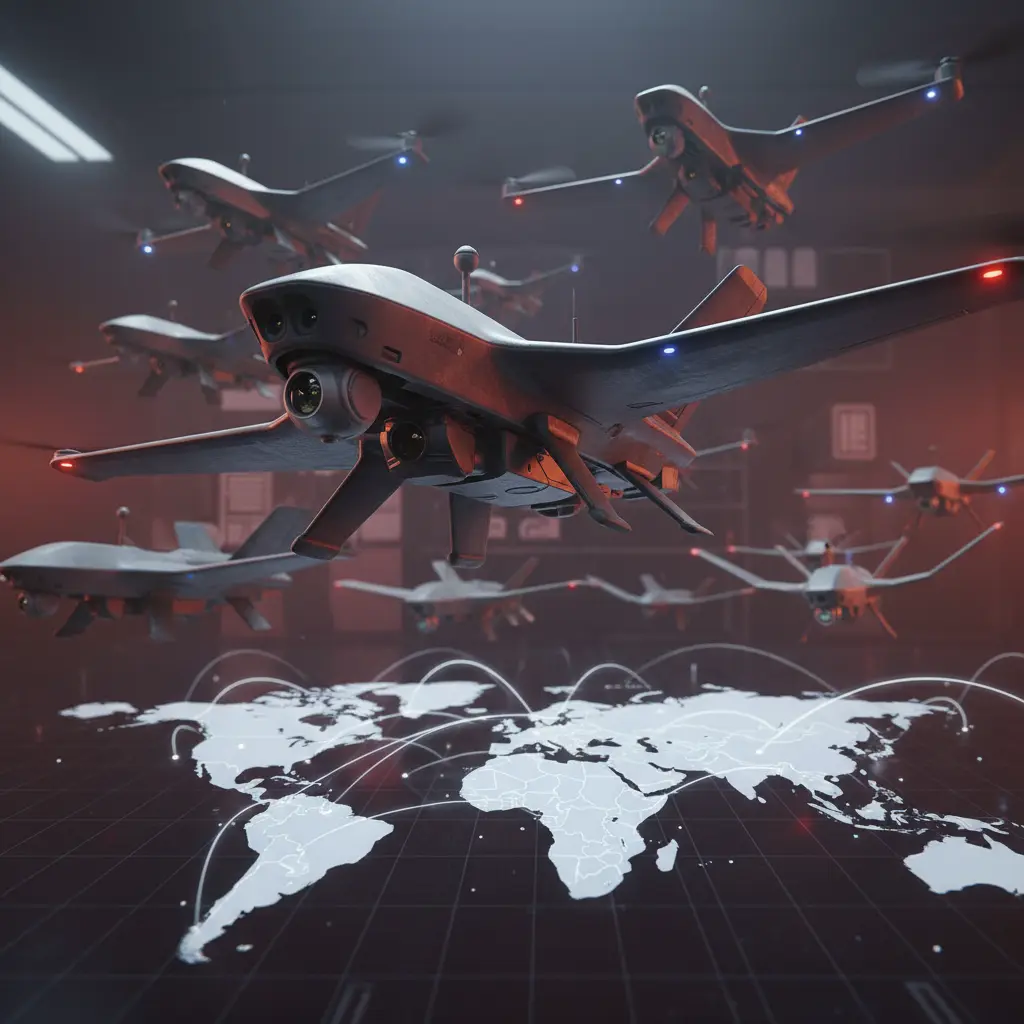
Ankara, January 16 – STM Defense Technologies Engineering and Trade Inc. has announced a significant milestone in its export endeavors, successfully delivering its indigenously developed KARGU and ALPAGU attack UAV (Unmanned Aerial Vehicle) systems to a NATO and European Union member country. This marks the first such export to a nation holding dual membership in these key international organizations. The deal expands STM’s UAV system presence to four continents and 15 countries globally.
The export agreement involves the rotary-wing attack UAV system KARGU and the fixed-wing attack UAV system ALPAGU, both of which are integral to the Turkish security forces’ inventory and have been successfully deployed in various field operations. Under the terms of the agreement, KARGU and ALPAGU will be integrated into land vehicles, tailored to meet the local user’s specific requirements and operational doctrine. STM’s commitment extends beyond mere platform delivery; it includes the integration of battle management system software to ensure compatibility with the recipient country’s existing systems and operational concepts.
KARGU: A Proven Asset in Cross-Border Operations
Known colloquially as ‘Kamikaze UAV,’ the KARGU attack drone was developed by STM using domestic resources. Introduced into the Turkish Armed Forces (TAF) inventory in 2018, KARGU has been effectively utilized by Turkish security forces in counter-terrorism, special operations, and cross-border missions. Its design allows for rapid munition changes by field personnel, enabling the swift replacement of anti-personnel warheads with armor-piercing ones based on immediate operational needs. With a low radar cross-section, KARGU is difficult to detect in enemy territory and can be easily transported and deployed within one minute by a single soldier.
ALPAGU: Precision Strike Capability with Advanced Features
The ALPAGU stands out for its lightweight structure, high dive speed, low radar cross-section, and ability to deliver pinpoint destruction to critical targets. It is actively deployed in counter-terrorism operations, cross-border missions, and urban warfare scenarios, boasting a range of 8 kilometers. Equipped with electro-optical and infrared cameras, ALPAGU can perform effective missions day and night. After being launched from a launcher, ALPAGU can sustain flight for approximately 15 minutes. Its artificial intelligence-supported, state-of-the-art image processing software ensures successful target tracking. The ALPAGU’s low radar cross-section and small size allow it to remain undetected by targets until the very last moment, enabling precise destruction of targets with its onboard munition.
STM General Manager Emphasizes Global Trust and Future Prospects
Özgür Güleryüz, General Manager of STM, stated in a written declaration that STM is developing national systems for modern warfare. “Our tactical UAV family strengthens the hand of our security forces in the field, and its proven success in the field makes it the preferred choice for friendly and allied countries. As STM, we have signed another important project that carries our engineering and software capabilities in autonomous systems to the European market. The export of KARGU and ALPAGU to a NATO and EU member country is a concrete indicator of our engineering expertise and the trust placed in our systems internationally. As of today, we are delighted to have brought our UAV systems to users in 15 countries across four different continents.”
Güleryüz further emphasized that this development holds significance beyond being STM’s first export of autonomous systems to Europe. “The integration of KARGU and ALPAGU into armored land vehicles also demonstrates our software capabilities. In this regard, our project is not limited to platform export but also constitutes a high value-added integration and software export. This project encompasses not only system delivery but also integration activities conducted in conjunction with the relevant country’s existing platforms and operational doctrines. We also expect this collaboration to serve as an important reference for the future operational deployment and broader use of STM’s autonomous systems in European countries. Following the successful completion of the project, we aim to integrate STM’s autonomous product family into a greater number of land vehicles in the relevant country.”
Source: DHA