


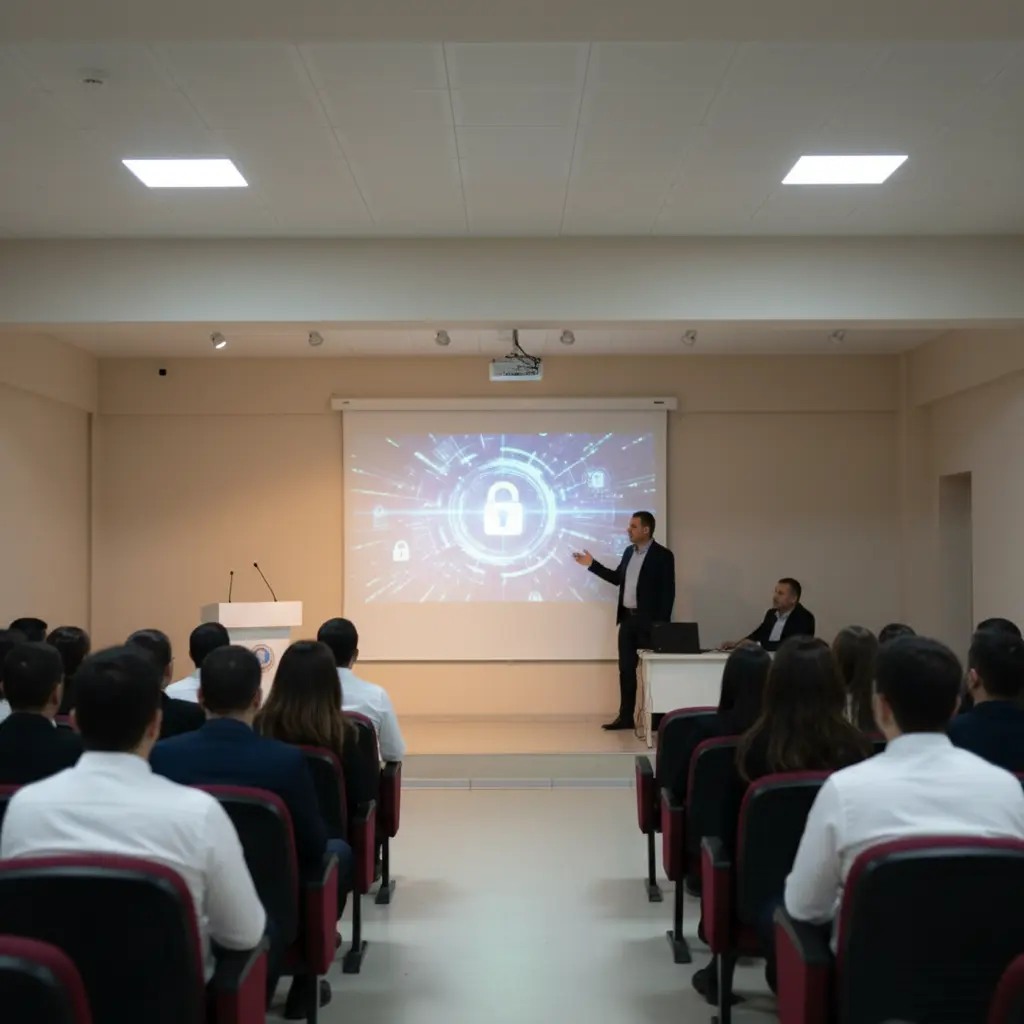
ŞEREFLİKOÇHİSAR (Ankara) – A seminar was held in the Şereflikoçhisar district of Ankara to inform university students about cyber fraud and the legal dangers of allowing third parties to use their bank accounts. The event, organized in cooperation with the Chief Public Prosecutor’s Office and Ankara Yıldırım Beyazıt University (AYBÜ) Tuz Gölü Campus, focused on the concept of ‘easy money’ and its associated risks.
Seminar Highlights Risks of ‘Easy Money’ Schemes
During the seminar, particular emphasis was placed on the fact that providing bank accounts, cards, or digital payment tools to third parties in exchange for promises of ‘easy money’ directly incurs criminal liability. This crucial information was delivered to students to protect them from falling victim to or unknowingly participating in fraudulent activities.
Key Attendees and Participants
The seminar, held at the AYBÜ Şereflikoçhisar Faculty of Applied Sciences, saw significant participation from key figures. Among the attendees were Şereflikoçhisar Chief Public Prosecutor Tanju Özer, Faculty Dean Güven Delice, AYBÜ MYO Director Burhan Günay, Şereflikoçhisar Public Prosecutor Atilla Ekşi, AYBÜ Department Head Meltem Keskin, along with numerous faculty members and students.
The collaborative effort between the Chief Public Prosecutor’s Office and AYBÜ underscores the importance placed on educating the younger generation about the growing threats of cybercrime. The seminar aimed to equip students with the knowledge to identify and avoid situations that could lead to legal complications due to financial fraud.
Understanding the Legal Ramifications
Experts at the seminar detailed how individuals can become unwitting accomplices in financial crimes by simply allowing others to use their bank accounts, even if they are unaware of the illicit nature of the transactions. This practice, often disguised as an opportunity for quick financial gain, carries severe legal consequences, including charges related to aiding and abetting fraud or money laundering.
Students were urged to be vigilant and skeptical of offers that promise substantial returns with minimal effort, as these are often precursors to fraudulent schemes. The message reinforced the idea that legitimate financial opportunities rarely involve sharing personal banking information or allowing others access to one’s accounts.
Preventative Measures and Future Outlook
The seminar concluded with a strong call for students to protect their personal and financial information, to report suspicious activities, and to seek advice from trusted sources if they encounter any dubious financial propositions. The organizers expressed their commitment to continuing such educational initiatives to safeguard the community from evolving cyber threats.
The event served as a proactive step in preventing cybercrime and ensuring the legal safety of university students, who are often targeted due to their digital literacy and potential vulnerability to attractive, yet deceptive, online offers.