

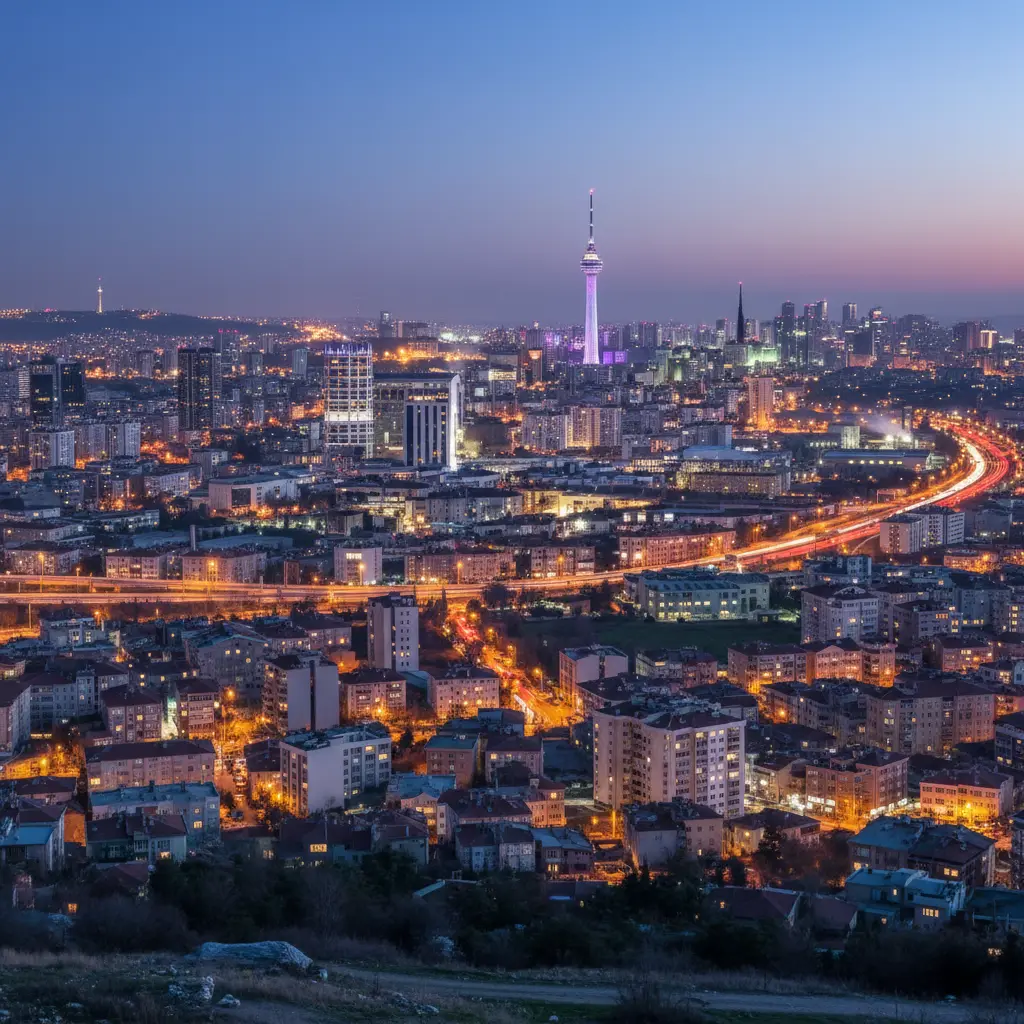
Ankara, Turkey – Ankara’s real estate market is currently witnessing remarkable dynamism, with housing prices in the capital city experiencing a substantial annual increase of 31.7%, effectively surpassing Istanbul’s 28.7% growth rate, according to data released by the Central Bank of the Republic of Turkey (TCMB).
Structural Economic Dynamics Fueling Growth
Experts attribute this robust growth to several structural economic dynamics, including significant industrial investments, ongoing public projects, and an increase in migration following recent earthquakes. These factors have collectively strengthened housing demand in Ankara, positioning the city as a burgeoning hub in the real estate sector. The monthly increase of 3.5% in Ankara’s housing prices further underscores this trend, especially noteworthy given that housing prices across Turkey have generally seen a real-term decline.
Expansion of Housing Production Capacity
Concurrently, Ankara’s capacity for housing production has also expanded considerably. The number of housing construction cooperatives has reportedly increased by approximately 40% since 2020, indicating a broader and more organized approach to housing development. This suggests that Ankara’s housing market is not driven by speculative forces but rather by a more balanced growth process supported by production, employment, and demographic shifts.
Industrial Investments and Migration as Key Drivers
Ruhi Konak, General Manager of Gaboras, emphasized that the above-average increase in Ankara’s housing prices is not due to temporary market fluctuations but rather deeply rooted in structural economic dynamics. Konak stated, “Industrial and technological investments concentrated along the Sincan, Kahramankazan, Akyurt, Polatlı, and Temelli corridor directly link housing demand to employment opportunities. Where production goes, settlement follows. This creates a healthier and more sustainable demand structure in the real estate market.”
The confluence of these factors paints a picture of a capital city undergoing significant transformation, with its real estate market reflecting a broader economic revitalization. The sustained growth in housing prices, coupled with an expanding production capacity, indicates a resilient and developing urban landscape.