
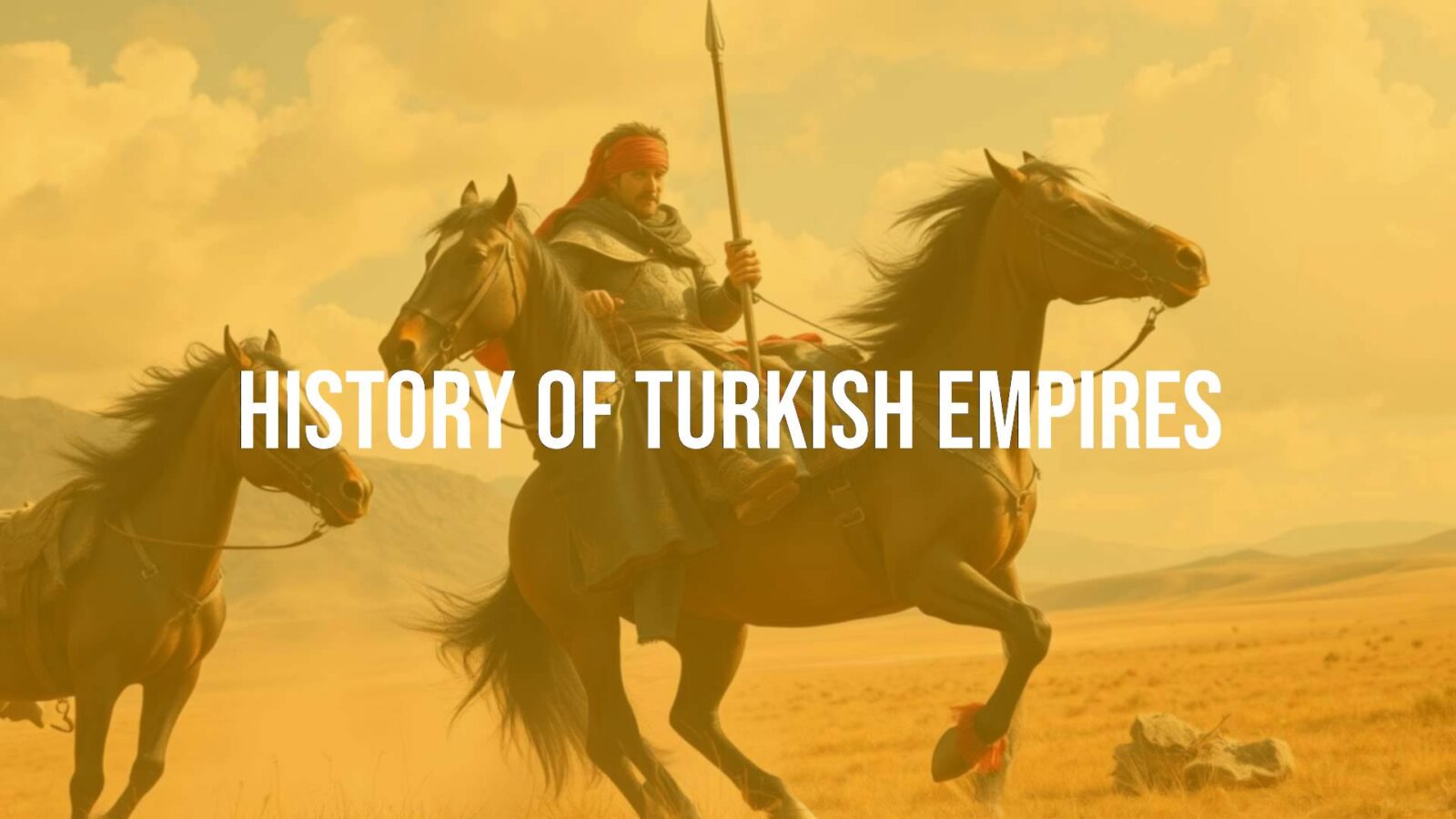
The story of “turkish empires history” is long and wide-ranging. It reaches back thousands of years and covers lands that at times stretched across three continents. This history is not about one single group acting the same way for all time. Instead, it is the story of many Turkic peoples who started in Central Asia, then moved, fought, built states, and developed new ideas. Over time they formed khaganates, sultanates, and empires that changed politics, built new cultures, and helped trade and ideas move across Africa, Europe, and Asia. To understand this past, it helps to look at where Turkic peoples came from, how their major states rose and fell, and what they left behind in government, culture, and war.
Origins of the Turkic Peoples and Early Turkish Empires
Who Are the Turkic Peoples?
“Turkic peoples” is a broad name for many ethnic groups linked mainly by language. They speak languages from the Turkic language family. Historically, many of these groups began in Central Asia and later spread across a huge area, from Siberia and Mongolia to Anatolia and parts of Eastern Europe. Many were nomadic or semi-nomadic herders. This way of life helped them become strong riders and fighters and also helped them adapt to many different places. When they moved and conquered, it was not just armies moving; cultures moved too. They met settled societies, traded with them, and often took on parts of their culture while also shaping it.
Turkic identity is much wider than modern Turkey. It includes groups such as Uyghurs, Kazakhs, Kyrgyz, Uzbeks, Azerbaijanis, Turkmens, Tatars, and many others. Early on, Turkic history often involved tribal unions and steppe states that could rise quickly and sometimes disappear quickly as well. Many of these states had major influence over Silk Road trade routes and over the farming societies at the edges of the steppe.
Etymology and Historical Definitions
The word “Turk” is very old and appears in different forms in historical sources. One of the earliest clear uses is in the 6th-century Göktürk inscriptions, where “Türk” is used as a name for the ruling group and their people. Before that, Chinese writers may have used similar words for nomadic groups north of China. Scholars still debate the exact meaning, but it may connect to ideas like strength, power, or maturity, which fits the image these groups had as skilled warriors.
Over time, what “Turk” meant changed. At first it could mean a specific tribe or political group. Later, as Islamic states grew, “Turk” was often used more broadly for people from Central Asia who spoke Turkic languages, became Muslim, and served as soldiers or officials. By the Seljuk and Ottoman periods, the word was strongly linked to the empires they built. At the same time, Ottoman identity was also a mix of Turkic, Islamic, and Byzantine influences, and for much of Ottoman history it was not only about ethnicity.
The Rise of the Göktürk Khaganate
One of the earliest and most important Turkic states was the Göktürk Khaganate, which appeared in the mid-6th century CE. It is often seen as the first major “Turkish empire” in the sense of a large organized state that openly called itself Turkic. It expanded fast and controlled much of Central Asia, from the Black Sea area to Manchuria. Its rise mattered for another reason too: it was one of the first steppe empires to use a written script (the Orkhon script) to record history and rules.
The Göktürks, led by rulers such as Bumin Qaghan and those who followed him, built strong military and government systems. They controlled parts of the Silk Road and could deal with major powers like Byzantium and China. The state later split into Eastern and Western parts and eventually weakened, but its influence lasted. Later Turkic states copied parts of its model, and it helped strengthen a shared Turkic identity.

Early Anatolian and Central Asian Turkish States
After the Göktürks, many other Turkic states appeared across Central Asia and later in Anatolia. In Central Asia, the Karluks, Oghuz Yabgu State, Karakhanids, and Ghaznavids were important examples. The Karakhanids were among the first Turkic dynasties to fully accept Islam, which helped Islam spread more widely among Turkic groups. The Ghaznavids, who came from Turkic slave-soldiers (Mamluks), built a strong empire based in Ghazni (in today’s Afghanistan) and raided and conquered deep into India.
The most important early Turkic movement to the west involved the Oghuz Turks. In the 10th and 11th centuries, many Oghuz groups moved into Persia and Anatolia, often because of politics and the search for pastureland. This brought them into conflict with the Byzantine Empire. A key turning point was the Battle of Manzikert in 1071, where the Seljuks defeated the Byzantines. This opened Anatolia to large-scale Turkic settlement and helped set the stage for later Turkish states there, including the Sultanate of Rum, which came before the Ottoman Empire.
Major Turkish Empires and Their Historical Development
Seljuk Empire: Expansion and Cultural Influence
The Seljuk Empire grew out of Oghuz Turkic movements and became a major power in the 11th and 12th centuries. Under rulers such as Tughril Beg and Alp Arslan, the Seljuks took control of Persia, Mesopotamia, and later much of Anatolia. Their victory at Manzikert weakened Byzantine control in Anatolia and helped start the long process of Turkic settlement and the spread of Islam in the region. This later led to the Sultanate of Rum in Anatolia, which became a Seljuk state known for culture and trade.
The Seljuks were conquerors, but they also supported learning and the arts. They used Persian widely in government and literature, built madrasas (Islamic schools), mosques, and caravanserais, and supported scholars and artists. Seljuk architecture often used detailed brickwork, pointed arches, and large entrance portals. The Great Seljuk Empire later broke into smaller states, but Seljuk culture, especially in the Sultanate of Rum, shaped the early Ottoman state that followed.
Ottoman Empire: From Beylik to Global Power
The Ottoman Empire lasted longer than any other major Turkish empire and had a huge effect on Europe, Asia, and Africa. It survived for more than 600 years.
Foundation and Early Growth (c. 1299-1453)
After the Seljuk Sultanate of Rum weakened, Anatolia was divided among many small Turkoman principalities called beyliks. The Ottoman state began as one of these in northwestern Anatolia. Its founder, Osman I, around 1299, took advantage of a weak Byzantine border and the instability caused by Mongol pressure in the region. Early Ottoman growth came from military skill, practical government, and the appeal of ghazi ideas (frontier warriors fighting on the border), which drew fighters and religious scholars.
Under rulers such as Orhan, Murad I, and Bayezid I, the Ottomans expanded quickly. They crossed into Europe and gained land in the Balkans. They also absorbed rival beyliks in Anatolia. They built strong institutions, including the Janissaries (elite infantry made up largely of Christian converts) and the devshirme system (collecting Christian boys for state service). Even after Timur defeated them in 1402, the Ottomans rebuilt and expanded again, showing how strong their state system had become.
Conquest of Constantinople and Age of Expansion (1453-1566)
In 1453, Sultan Mehmed II captured Constantinople, ending the Byzantine Empire. The city became Istanbul, the new Ottoman capital. This marked a new phase of power. Under Mehmed II, Selim I, and especially Süleyman the Magnificent (1520-1566), the empire reached its highest point in land and influence.
During Süleyman’s rule, the Ottomans pushed into Central Europe (eventually reaching Vienna), expanded in North Africa, and dominated the Eastern Mediterranean, the Red Sea, and the Persian Gulf. The empire became a major naval force and controlled key trade routes. At home, Süleyman organized and expanded Ottoman law (Kanun) and supported art, building, and literature. Istanbul became a leading center for culture and education.

Stagnation, Reform, and Challenges (1566-1827)
After Süleyman, the empire entered a long period that many describe less as simple decline and more as slower growth and major change. The empire stayed powerful, but it faced rising problems. The Janissaries, once highly effective, became a group with strong political power and often opposed reforms. Economic changes also hurt the empire, including global trade shifting away from older routes and the impact of large amounts of silver coming from the Americas into Europe.
This period also included the “Sultanate of Women,” when important women in the imperial household had major political influence. The empire fought many wars, often against the Habsburgs, the Safavids, and Russia. It tried reforms, but many were limited and done in response to crises. Treaties such as Karlowitz (1699) and Küçük Kaynarca (1774) showed that the empire was losing territory and that European states were gaining the upper hand.
Decline, Nationalism, and Modernization (1828-1908)
The 19th century was difficult for the Ottomans. European powers often called it the “Sick Man of Europe” and hoped to take its lands. Nationalism grew among many groups inside the empire, especially in the Balkans, leading to revolts and independence wars. The Ottoman government answered with major modernization plans called the Tanzimat Reforms (1839-1876). These reforms aimed to strengthen central control, update the army and state offices, change laws, and build a shared Ottoman identity.
Even so, the reforms faced opposition and could not stop the loss of land and growing unrest. The empire struggled against industrializing European powers and became more dependent on foreign loans. The Young Turks, who supported constitutional government and modernization, became more influential, and in 1908 the constitution was restored.
Defeat and Dissolution (1908-1922)
In the early 20th century, the empire finally collapsed. After the Young Turk Revolution, the Balkan Wars (1912-1913) caused the loss of almost all remaining Ottoman land in Europe. Joining the Central Powers in World War I was a major mistake. The empire fought on many fronts and suffered huge losses, especially in the Middle East.
After defeat, Allied forces occupied Ottoman areas, and the Treaty of Sèvres (1920) planned to break up what was left. This led to the Turkish War of Independence, led by Mustafa Kemal Atatürk. After victory, the Sultanate was ended in 1922, the Ottoman Empire was over, and the Republic of Turkey was founded in 1923.
Other Significant Turkic States: Khwarazmian, Timurid, and Mamluk Dynasties
Seljuks and Ottomans get most attention, but other Turkic-led states also shaped this history. The Khwarazmian Empire, based in Central Asia, became powerful in the 12th and early 13th centuries and ruled a wide area before the Mongol invasions destroyed it. Its Turkic ruling family started as governors under the Seljuks and expanded through war and alliances.
The Timurid Empire, founded by Timur (Tamerlane) in the late 14th century, was another major Turkic-Mongol state. Timur, a Mongol who adopted Turkic language and culture, built an empire from Central Asia into Anatolia and India. He briefly disrupted the Ottomans and the Mamluks. His time also saw major growth in Islamic art, architecture, and science, later influencing states such as the Mughal Empire.
The Mamluk Sultanate ruled Egypt and Syria from the mid-13th to the early 16th centuries. It was unusual because many rulers were once Kipchak Turkic slave-soldiers (Mamluks) who rose through the army and took power. They defeated the Mongols at Ain Jalut in 1260 and removed the last Crusader strongholds. They protected Islamic scholarship and culture during unstable times, until the Ottomans conquered them.
The Gunpowder Empires: Ottoman, Safavid, and Mughal Connections
From the 16th to the 18th centuries, three major Islamic empires rose: the Ottoman, Safavid, and Mughal empires. Historians often group them as the “Gunpowder Empires” because they relied heavily on cannons and firearms and built strong central governments. Each also had important Turkic roots or Turkic influence.
The Ottomans were a Turkic empire. The Safavids ruled Persia and made Twelver Shia Islam the state religion while promoting Persian culture, but their ruling power had Turkic (Azerbaijani) roots, and the Qizilbash were central to their rise. The Mughal Empire in India was founded by Babur, a descendant of Timur and Genghis Khan, and carried Turkic-Mongol traditions into South Asia. These empires competed for land and influence, but they also traded, negotiated, and shared artistic and intellectual ideas.
Government and Social Structure in Turkish Empires
Monarchical and Administrative Systems
Most Turkish empires were monarchies, led by a Sultan or Khagan at the top. Power often passed through family lines, but not always from oldest son to oldest son, which sometimes caused fights over succession. The ruler held the highest authority, and in Islamic empires the ruler could also claim religious legitimacy (the Ottoman sultan later also held the title of caliph).
Large empires needed complex government systems. In the Ottoman Empire, power was strongly centralized. The Grand Vizier acted like a chief minister and led the Imperial Council (Divan). A large bureaucracy handled finance, law, and military matters. Provinces were run by governors (beylerbeys or pashas) who had local power but still answered to the center. This mix of central control and local management helped the empire rule many different peoples and regions.
Legal Traditions and Sharia Influence
In Islamic Turkish empires, Sharia (Islamic law) was a main source of law, based on the Quran and the Sunnah (the sayings and practices of Prophet Muhammad). Sharia covered personal matters such as marriage, family issues, and many parts of civil and criminal law. Alongside Sharia, these empires also created large sets of state laws. In the Ottoman case, these were called Kanun.
Kanun covered topics like taxes, land rules, and state administration, including areas not clearly defined in Sharia. Having both systems gave the state room to respond to practical needs. In the Ottoman Empire, many non-Muslim communities also kept parts of their own legal traditions through the millet system. In areas like family law, they could follow their religious rules under their own leaders.
Military Organization and Reforms
Strong armies were central to Turkish empires. Early steppe states relied heavily on fast cavalry, skilled archers, and steppe battle tactics. Over time, especially under the Ottomans, the military became more organized. It combined traditional cavalry forces (Sipahis) with infantry units like the Janissaries.
The Janissaries were a standing army recruited through the devshirme system and became famous as elite infantry using firearms. The Ottoman navy also became powerful in the Mediterranean. As cannons and guns became more important, Turkish empires adopted and improved artillery. In later centuries, especially in the 1800s, leaders attempted broad military reforms based on European models, but changes often moved slowly and faced strong opposition inside the state.
Economic Foundations and Prosperity Drivers
Turkish empires had different economic bases depending on where they ruled. Early Central Asian states gained wealth by controlling parts of the Silk Road and managing trade between East and West. Herding and animal farming were also key for many Turkic groups.
In states like the Seljuks and Ottomans, farming was the main economic base. Land systems such as the timar system (Ottoman land grants tied to military service) supported farm production and helped raise troops. Control of trade routes on land and sea was also important. Istanbul became a major trade center linking Europe, Asia, and Africa. Taxes on trade, farming, and conquered areas supported the state. Cities also supported crafts and markets, including bazaars and specialized workshops, helping pay for large armies and expensive courts.
Religion, Language, and Cultural Life
Adoption and Spread of Islam
For many Turkic peoples, becoming Muslim changed their identity and political path. Some early Turkic groups followed Tengrism (an indigenous belief system) or Buddhism. Conversion to Islam began more strongly in the 9th and 10th centuries, especially among groups such as the Karakhanids and the Oghuz Turks. It often happened slowly, shaped by Sufi teachers, merchants, and the benefits of joining the wider Islamic community.
After conversion, Islam became a shared force across large empires like the Seljuks and Ottomans. It offered a common legal base (Sharia), a large tradition of learning, and a strong cultural identity. It also supported imperial expansion by giving religious meaning to rule and conquest, and it helped these empires become major supporters of Islamic art and scholarship.
Role of Sufism and Religious Institutions
Sufism (Islamic mysticism) played a major part in spreading Islam among Turkic peoples and shaping religious life inside their states. Sufi orders often focused on personal faith, shared rituals, and community support. This approach connected well with nomadic traditions and helped conversions. A famous figure is Mevlana Rumi, whose Mevlevi Order began in Seljuk Anatolia and influenced religious and cultural life for centuries.
Institutions such as madrasas, mosques, and tekkes (Sufi lodges) shaped daily life and education. Madrasas trained scholars, judges, and officials. Mosques also worked as community centers. Sufi networks offered guidance and charity, tying religion closely to society and, in some cases, to the state.
Multiculturalism: Christian and Jewish Minorities
Even though many Turkish empires were Islamic, some of them, especially the Ottoman Empire, included many religions and cultures. Large Christian populations (Orthodox, Armenian, Catholic) and Jewish communities lived across the Balkans and the eastern Mediterranean regions.
Under Islamic rule, many non-Muslims were classified as “People of the Book” (Ahl al-Kitāb) and given dhimmi status. This offered protection and freedom of worship in return for loyalty and payment of a special tax (jizya). In the Ottoman Empire, the millet system organized this more formally. Each religious community could manage many internal matters-such as education, social support, and some legal issues-through its own leaders. The system had limits and could involve tension, but it also allowed long periods of coexistence and helped create a diverse imperial society.
Official Languages and Literary Heritage
Languages in Turkish empires varied greatly. Early Turkic states used Old Turkic, shown in the Orkhon inscriptions. As Turkic groups moved west, their languages changed. In Central Asia, Chagatai Turkic became an important literary language, used by writers such as Ali-Shir Nava’i.
In the Seljuk and early Ottoman periods, Persian was widely used for government, literature, and elite culture, especially in Anatolia. Over time, Ottoman Turkish became a distinct written language. It included many Arabic and Persian words and some grammar features, while keeping a Turkic core structure. This language produced Divan poetry, prose, and historical writing. At the same time, everyday Turkic dialects continued in folk songs, stories, and oral traditions.
Education, Science, and Contributions to Knowledge
During their strongest periods, Turkish empires were important centers of learning. Madrasas offered broad education in law, theology, philosophy, and other fields. Ottoman schools and scholars built on earlier Islamic traditions from the Abbasid and Seljuk eras.
Scholars and experts also added new work in areas such as astronomy (including the observatory of Taqi al-Din), medicine (hospitals and medical training), mathematics, and mapmaking (such as Piri Reis’s world map). Libraries held large collections of manuscripts. Translation and preservation of texts helped pass knowledge between regions, linking scholarship in the East and the West.
Art, Architecture, and Urban Development
Turkish empires left behind striking art and buildings. Seljuk architecture used large gateways, detailed tilework, and strong caravanserai designs that supported trade. Ottoman building reached a high point through architects like Mimar Sinan, the chief imperial architect. Mosques such as the Süleymaniye and Selimiye show the classical Ottoman style, with large central domes, tall thin minarets, and balanced proportions.

Ottoman art also grew in miniature painting, calligraphy, ceramics (like Iznik tiles), textiles, and metalwork. City building mattered too. Istanbul, Bursa, and Edirne became busy centers of trade and culture with markets, baths (hammams), fountains, and public buildings. Many cities developed a clear look that blended practical needs with beauty.
Music, Cuisine, and Daily Life Practices
Everyday culture across Turkish empires was varied and lively. Music ranged from Ottoman classical traditions (shaped by Persian and Byzantine influences) to local folk styles across Turkic communities. Instruments such as the oud, ney, and kanun were widely used.
Ottoman cuisine became a major food tradition, mixing Central Asian, Middle Eastern, and Mediterranean influences. It included both palace dishes and everyday meals, often using fresh ingredients and careful preparation. Coffee culture became part of social life, with coffeehouses acting as meeting places for conversation, news, and debate.
Daily life also included public baths, detailed clothing styles, and strong traditions of hospitality and storytelling. Festivals and religious holidays brought people together and helped build community ties across a diverse population.
Key Events and Turning Points in Turkish Empires History
Major Battles, Treaties, and Diplomatic Relations
Turkish empires were shaped by major wars, diplomacy, and peace agreements. Manzikert (1071) helped Seljuk power grow in Anatolia. For the Ottomans, Kosovo (1389) strengthened their position in the Balkans, and the capture of Constantinople (1453) was both symbolic and strategic. Mohács (1526) brought Hungary under Ottoman control. The naval Battle of Lepanto (1571) was an important setback for Ottoman sea power, though it did not end it.
Diplomacy involved shifting alliances, rivalries, and trade deals with European states, the Safavids, and the Mamluks. Treaties like Karlowitz (1699) signaled major land losses to European powers, while Küçük Kaynarca (1774) gave Russia new influence over Orthodox Christians inside Ottoman lands. These agreements showed that the empire’s position in international politics was changing.
Internal Revolts, Reforms, and Political Crises
These empires also faced internal problems. The Seljuk Empire broke apart because of power struggles and the rise of atabegs (regional governors). The Ottoman Empire dealt with many Janissary revolts, especially from the 1600s onward, as the Janissaries became more conservative and resisted change.
There were also major uprisings in the countryside, such as the Celali Rebellions in Anatolia. In response to problems at home and pressure from abroad, reform efforts appeared at different times. The Tanzimat reforms in the 1800s aimed to modernize the state, change laws, and improve administration. These reforms often created new tensions and did not always work as planned, adding to later political crises.
Impact of World Wars and Geopolitical Shifts
The 20th century brought major global changes that ended the Ottoman Empire. Joining World War I on the side of the Central Powers led to disaster. The empire fought on many fronts, lost huge numbers of people, and lost key territories. The secret Sykes-Picot Agreement (1916) between Allied powers planned to divide Ottoman Middle Eastern lands, showing what was coming.
After the war, occupation and the Treaty of Sèvres (1920) aimed to break the empire apart. This helped spark Turkish nationalism and led directly to the Turkish War of Independence, which blocked partition plans and led to the founding of modern Turkey.
The Role of the Young Turk Movement and Nationalism
The Young Turk Movement, especially the Committee of Union and Progress (CUP), played a major part in the last years of the empire. Beginning in the late 1800s, they pushed for constitutional rule, modernization, and strengthening the state against European pressure. Their 1908 revolution brought the constitution back and opened a new phase of politics.
Over time, many Young Turks also supported Turkic nationalism and pushed for a stronger Turkish identity within a very diverse empire. This, along with the Balkan Wars and World War I, increased ethnic tensions and sped up the empire’s breakup, as other groups also pushed for their own national goals. The Young Turk legacy is debated: it includes reforms and modernization plans, but also harsh and controversial policies, including their role in the Armenian Genocide.
Historiographical Debates and Legacy of Turkish Empires
Different Perspectives on the Fall of Turkish Empires
Historians still debate why major Turkish empires fell, especially the Ottoman Empire. Older explanations often focused on internal corruption and weakness. Newer research is usually more balanced and points out that the Ottoman state often adapted and survived longer than many people assume.
Many historians now stress external pressures such as European economic and military growth, the rise of nationalism, and changes in global trade. Many also prefer to describe later Ottoman history as a period of change and struggle rather than simple “stagnation.” There is also debate about when decline began, since the empire stayed strong in many ways well into the 1800s.
Contributions to World Civilization and Modern States
Turkish empires had wide influence. They connected regions and helped trade, ideas, and technology move between East and West. Their buildings, especially Ottoman mosques and public structures, are major parts of world heritage. Their government and legal systems influenced later states and offered models for managing large, diverse populations.
They also supported science and scholarship in astronomy, medicine, and mathematics. Food traditions, music, and art styles spread across Europe, the Middle East, and North Africa. Modern states such as Turkey, Azerbaijan, and several Central Asian republics carry parts of these legacies in language, culture, and national identity.
Common Misconceptions and Controversies
There are many misunderstandings about Turkish empires. One is the idea that the Ottoman Empire was only a war machine, ignoring its major achievements in government, culture, and the arts. Another is a simple story of “decline” that ignores the mix of internal issues and outside pressures that shaped Ottoman history.
Controversies also involve difficult events, including policies toward minority groups and the Armenian Genocide during World War I. These issues show why careful use of sources and attention to different viewpoints matter when studying these empires. Simple stories rarely match the full historical record.
Frequently Asked Questions about Turkish Empires History
Where Did Major Turkish Empires Begin?
Most major Turkish empires began, in ethnic and language terms, in Central Asia. Early large Turkic states such as the Göktürk Khaganate formed on the Eurasian steppe. The Seljuks later brought Turkic power into Persia and then into Anatolia. The Ottoman Empire began much farther west, as a small beylik in northwestern Anatolia, growing as Byzantine and Seljuk power weakened. So the roots were Central Asian, but the main center of later empires moved westward.
Why Was the Ottoman Empire Called the ‘Sick Man of Europe’?
“Sick Man of Europe” was a negative label used by European powers in the 1800s. It suggested that the Ottoman Empire was weak and unstable compared with industrializing European states. The empire faced serious problems: losing land due to nationalist uprisings, military defeats (especially against Russia), and growing dependence on foreign loans. European states also used this idea to justify вмешательство in Ottoman politics and to prepare for dividing Ottoman territory if the empire collapsed.
How Did Turkish Empires Influence Neighboring Regions?
Turkish empires changed nearby regions in many ways. Through war and conquest, they reshaped borders across the Balkans, the Middle East, and North Africa. Through culture, they spread Islamic traditions, building styles (mosques, bridges, baths), and food customs that became part of local life. Ottoman Turkish influenced administration and culture in many places and left lasting loanwords in different languages.
In government, ideas such as the millet system offered one approach for managing different religious communities, and the use of both Sharia and state law shaped local legal practice. Economically, control of trade routes supported markets, cities, and long-distance commerce. Even after these empires ended, their institutions, cultural habits, and historical memories continued to affect the states that replaced them.











Leave a comment