


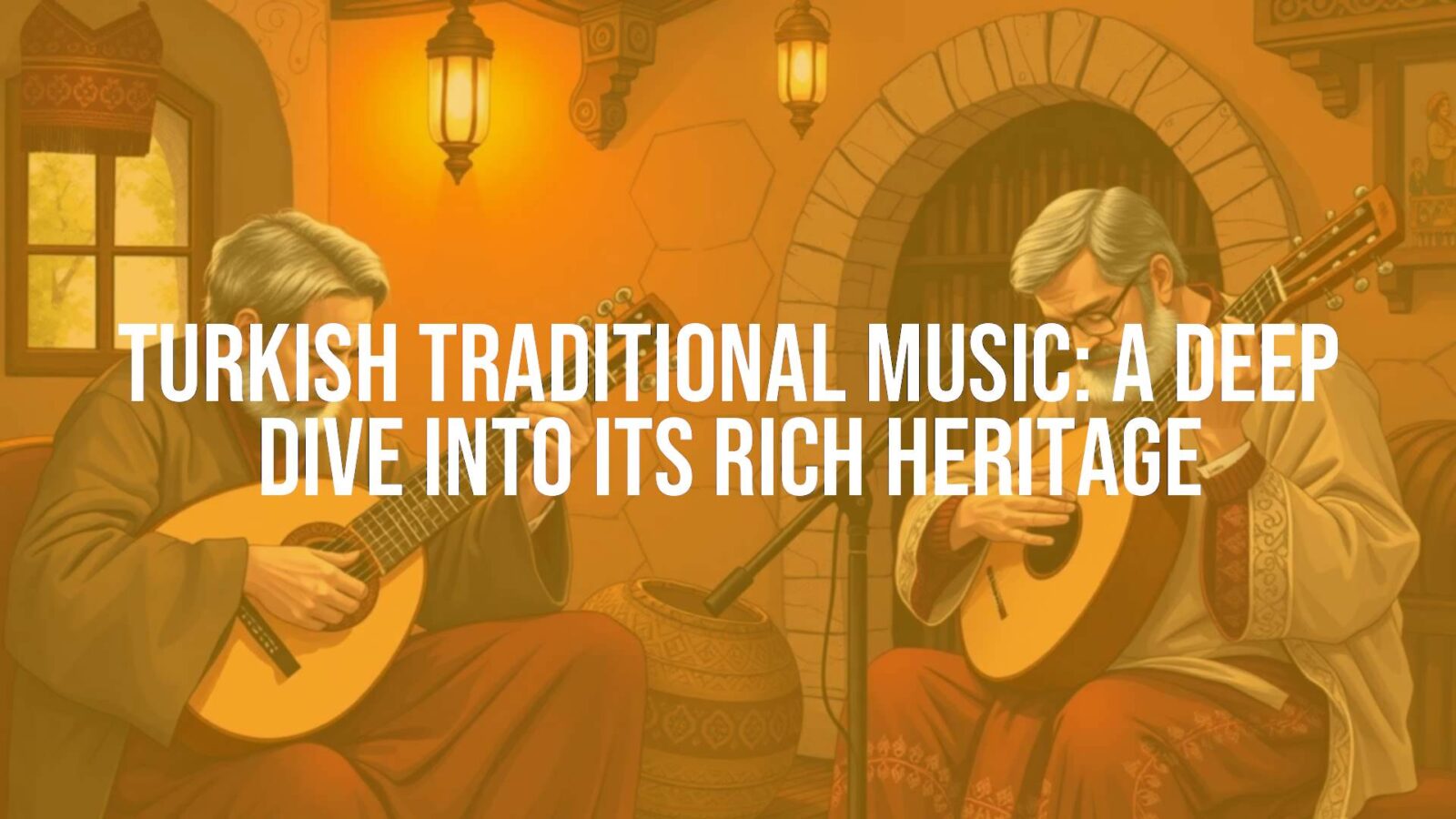
Turkish traditional music is more than a set of songs and beats. It carries the history, feelings, and shared identity of a whole culture. It is known for a strong mix of melodic modes called makamlar, rhythmic patterns called usuller, and many instruments that come from Anatolia, Central Asia, and the Ottoman court. This music is still performed today, and it keeps its place in daily life, celebrations, and spiritual practice. This article explains what makes Turkish traditional music special, how it changed over time, its main types, and why it matters in Turkey and outside it.
What defines Turkish music traditional styles?
Turkish traditional music grew from many cultural influences coming together. It works like a musical language with many details, and it can express happiness, sadness, spirituality, or heroic stories. To understand it, you need to look at its main parts.
Key characteristics of Turkish traditional music
The main feature of Turkish traditional music, in both classical and folk forms, is the makam system. A makam is not just a scale. It is a set of rules for how a melody moves: which notes are used, how the melody should travel, which notes are stressed, and what kind of mood it should create. Many makamlar use microtones (notes that fall between Western notes), which gives Turkish music its well-known sound and emotional depth.
Rhythm is also central, and it is shaped by usul. Usuller are repeating rhythmic cycles. Some are simple, and others are long and detailed. They do more than count time-they shape the flow and feeling of the piece. The balance between the freedom of makam and the steady structure of usul creates a sound that feels both expressive and organized, with common ornaments like slides and subtle note bends during performance.
Distinction between folk and classical forms
Turkish traditional music is often grouped into two main streams:
- Folk music (halk müziği): Music from villages and rural areas, passed down by ear over generations. It often has simpler forms and focuses on daily life, love, nature, and local events. It is closely connected to regional dance and identity. Common instruments include the bağlama, kaval, and zurna.
- Classical/art music (sanat müziği / klasik Türk müziği): Music shaped in Ottoman court life, Sufi lodges, and cities. It is known for more formal composition, detailed makam use, and performance traditions that mix composed pieces with improvisation (taksim). Common instruments include the oud, kanun, ney, and kemençe.
Even though these forms grew in different social settings, they have influenced each other for centuries.

How has Turkish music traditional evolved through history?
Turkish traditional music has a long history shaped by many peoples and empires across Anatolia. Over time, it absorbed new ideas while keeping older ones alive.
Origins in Anatolian and Central Asian cultures
Some of the oldest roots reach back to Central Asian Turkic traditions. These included ritual singing, epic storytelling, and instruments like the kopuz, an early ancestor of the bağlama. As Turkic groups moved into Anatolia, they met older local cultures and also Byzantine, Persian, and Arab music. The result was a blend: Turkic musical habits mixed with Middle Eastern modal thinking, helping form a sound that became recognizably Turkish.
In early Anatolia, music often served daily and social needs: ceremonies, nomadic life, and stories of heroes. The aşık tradition (traveling poet-musicians) became important for keeping songs and poems alive, usually with saz (bağlama) accompaniment. Over time, regional styles became clearer and kept growing.
Influence of the Ottoman period
The Ottoman Empire brought a high point for Turkish music, especially classical forms. Istanbul’s court supported musicians and composers from across the empire. A large repertoire developed, built on makam. Sufi life, especially the Mevlevi Order (Whirling Dervishes), also shaped an important spiritual tradition focused on the ney and kudüm.
Military music became famous through Mehter bands, the oldest known military bands. Their loud sound-zurna, davul, and kös-was meant to raise morale and intimidate enemies. Ottoman music theory and structure became more organized in this period, and many works from that time are still performed and studied.

Changes during the early Turkish Republic
After the Republic was founded in 1923, Turkey pushed modernization and Western cultural reforms. This affected traditional music in different ways. Folk music was often supported as a symbol of national identity. Ottoman classical music, however, was sometimes seen as tied to the old empire, and it faced criticism and limits in certain periods. Western classical music was promoted more strongly in public life.
At the same time, the Republic also helped protect traditional music by building institutions to teach and document it. Conservatories, research projects, and radio broadcasts made folk and classical music easier to share across the country. These changes helped traditional music continue into modern times, alongside newer styles.
What are the main genres in Turkish music traditional?
Turkish traditional music includes several main genres, each shaped by its own history and purpose.
Türkü and its themes
Türkü is the best-known type of Turkish folk song. It changes a lot from region to region, reflecting local dialects, styles, and life. Themes include love, separation, nature, hardship, injustice, migration, and heroic stories. The bağlama often leads, and the lyrics are usually direct and poetic.
Many türküs use verse-and-chorus patterns. Some are slow and emotional, while others are fast and meant for dance. The aşık tradition is strongly tied to türkü, including improvised poetry and verbal contests called atışma. Since each region has its own sound, türkü forms a wide musical map of Turkey.
Ottoman classical and art music
Ottoman classical music, or Türk Sanat Müziği, grew in courts and urban culture. It relies heavily on makam and uses established forms. A common concert structure is the fasıl, a sequence of pieces in the same makam. It often includes:
- peşrev (instrumental opening)
- vocal forms such as şarkı and gazel
- saz semaisi (instrumental form)
- sometimes a faster ending piece linked to dance
This genre often takes years of study. Its main instruments include oud, kanun, ney, tanbur, and classical kemençe. While it started in elite settings, it is now widely enjoyed in modern Turkey.
Military and Janissary music (Mehter)
Mehter music is one of the most striking Ottoman traditions. It was played in battle, ceremonies, and victory celebrations. The sound is loud, heavy, and strongly rhythmic.
A typical Mehter group uses instruments such as:
| Instrument | Type | Sound/Use |
|---|---|---|
| zurna | wind | sharp, piercing melody |
| boru | wind | trumpet-like calls |
| davul | percussion | large drum for strong pulse |
| nakkare | percussion | small kettle drums for patterns |
| zil | percussion | cymbals for accents |
| köss | percussion | giant kettle drums for power |
Mehter also influenced European military music and helped shape the “alla turca” idea in the West.
Religious and spiritual music traditions
Spiritual music is a major part of Turkish tradition, especially in Sufi and Alevi communities. Mevlevi music is well known internationally through Ayin-i Şerif ceremonies. It blends spiritual poetry, ney improvisation (taksim), and percussion like kudüm and bendir. The goal is to support a spiritual experience during the whirling ritual.
Alevi music includes forms like nefes and deyiş, sung by zakirs with bağlama. These songs share teachings about divine love, human values, devotion, and justice. In both traditions, music is part of worship and community life, not just a stage performance.
Which musical elements shape Turkish music traditional?
Turkish traditional music gets its special sound from its theory, especially makam (melody) and usul (rhythm). These systems shape how musicians perform and improvise.
Scales (makam) and melodic structure
Makam is the base of melody in Turkish music. Many makamlar use microtones, giving notes a “bent” quality that Western music usually does not have. There are many makam types, each defined by interval patterns, key notes, and typical melodic routes. A makam also carries a mood and a sense of direction, not just a list of notes.
Improvisation is part of this system. Instrumental improvisation is called taksim, and vocal improvisation is often called gazel. Performers explore the makam while staying within its rules, so each performance can feel fresh while still sounding traditional.
Time signatures and rhythmic cycles (usul)
Usul is the rhythmic structure used in both folk and classical music. Usuller can be short and simple or long and layered. Each has a name and a pattern of strong and weak beats. Percussion instruments like darbuka, bendir, and kudüm help mark these cycles.
A key feature is the relationship between a free-sounding melody and a steady rhythm cycle underneath. Skilled players may add small rhythmic changes while still keeping the usul clear. This mix of structure and freedom is one reason Turkish music feels so lively.
What traditional instruments are used in Turkish music?
The sound of Turkish traditional music depends a lot on its instruments. Many have long histories and are still made by hand and passed down in families and local workshops.

Stringed instruments: bağlama, oud, kanun
The bağlama (saz) is the main instrument of folk music. It is a long-necked lute with a pear-shaped body and grouped strings (often 6-9 total). It can sound sharp and rhythmic or warm and soft. Different sizes exist, such as cura (small), divan sazı (large), and bozuk (medium).
The oud (ut) is a fretless lute common in classical music. Its deep tone works well for makam-based improvisation. The kanun is a plucked zither with many strings, known for a bright sound. Small levers let players adjust pitch quickly, which helps with microtones. The kemençe is another key string instrument, used in classical music and also in some regional folk traditions.
Wind instruments: ney, zurna, kaval
The ney is an end-blown reed flute strongly linked with Sufi music. Its soft, breathy tone is often described as full of longing. It requires strong breath control and careful technique.
The zurna is almost the opposite in volume: it is loud and piercing, used for outdoor events like weddings and festivals, often paired with davul drums. The kaval is a folk flute with a gentler sound, often linked with shepherd life and open landscapes.
Percussion instruments: darbuka, bendir, kudüm
Percussion carries the main rhythmic drive. The darbuka is a goblet drum played by hand, used across folk and popular styles. It can make deep bass sounds and sharp high hits, making it flexible for many rhythms.
The bendir is a frame drum, sometimes with snares inside that create a buzzing tone. It is common in folk and religious settings. The kudüm is a pair of small kettle drums played with sticks, central to Mevlevi music. Together, these instruments support the layered rhythms that listeners recognize in Turkish music.
How do regional styles differ across Turkey?
Because Turkey is large and culturally diverse, its music changes from place to place. Regional styles reflect local history, languages, and nearby cultures.
Aegean and Rumeli regional styles
Aegean and Rumeli (Thrace) music in western Turkey often focuses on dance and celebration. Because of contact with the Balkans and Greece, instruments like clarinet and violin are common alongside the bağlama and oud. Rhythms often support dances like zeybek and hora. The sound is usually bright and energetic.
Singing in these areas is often clear and strong. Many songs tell stories about love, separation, and local life. The mix of urban Ottoman elements and local folk traditions can be heard more strongly in this region.
Black Sea and Caucasus influences
The Black Sea region has a fast, high-energy style with complex rhythms. A key instrument is the regional kemençe (different from the classical kemençe). The tulum (bagpipe) is also important in some areas.
Music often supports the fast group dance horon. Songs may focus on the sea, local heroes, and the region’s harsh beauty. Influence from the Caucasus also shapes melodies and rhythm choices, giving the region a very recognizable sound.
Southeastern and Anatolian folk traditions
Central and southeastern Anatolia hold many of Turkey’s oldest folk traditions. The style is often slower and more reflective, leaving space for strong emotion and storytelling. The bağlama dominates, especially in the aşık tradition, where long songs can carry epic stories.
In southeastern Anatolia, Arab and Kurdish links also show in vocal style, rhythm, and instruments. The cümbüş and various percussion instruments are common. Themes may include mysticism, history, moral ideas, and everyday struggle, with a strong focus on keeping stories alive through song.
What are the social and cultural uses of Turkish music traditional?
Turkish traditional music is part of social life. It marks important moments, builds community, and carries stories and beliefs.
Role in celebrations, rituals, and daily life
Traditional music is present at major events such as weddings, where dance music brings people together. Circumcision ceremonies, national holidays, and local festivals also use specific traditional songs and ensembles, often with zurna and davul for outdoor energy.
It also appears in daily routines: lullabies, work songs, and street calls can carry traditional melodic patterns. In many places, music is a normal part of home and community life, helping people feel connected to shared roots.
Connection to storytelling and folk literature
Music and storytelling are closely linked in Turkish culture, especially through the aşık tradition. Aşıks travel and perform poems, stories, and lessons while playing the bağlama. These performances pass on history, values, and social commentary.

Türkü lyrics also act as folk literature. They often include metaphors, sayings, and simple but powerful language about real life. Because of this, traditional music works like a living record of memory and identity.
Spiritual practices: Sufi and Alevi music
Music has a strong spiritual role in Sufi and Alevi life. In Mevlevi practice, ney and kudüm support the sema ritual and help guide focus away from everyday concerns and into contemplation. Makam and improvisation shape the emotional path of the ceremony.
In Alevi cem gatherings, zakirs sing sacred hymns (nefes and deyiş) with bağlama accompaniment. These songs teach beliefs and ethics while also building community. In both traditions, music acts as worship, shared learning, and group bonding.
Who are notable figures in Turkish music traditional?
Many well-known composers and performers helped shape Turkish traditional music. Some are remembered for classical composition, and others for folk songs that speak to everyday people.
Famous composers, performers, and ashiks
In Ottoman classical music, Buhurizade Mustafa Itri (17th century) is one of the most respected composers, and his works remain central today. Hammâmîzâde İsmâil Dede Efendi (18th-19th century) is another major figure known for many vocal and instrumental works, including Mevlevi pieces.
In folk music, legendary aşıks include Aşık Veysel Şatıroğlu, a blind poet-musician famous for songs about love, nature, human values, and hardship. Neşet Ertaş, from the Abdal tradition, is also widely loved for his unique bağlama style and sincere performance. These artists are remembered as storytellers and voices of the people, not just musicians.
Contribution of Romani musicians
Romani musicians have played a major role in Turkish music, especially in urban folk styles and celebration music. They are known for strong improvisation skills and high-level technique. Clarinet, violin, and darbuka are common in these settings, especially at weddings and festivals.
Romani performers often connect different musical styles and add their own ornaments, fast runs, and emotional intensity. Even with social challenges over time, their music has remained a key part of Turkey’s sound.
How has Turkish traditional music influenced and been influenced by global music?
Turkish traditional music has both shaped music in other places and taken in outside influences. Like any active tradition, it changes as people and ideas move.
Turkish influence on Western classical and military music
One of the clearest links is through Ottoman Mehter music. European armies copied parts of its sound and began using Turkish-style percussion like cymbals, bass drums, and triangles. This also led to the “Janissary music” trend in Europe.
Composers such as Mozart (for example “Rondo alla Turca”), Beethoven (including the “Turkish March”), and Haydn (like the “Military” Symphony) used Turkish rhythms and instrument colors. This interest helped shape Western orchestration and shows how far Ottoman musical ideas traveled.
Impact of global and Western elements on Turkish styles
In the 1900s, global media and Western music styles had a growing effect in Turkey. Early in the Republic, Western music education and notation were promoted, which led to debates about how traditional music should fit into modern life. Later, radio and cinema made jazz, rock, and pop more familiar.
Over time, many musicians blended Turkish melodies and instruments with Western harmony, new rhythms, and electronic sounds. Some people preferred older forms, but these mixtures also created new styles and brought Turkish sounds to wider audiences. Today, many artists still balance respect for tradition with modern ideas.
Festivals, institutions, and preservation of Turkish music traditional
Turkish traditional music continues because people actively support it. Festivals, schools, and archiving projects help pass it on.
Major music festivals and public celebrations
Many festivals across Turkey focus on traditional music. The International Konya Mystic Music Festival, held in December, is one of the best known and highlights Sufi music, including Mevlevi ceremonies connected to Rumi. Other events, such as the International Silifke Folk Dance and Music Festival, bring attention to regional folk music and dance.
Festivals also help older musicians teach younger players, and they create spaces where new talent can grow. Public holidays and local seasonal events also often include traditional music, keeping it part of shared community life.
Music education and cultural organizations
Conservatories and universities play a large role in teaching and protecting traditional music. Schools such as Istanbul Technical University (ITU) and Hacettepe University have programs for Turkish Folk Music and Turkish Classical Music. Students learn makam and usul theory, instrument skills, and performance practice.
Private music schools, cultural groups, and community centers also help by offering lessons in instruments like bağlama, ney, and oud. Government groups, including the Ministry of Culture and Tourism, also support research, concerts, and cultural projects.
Efforts in archiving and sustaining traditions
Archiving and documenting music is key for keeping traditions alive. Universities, TRT (state broadcasting), and cultural institutes record performances, collect field recordings, write down songs, and digitize old materials. These archives help musicians, researchers, and the public access music that might otherwise disappear.
Support also goes to instrument makers who build traditional instruments, so the original sounds remain possible. Some projects focus on protecting rare regional styles and helping older folk musicians continue their work. Through all these efforts, Turkish traditional music stays active in modern life while keeping strong ties to its past.











Leave a comment