


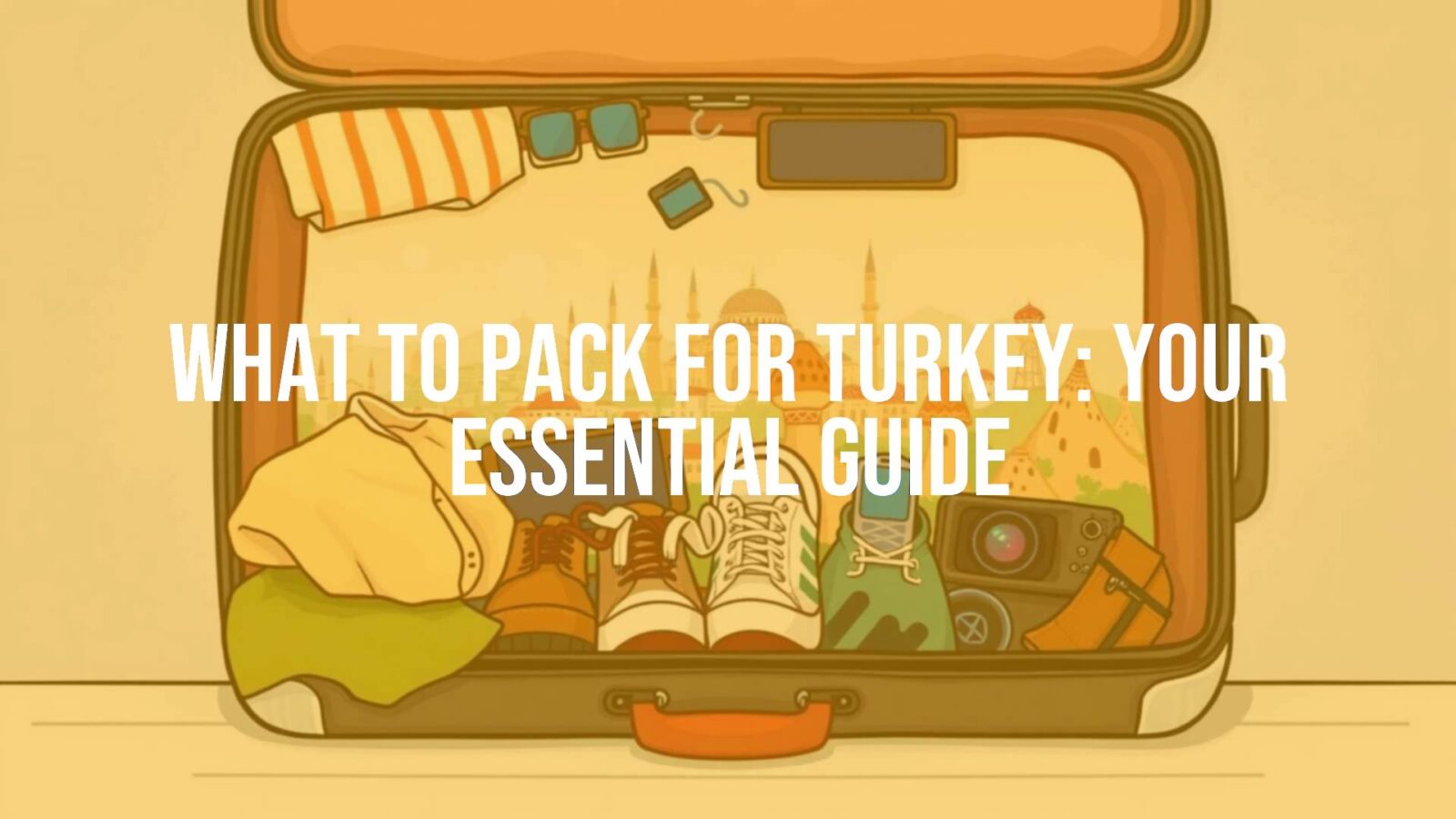
Packing for Turkey is exciting, but it helps to plan so you stay comfortable, show respect for local customs, and are ready for different places and activities. In simple terms: pack clothes you can mix and layer for Turkey’s different regions and seasons, bring comfortable shoes, and include modest options for certain sites. Along with clothing, you’ll also want the right travel documents, personal care basics, and the electronics you’ll rely on during the trip.
Turkey blends old and new, from Istanbul’s busy bazaars to calm Aegean beaches and the unusual landscapes of Cappadocia. Your final list depends on where you’re going, but it’s smart to think about the whole trip before you start filling your suitcase. Below are the main points that will shape what you should pack for Turkey.

What to Consider Before Packing for Turkey
Why does Turkey’s geography affect your packing list?
Turkey is a large country that sits between Europe and Asia, and the land changes a lot from place to place. This affects what you should bring. You can go from sunny Mediterranean beaches to snowy mountain areas in the east, or from dry valleys in Cappadocia to green farming areas near the Aegean.
If your trip includes different areas-like a few days in Istanbul, time on the coast in Antalya, and a stop in Cappadocia-you’ll need a more flexible packing plan than someone staying in one place. Coastal stops need light clothes and swimwear, while Cappadocia often has big temperature changes between day and night, so layers matter. Mountain areas (especially outside summer) may need warm clothes and rain protection. Knowing where you’ll go is the first step to packing well.
How do climate and weather patterns influence what to bring?
Turkey’s weather also changes a lot by region. The country has four seasons, but they don’t feel the same everywhere. The Mediterranean and Aegean coasts usually have hot, dry summers and mild, rainy winters-great for beach trips in summer, but you may need a rain jacket in winter.
In inland areas like Ankara and Cappadocia, the climate is more extreme: hot, dry summers and cold winters with snow. Istanbul has a mix: warm summers, cooler winters, and comfortable spring and fall weather. Check the forecast for each place on your route for the exact dates you’re traveling. A summer beach trip and a winter trip through central Turkey will need very different items, so keep an eye on temperature, rain, and humidity.
Should cultural customs shape your clothing choices?
Yes. Turkey’s big cities, like Istanbul, are modern and you’ll see many styles of clothing. Still, Turkey is mostly Muslim, and modest clothing is appreciated in many situations-especially outside beach resorts, in smaller towns, and at religious sites.
Dressing respectfully helps you fit in and shows you care about local traditions. For women, it often means carrying a scarf for mosques and choosing clothes that cover shoulders and knees in more traditional areas. For everyone, it’s best to avoid very revealing outfits away from the beach. Dressing a bit more modestly can also lead to better interactions with locals and a smoother trip.
Clothing to Pack for Turkey: Region and Season
What to wear in Turkish cities and urban areas
In cities like Istanbul, Izmir, and Ankara, aim for comfortable clothes that still look neat. Many locals dress in a smart-casual way. Women can wear dresses, skirts (knee-length or longer), capris, or fitted trousers with blouses or simple tops. Men can wear polos or collared shirts with trousers or dark jeans. Comfortable walking shoes are a must since you’ll likely walk a lot on stone streets and around historic areas.
City clothing is usually relaxed, but you may want to skip very short or low-cut items if you want to avoid unwanted attention. Layers are useful because the weather can change during the day, and air-conditioned buildings can feel cold even in summer.
How to dress for coastal and beach regions
For the Mediterranean and Aegean coast-places like Antalya, Bodrum, and Fethiye-pack more beach and resort items. Swimsuits are fine at the beach and pool. For daytime, bring light fabrics like cotton or linen to stay cool. Shorts, t-shirts, sundresses, and loose skirts work well.
Bring a cover-up for walking around town or going into shops. Beach areas are more relaxed, but it’s still polite to cover up once you leave the sand. Pack sandals or flip-flops and a sun hat. Evenings may call for slightly nicer (but still light) outfits for dinner or a walk by the water.
Best clothing for conservative and rural areas
In more traditional or rural areas (including parts of central and eastern Turkey), it’s best to dress more modestly. People tend to be more conservative, and respectful clothing is appreciated. Women should cover shoulders and knees. Good options include loose trousers, long skirts, maxi dresses, and long-sleeved tops. A light scarf is helpful for mosques and can also be useful in very traditional villages.
Men should choose trousers or longer shorts and wear t-shirts or collared shirts instead of tank tops. The goal is to be comfortable without standing out too much. Even if there isn’t a strict rule, modest clothing shows respect and often leads to friendlier interactions.

Spring clothing recommendations (March-May)
Spring (March to May) is a great time to visit, but the weather can change quickly. Pack layers: t-shirts, long-sleeved tops, and a light or medium jacket or cardigan. A rain jacket is a good idea, especially early in spring when showers are more common.
Bring comfortable walking shoes, and if possible, a backup pair in case one gets wet. Nights can still be cool, so add a warmer sweater or slightly thicker jacket. A light scarf can add warmth and can be used for mosque visits. Since regions can be very different, check the forecast for each stop.
Summer clothing recommendations (June-August)
Summer (June to August) is hot and dry in many areas, especially inland and on the coast. Pack light, breathable clothes like cotton and linen. Bring t-shirts, shorts, skirts, sundresses, and swimwear. Sun protection matters a lot: pack a sun hat, sunglasses, and high-SPF sunscreen.
Evenings can be cooler by the sea or in higher places like Cappadocia, so a light cardigan or long-sleeved shirt can help (and can also protect against mosquitos). Carry a reusable water bottle to stay hydrated. For sightseeing, comfortable sandals can work, but closed-toe shoes are helpful if you’ll walk for hours.
Fall clothing recommendations (September-November)
Fall (September to November) often has mild weather and is a favorite time for many travelers, especially in September and early October. The heat drops, but the sea can still be warm enough for swimming on the coast. Pack layers: a mix of short and long-sleeved tops, a sweater or fleece, and a medium jacket.
Rain becomes more likely later in the season, so bring a rain jacket or a strong umbrella, especially in November. Closed-toe walking shoes are good for cities and ruins. Evenings get cooler, so include enough warm options.
Winter clothing recommendations (December-February)
Winter (December to February) can be quite cold, especially inland and in the east where snow is common. Coastal areas are usually milder but often rainy. For winter trips, pack warm layers like thermal tops, long-sleeved shirts, sweaters, and a warm waterproof coat.
Waterproof boots with good grip are very useful if you expect snow or heavy rain. Pack a hat, gloves, and a scarf. Winter can be a quieter time to visit, and many indoor museums and sites are still open, so you can enjoy the culture if you dress for the weather.
What to Pack for Visiting Religious and Historical Sites
Appropriate attire for mosques
When visiting mosques, dress respectfully. Men and women should cover shoulders and knees. Women also need to cover their hair with a scarf. Many popular mosques have scarves and wrap skirts at the entrance, but carrying your own light scarf is easier and more comfortable.
Avoid tight or revealing clothing. Loose trousers or long skirts work well. Tops should cover the shoulders and ideally go to the elbows. You’ll need to remove your shoes before entering, so shoes that come on and off easily are a practical choice.
Shoes and accessories for religious sites
Since shoes must be removed in mosques, slip-on shoes, sandals, loafers, or easy sneakers work well. You may carry your shoes with you or place them on shelves, so a small reusable bag can be handy if you prefer to keep them with you.
For women, a scarf is the key item-choose one large enough to cover hair and shoulders. Sunglasses help outside, but remove them inside religious buildings. A small cross-body bag is also useful for keeping valuables close while keeping your hands free.
Activity-Specific Packing Advice
What to pack for hot air balloon rides in Cappadocia
Balloon rides in Cappadocia start very early, and mornings can feel cold even in summer. Dress in layers: trousers, a sweater, and a warm jacket. As the sun comes up, you may want to remove layers, so choose items that are easy to take off. In spring and fall, gloves and a hat can also help.
Wear comfortable closed-toe shoes since you’ll stand in the basket and may walk on uneven ground at takeoff or landing. Bring a fully charged phone or camera for photos, and sunglasses for after sunrise.

Preparing for historical site sightseeing
Turkey has many famous ruins and historic places, like Ephesus, Troy, Hierapolis, and Gobeklitepe. These sites often mean lots of walking on uneven stone or dusty paths. The most important item is sturdy, comfortable walking shoes or sneakers. Sandals can work for short visits, but closed-toe shoes are usually better for long days.
Pack sun protection for most of the year: a sun hat, sunglasses, and high-SPF sunscreen. Light clothing that covers shoulders and knees is useful for sun protection and can be more respectful at cultural sites. Bring a reusable water bottle and a small day bag for essentials and snacks.
Packing for beach, swimming, and sunbathing
For beach time, bring more than one swimsuit so you can rotate and always have a dry option. A quick-dry towel or a Turkish towel (peshtemal) is light and easy to pack. Add a cover-up or sarong for walking around town or your hotel.
Pack a hat, sunglasses, and plenty of water-resistant sunscreen. After-sun lotion or aloe vera is also helpful. Flip-flops are ideal, and a waterproof pouch can protect your phone and cash. If you like to relax, bring a book or e-reader.
Outdoor adventures: hiking, trekking, and sports
If you plan to hike (like parts of the Lycian Way) or do other outdoor activities, bring the right gear. Trail shoes or hiking boots with good grip are important on rocky paths. Pack moisture-wicking clothes you can layer, since temperatures can change during the day. A wind and rain jacket is a smart choice in any season.
Bring a small daypack for water, snacks, a basic first-aid kit, and extra layers. Trekking poles can help on steep routes. A headlamp can be useful if you’re out around dawn or after dark. Insect repellent is helpful in warm months, especially in rural areas.
Urban exploration, shopping, and markets
Walking through Turkish cities and markets is a big part of the fun. Comfortable shoes are the most important item since you’ll walk a lot, often in crowded streets and busy bazaars like the Grand Bazaar in Istanbul. Sneakers, comfortable flats, or low boots (depending on the season) are good choices.
Bring a practical day bag or cross-body bag to keep your belongings close. A reusable shopping bag is useful for market finds. Wear smart-casual layers so you can handle changes between outdoor heat and indoor air-conditioning. A power bank helps keep your phone charged for maps and photos.
Trip Length and Packing Strategies for Turkey
Packing for one week in Turkey
For a one-week trip, pack light and focus on items you can mix and match. A simple capsule wardrobe works well. Bring about 3-4 bottoms (trousers, skirts, shorts) and 5-7 tops. Add one jacket or cardigan that works during the day and at night.
Try to limit shoes to 2-3 pairs: one main walking pair, one nicer option if you need it, and sandals/flip-flops if you’ll be on the coast. Rolling clothes can save space, and packing cubes help you stay organized. With smart choices, you can often fit everything in a carry-on.
Packing for a two-week trip
For two weeks, pack smart instead of packing double. Bring enough clothing for about 7-10 days and plan to do laundry once or twice. Many hotels offer laundry service, and you can also find laundromats in cities.
Stick to flexible items you can dress up or down. If you’ll walk a lot, you might add a second comfortable shoe option. A small amount of travel laundry soap can help for quick hand-washing. Packing cubes are even more helpful on longer trips, especially if you’re moving between locations.
Packing for longer stays or multi-destination trips
For longer trips across Turkey, flexibility matters most. Packing less often works better, especially if you’ll move between cities. Pack quick-dry fabrics and plan for regular laundry. Choose a core set of items you can layer for different weather and wear for both daytime sightseeing and evening meals with small changes.
If you’ll move often, a backpack can be easier than a large suitcase. A small sewing kit can help with quick fixes, and a sink stopper can be useful for washing clothes by hand. You can buy many toiletries locally, so you don’t need to bring everything from home.
Travel Essentials Checklist for Turkey
Important travel documents and money management
Before packing clothes, check your documents. Your passport should be valid for at least six months after your travel dates. Check visa rules for your nationality early, and apply online if needed. Keep paper copies of your passport, visa, flights, and hotel bookings, and save digital copies on your phone and in cloud storage.
For money, bring some Turkish Lira (TL) for small purchases and use cards for bigger spending. Tell your bank you’re traveling so your card isn’t blocked. A travel credit card with no foreign fees can help. Keep some emergency cash in a separate place. In busy tourist areas, a secure wallet or money belt can help protect against pickpockets.
Toiletries and personal care items
You can buy most toiletries in Turkey, but it’s still smart to pack your basics in travel sizes: toothbrush, toothpaste, shampoo, soap, and any skincare you use daily. If you take prescription medicine, bring enough for the whole trip, plus a copy of the prescription (and a doctor’s note if needed).
A small first-aid kit is useful: pain relief, bandages, antiseptic wipes, and allergy medicine if you need it. Bring insect repellent for warm months and outdoor plans. Hand sanitizer is helpful for travel days. Women can find hygiene products locally, but bringing your preferred brand can save time.
Electronics, adapters, and connectivity
Pack your phone, charger, headphones, and a power bank for long days out. Turkey commonly uses Type F or Type C plugs (two round pins), so bring a travel adapter. A multi-port USB charger can be useful if you have several devices.
For data, check eSIM options before you leave or plan to buy a local SIM card after arrival. If you use a camera, bring extra memory cards. Protective cases are helpful, especially if you’ll visit dusty or rocky areas like Cappadocia.

Bags and packing organization
Choose luggage that fits your travel style: a light suitcase or a comfortable travel backpack. For daily outings, use a small daypack or cross-body bag for water, snacks, and valuables. Packing cubes can help you separate clean and dirty clothes and make it easier to find items quickly.
If you’ll be near water, a waterproof pouch or dry sack can protect electronics. Reusable cloth bags help for shopping and for carrying wet swimwear. A foldable duffel bag can be useful if you buy lots of souvenirs and need extra space on the way home.
Packing Tips for Families and Solo Travelers
Tips for families traveling with children
With kids, packing takes a bit more planning. Along with regular clothes, bring familiar snacks and small activities for flights, drives, and quiet time. Pack extra outfits for young children in case of spills or accidents.
Bring any child-specific medicines, a simple first-aid kit, and comfort items like a favorite toy or blanket. For babies, a compact travel stroller can help. Sun protection is important for everyone, especially kids: hats, sunscreen, and rash guards are great on the coast. If your children are older, let them help pack so they remember their key items.
Solo female traveler packing suggestions
For solo female travelers, comfort and feeling safe matter, and packing can help with that. Turkey is generally safe, but dressing modestly can help you blend in and reduce unwanted attention, especially outside major tourist areas. Bring clothes that cover shoulders and knees, and keep a scarf with you for mosques and more traditional places.
A secure cross-body bag or money belt helps protect valuables. Some travelers like bringing a personal safety alarm. Learn common local scams and basic customs before you go. Pack in a way that helps you feel confident and comfortable so you can focus on enjoying the trip.
What Not to Pack for a Trip to Turkey
It helps to think about what to leave at home. Skip very revealing clothing if you plan to visit mosques or traditional areas. Resort towns are relaxed, but walking around cities in very skimpy outfits can bring unwanted attention and may be seen as disrespectful.
Leave expensive jewelry and high-value items at home. Turkey is generally safe, but it’s better not to risk loss or damage. You can buy nice, affordable accessories there. Also avoid packing too many heavy items you can easily buy locally, like basic toiletries or large bottles of sunscreen (unless you need a specific brand). Overpacking makes moving between places harder, so keep your luggage light and practical.
Frequently Asked Questions about Packing for Turkey
Is modest clothing required everywhere in Turkey?
No. Modest clothing is not required everywhere, but it is strongly recommended in certain places. In large cities like Istanbul, Izmir, and Antalya, especially in modern areas, you’ll see many styles and casual Western clothing is common. But for mosques and for smaller towns and villages, modest clothing shows respect for local culture.
For women, that usually means covering shoulders and knees and carrying a scarf for mosques. Men should also choose longer shorts or trousers and avoid sleeveless tops in these settings. The main idea is to match your clothing to the place you’re visiting.
Can you wear shorts and sleeveless tops in Turkey?
Yes, in many places. Shorts and sleeveless tops are common in beach towns, at resorts, around pools, and in tourist areas of big cities during hot weather. Many locals also wear them in cities, especially younger people. The situation matters, though.
Avoid shorts and sleeveless tops at mosques, some official buildings, and in more traditional neighborhoods or rural areas. Bringing a light cover-up and an extra option (like longer shorts, a skirt, or a loose shirt) makes it easy to change based on where you are.
Do you need a headscarf to enter mosques?
Yes. Women need to cover their hair with a headscarf to enter mosques in Turkey. Shoulders and knees should also be covered, and men should dress modestly too. If you don’t have a scarf, many well-known mosques provide scarves for visitors to borrow at the entrance.
That said, it’s often easier to carry your own light scarf. It can also be used for warmth or as an accessory. Also remember: everyone must remove their shoes before stepping onto the carpeted prayer areas, so shoes that are easy to take off are helpful.













Leave a comment