


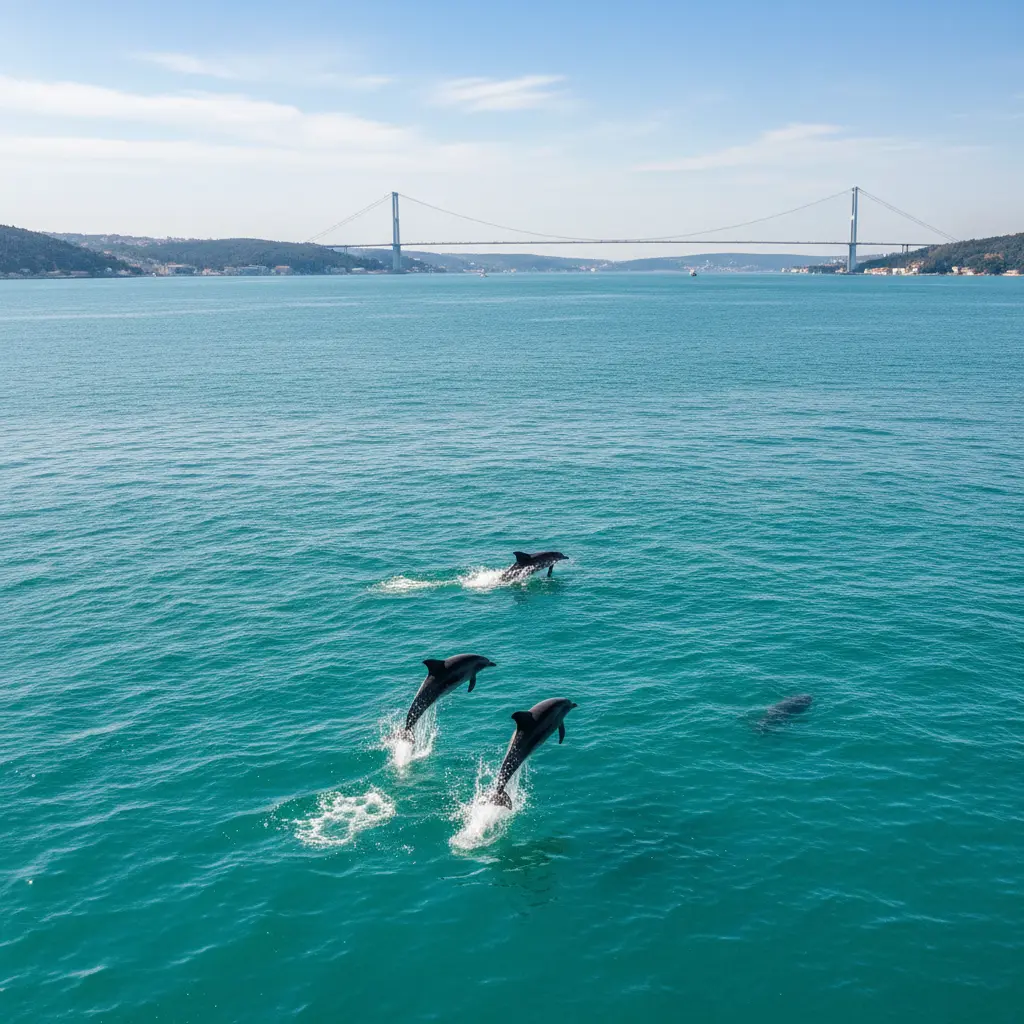
ISTANBUL, (DHA) – A captivating spectacle unfolded in the Istanbul Bosphorus as dolphins were filmed from above, gracefully navigating the waters that have recently turned a vibrant turquoise hue near the Yavuz Sultan Selim Bridge.
Turquoise Waters and Playful Dolphins Transform Bosphorus
The unusual turquoise coloration of the sea in the Istanbul Bosphorus has provided a stunning backdrop for the appearance of numerous dolphins. These marine mammals were observed in a pod, moving rhythmically beneath the Yavuz Sultan Selim Bridge. The dolphins engaged in what appeared to be a playful dance, leaping and splashing on the surface of the vivid waters, creating a truly breathtaking visual experience.
The aerial footage captured the dolphins competing with each other in their energetic jumps above the water, offering a rare and beautiful display of nature’s wonders in the heart of Istanbul. This phenomenon has drawn significant attention, highlighting the natural beauty that coexists with the city’s urban landscape.
Possible Reasons for the Turquoise Hue
While the exact cause for the Bosphorus’s turquoise color was not specified in the initial report, such changes in water coloration are often attributed to the proliferation of phytoplankton, microscopic marine algae. These organisms, under specific environmental conditions such as changes in water temperature, nutrient levels, and sunlight, can undergo rapid growth, leading to what is known as an algal bloom. Different species of phytoplankton can produce various pigments, resulting in a range of colors, including the striking turquoise observed in the Bosphorus.
Another potential factor could be the influx of freshwater from rivers, carrying suspended sediments that reflect light in a way that gives the water a more vibrant, lighter color. However, without further scientific analysis, these remain speculative explanations for the recent change in the Bosphorus’s appearance.
Impact on Marine Life and Ecosystem
The presence of dolphins in these newly colored waters suggests that the change, at least in this instance, has not been immediately detrimental to their activity. Dolphins are sensitive indicators of marine ecosystem health, and their playful behavior indicates a relatively healthy environment, at least for the short term. Nevertheless, significant and prolonged algal blooms can sometimes lead to oxygen depletion in the water, which can be harmful to marine life. Monitoring the Bosphorus’s water quality will be crucial to understand the long-term implications of this natural phenomenon.
The Bosphorus Strait is a vital waterway connecting the Black Sea to the Sea of Marmara and the Mediterranean. It is a rich ecosystem supporting diverse marine life, and any significant environmental changes are closely observed by scientists and environmental agencies. The sight of dolphins, often considered a symbol of healthy oceans, frolicking in such vibrant waters serves as a reminder of the unique biodiversity present in and around Istanbul.
Public Reaction and Future Observations
The aerial footage of the dolphins has been widely shared, captivating the public and generating significant interest in the natural beauty of the Bosphorus. Such events often spark increased awareness and appreciation for marine conservation efforts. Local authorities and environmental organizations are likely to continue monitoring the situation to ensure the well-being of the Bosphorus ecosystem.
This natural spectacle provides a moment of wonder for residents and visitors alike, underscoring the dynamic and ever-changing nature of Istanbul’s iconic waterway. Further observations will shed more light on the persistence of the turquoise hue and the continued presence of dolphins in these stunning waters, offering valuable insights into the ecological dynamics of the region.